Request Your Free Quote!

Drywall Scope Changes: What the Wall Behind the Wall Costs
A SoCal drywall scope change can add hundreds to your quote. See what triggers a change order, what it costs, and how to keep your invoice clean.
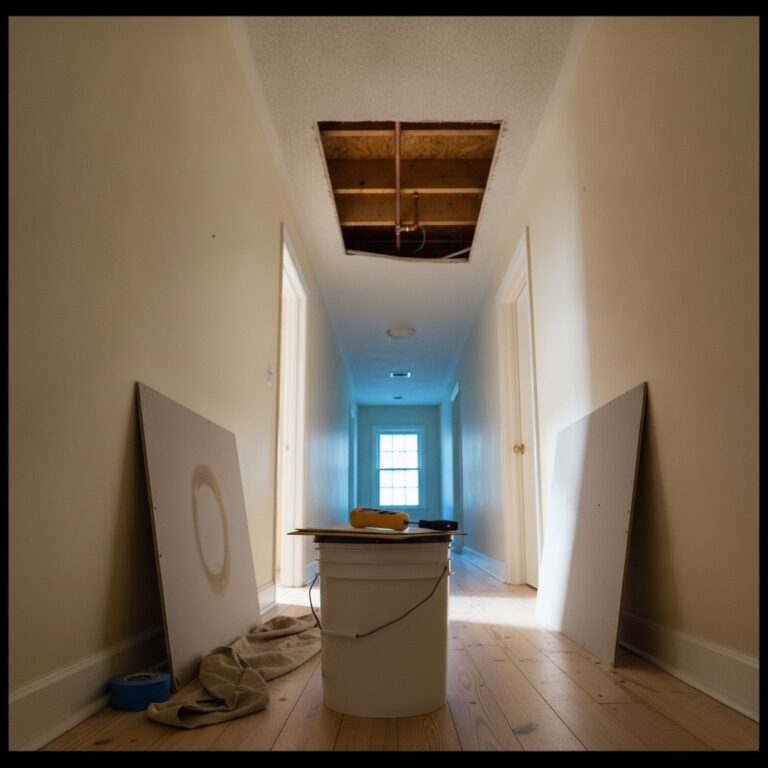
A homeowner in Fullerton signs a clean quote to patch a water-stained ceiling. The number reads $1,400. Two days in, the crew pulls the damaged section and finds the joist above it soft and the insulation soaked three bays over. The job is now $2,600. That jump has a name. It is a scope change, and it is the single most common reason a drywall invoice ends higher than the quote a homeowner signed.
What a scope change actually means
A scope change is any work that was not in the signed quote. Sometimes you ask for it. You decide mid-project to run the smooth finish across the whole ceiling instead of the one repaired section. Sometimes the house asks for it. The crew opens a wall and finds rot, old wiring, or a framing detail that has to be corrected before new drywall goes up. Either way, the original price no longer covers the work standing in front of the crew.
Industry data backs up how routine this is. Change orders and mid-project surprises push most renovation budgets up 15 to 20 percent, and a single change order on an interior remodel runs around $2,850 on average. Drywall jobs sit at the smaller end of that range, but the math still moves a $1,500 repair into the $2,000s fast. Honest contractors tell you this risk exists before you sign. The rest let the invoice do the talking on the last day.
The wall behind the wall: what crews actually find
Most drywall scope changes trace back to one of five hidden conditions. Water damage leads the list. A stain the size of a dinner plate often sits below a wet area three or four times larger, because drywall wicks moisture sideways along the paper face. Cut the panel and the real footprint shows. The second is framing. Older Orange County homes, especially 1960s and 1970s tracts in Garden Grove, Westminster, and Santa Ana, hide notched studs, sistered joists, and headers that never met current load math.
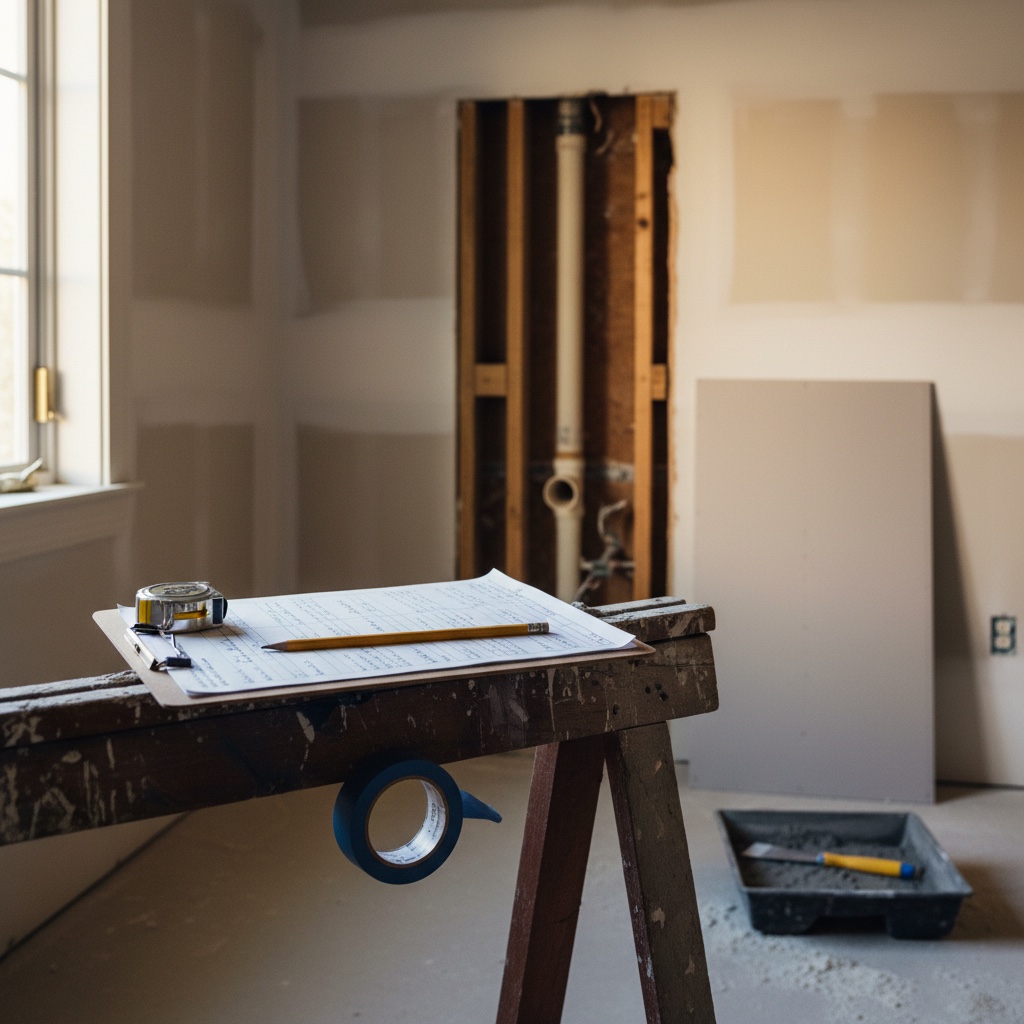
The third is wiring and plumbing. Open a kitchen or bathroom wall and you may find a drain line, a vent stack, or a junction box that has to move before the wall can close. That is electrician or plumber time, not drywall time, and it lands as a separate line. The fourth is mold. Once a wet panel comes down, standard California practice is to stop and assess before re-rocking. The fifth is texture mismatch, where matching a 30-year-old knockdown pattern turns a small patch into a full-wall refinish.
None of these are a contractor inventing reasons to charge more. They are conditions that nobody can see through a painted, closed wall. A good crew flags the risk during the in-home assessment. If your house is older, or the repair sits near a kitchen, a bath, or a roofline, expect the quote to name that risk in writing rather than pretend it does not exist.
What a change order costs in Orange County
Here is the part homeowners want. Drywall labor and material in California runs roughly $3.00 to $4.50 per square foot installed at a standard level-4 finish, higher than the national range because of state labor rates near $75 an hour and stricter code. A scope change gets priced the same way, just applied to the new work. Replace an extra 40 square feet of water-damaged ceiling and you are looking at $250 to $500 in drywall scope alone, before any plumbing or electrical touches the job.
The bigger cost is usually the trade work, not the rock. A plumber rerouting a drain line is a $400 to $1,200 add. Mold remediation on a small area starts around $500 and climbs with the footprint. Water-damage drywall repair on its own commonly lands between $500 and $2,000 depending on spread. The reason change orders feel expensive is timing. Every change after demo starts costs two to five times what the same work would have cost if it had been written into the original plan.
Repair pricing gives a useful baseline. A small hole under four inches runs $100 to $250 done right. A medium hole runs $200 to $500 because it needs a backed patch, tape, three mud coats, sanding, prime, and paint. When a quoted small repair turns into a medium or large one because the damage ran further than the surface showed, that is a scope change in miniature, and the same per-square-foot math applies to the extra area.
One more cost question comes up often: who pays for a scope change. If the change is something you chose, like upgrading to a level-5 finish, it is yours. If it is a hidden condition tied to a covered loss, such as a burst supply line, your homeowner’s insurance may cover the water-damage portion. Carriers move slowly, especially in heavy rain weeks when claims pile up, so a clear change order with photos and line-item pricing is exactly the documentation an adjuster wants to see.
How to keep change orders small
You cannot delete every surprise, but you can shrink them. Start with an assessment that actually looks. A crew that taps the wall, checks the attic side, runs a moisture meter, and pulls a baseboard catches most hidden conditions before the quote is signed. That moves cost out of the change-order column and into the honest base price, where you can compare two bids fairly instead of guessing which one hid the risk.
Budget for the unknown before it shows up. Renovation professionals tell homeowners to set aside a contingency of 15 to 20 percent of the project total for exactly this reason. On a $5,000 drywall remodel that is $750 to $1,000 held in reserve. If the walls come back clean, you keep it. If the crew finds the soaked joist, the money is already set aside and the project keeps moving instead of stalling while you scramble to fund the fix.
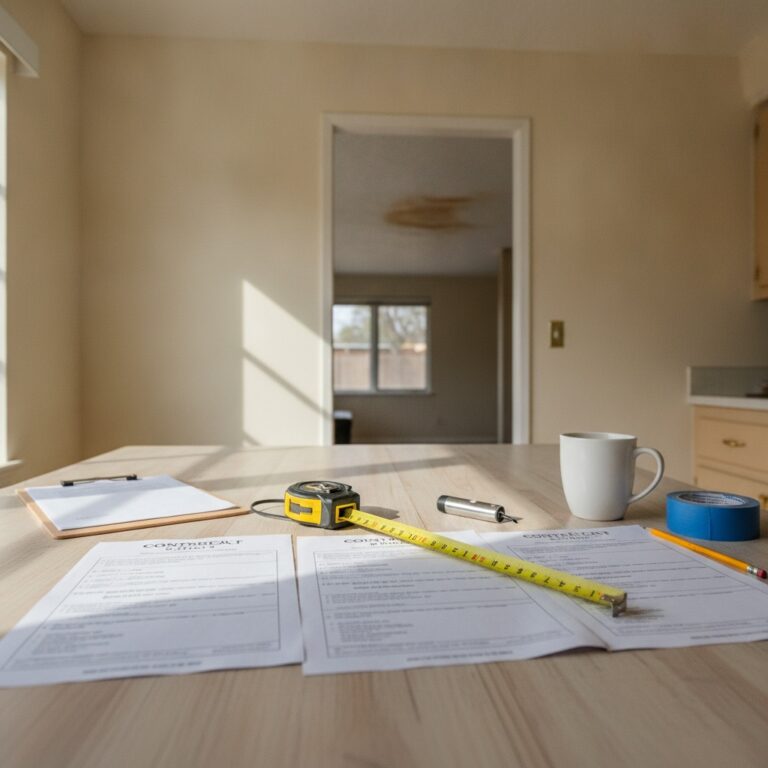
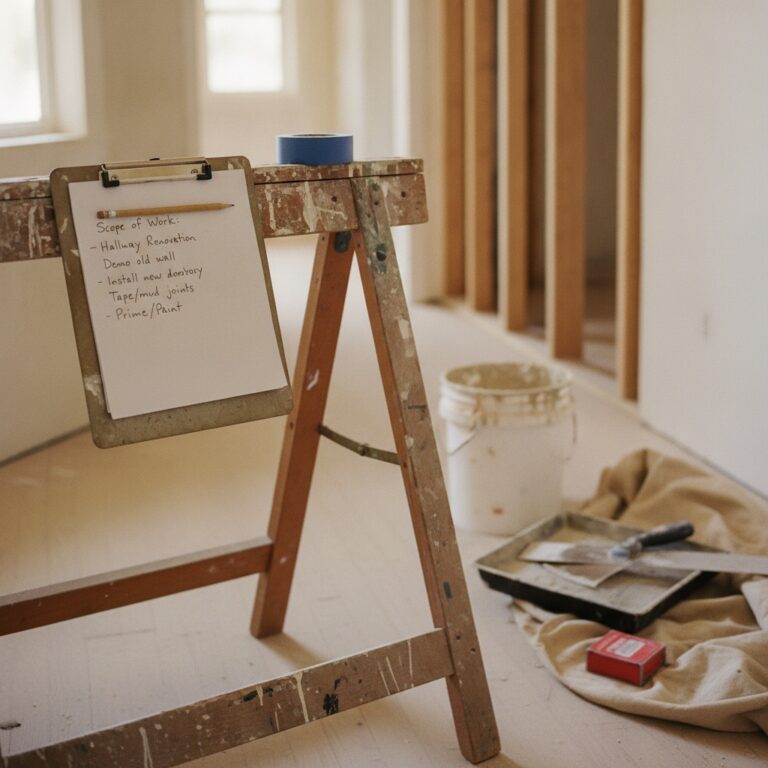
Read what the quote covers. A real JNL quote names hang, tape, finish to the stated level, prime, paint, cleanup, and debris haul-off as separate line items, plus the texture it will match. It also names what it does not cover, such as plumbing reroutes or framing correction, so a later change order is a known possibility rather than a shock. Ask any contractor to put the change-order process in writing: how a change gets priced, who approves it, and whether you sign off before that work starts.
Scope changes are not the enemy. A surprise you find out about on day two, in writing, with a clear price and your signature before the work starts, is a managed cost. A surprise that shows up on the final invoice is a broken process. JNL Drywall works the first way. If you have a repair or remodel anywhere in Orange County and want a quote that names the real risks before a single panel comes down, book a free in-home assessment. We would rather show you the wall behind the wall now than explain it later.
Morning-context sources used: Angi, How Much Does Drywall Repair Cost? [2026 Data]; Angi, Drywall Installation Cost in Los Angeles [2026 Data]; Homewyse, Cost to Install Drywall, 2026 Cost Calculator; Phoenix Home Remodeling, The Real Cost of Change Orders in Interior Remodels, March 2026; HomeGuide, How Much Does Drywall Repair Cost? 2026.