Request Your Free Quote!

Orange Peel or Knockdown? Matching a SoCal Patch in 2026
Orange peel or knockdown? In SoCal homes the texture, not the hole, decides if a drywall patch disappears. What each costs to match in 2026.
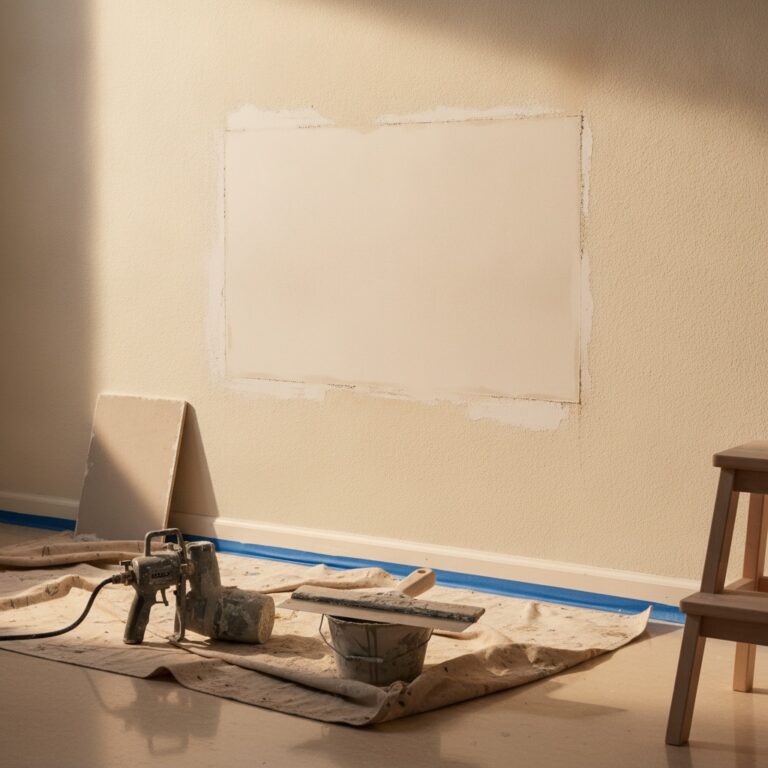
You patched a hole in the hallway, painted it, and stepped back. The patch is smooth. The wall around it is not. In a Fullerton or Anaheim home built in the last forty years, that wall is almost certainly orange peel or knockdown, and the flat patch reads like a thumbprint the second afternoon light hits it. Matching the texture, not filling the hole, is the part that decides whether the repair disappears or announces itself to every guest.
This matters more in 2026 than it did a few years ago. Design writers spent the last two seasons calling smooth walls dated and pushing tactile, plaster-style finishes back into style. Most SoCal homeowners are not chasing a trend though. They have a wall with a texture already on it, and they want the new work to vanish into the old. That is a matching problem, and orange peel and knockdown behave very differently when you try to solve it.
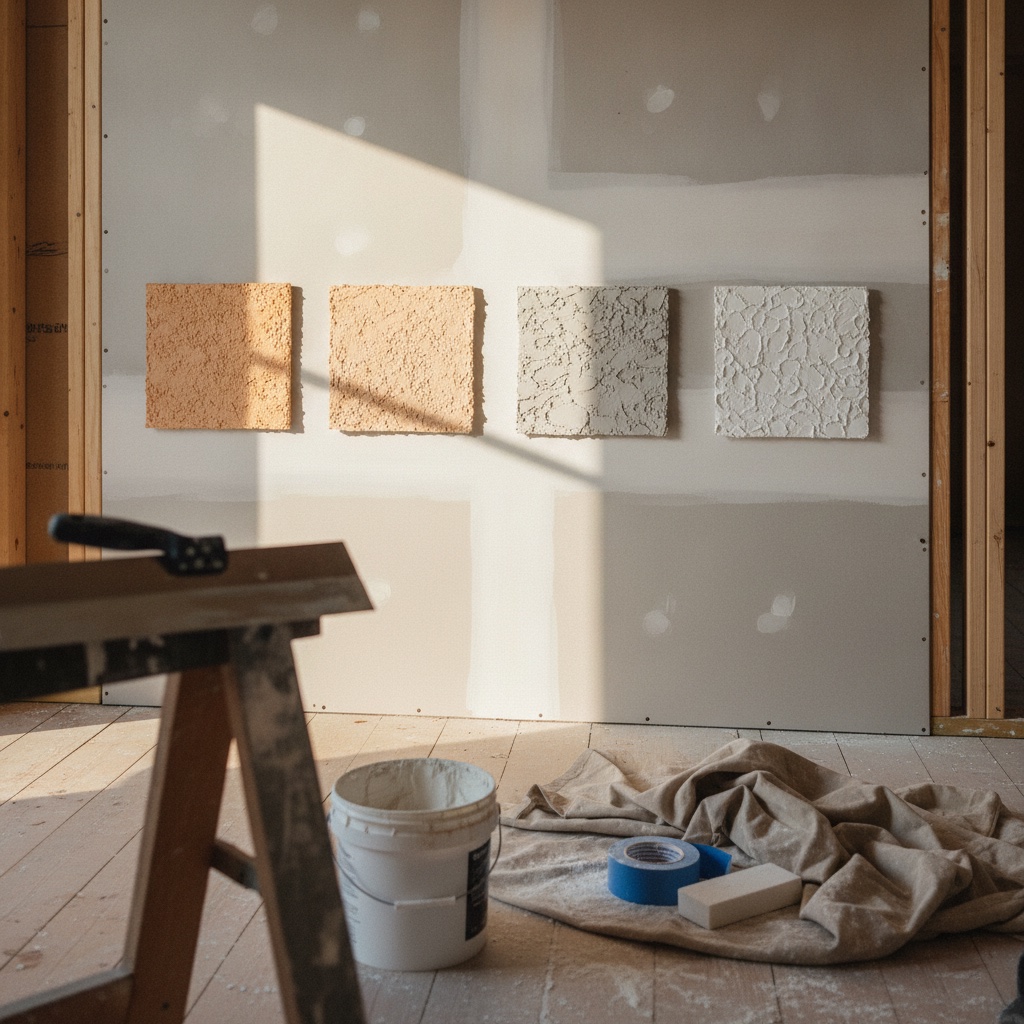
Orange peel and knockdown, told apart at arm’s length
Orange peel looks like the skin of an orange. It is a fine, even spray of small rounded bumps with no flat tops. Run your hand across it and it feels like sandpaper grit blown up large. It is the most common wall texture in Orange County tract homes and a lot of Inland Empire builds from the 1990s forward, because it sprays fast and hides minor wall imperfections.
Knockdown starts the same way. Mud gets sprayed on in heavier blobs. Then the finisher waits a few minutes and drags a wide knife flat across the surface, flattening the peaks into little islands with smooth tops and ragged edges. The result reads as a soft, mottled topography rather than an even grit. Knockdown is common on ceilings and on accent walls, and you see it across San Diego north county and Long Beach remodels from the 2000s.
The tell is the flat spots. Orange peel has none. Knockdown is defined by them. Once you know to look for the smeared islands, you can name your wall from across the room, which is the first thing any honest repair plan needs.
Why knockdown is the harder match
Orange peel forgives. A finisher can feather the edges of a patch, load a hopper or a spray can with the right tip size, and blow a fresh coat over the repair that blends into the field. Match the bump size and the spray pressure and the seam fades. On a closet wall or a low-traffic hallway in Riverside, a skilled hand can make an orange peel patch invisible in a single visit.
Knockdown fights back. The pattern is irregular by design, so there is no single bump size to dial in. The finisher has to spray to roughly the right density, then time the knockdown pass so the new islands match the size, spacing, and flatness of the ones already on the wall. Too wet and the blobs spread. Too dry and the edges tear instead of smearing. Miss the timing by ninety seconds and the patch reads as a different texture next to the old one. This is why a cheap patch on a knockdown wall so often looks worse than the damage did.
There is a second trap with both textures. Old texture has years of paint built into it, which softens the relief. Fresh texture sits proud and sharp. Even a perfect pattern match can catch light differently for the first month until the new work gets its first full coat of wall paint and settles in.
What a texture-matched patch costs in Orange County
Plain hole repair is cheap. A doorknob ding or a small patch runs in the range of $75 to $350 across most of Orange County, depending on size and access. Texture matching is the line item that moves the number. Textured repair work runs meaningfully more than smooth, often thirty to forty percent more, because the blending is slow and the margin for error is small. Retexturing a repaired area adds roughly a dollar per square foot on top of the patch itself, and ceiling work runs another twenty to forty percent over wall work because everything overhead is slower and sometimes needs staging.
The bigger cost decision is whether to paint the patch or the whole wall. A spot touch-up saves money but gambles on the paint matching, and twenty-year-old wall color almost never matches a fresh can, even from the same formula. Painting corner to corner for a truly invisible result adds somewhere around $150 to $400 per wall. On a knockdown wall in a west-facing Newport Beach living room, that corner-to-corner repaint is usually money well spent, because the afternoon glare will find any seam you tried to skip.
How June light decides whether the patch disappears
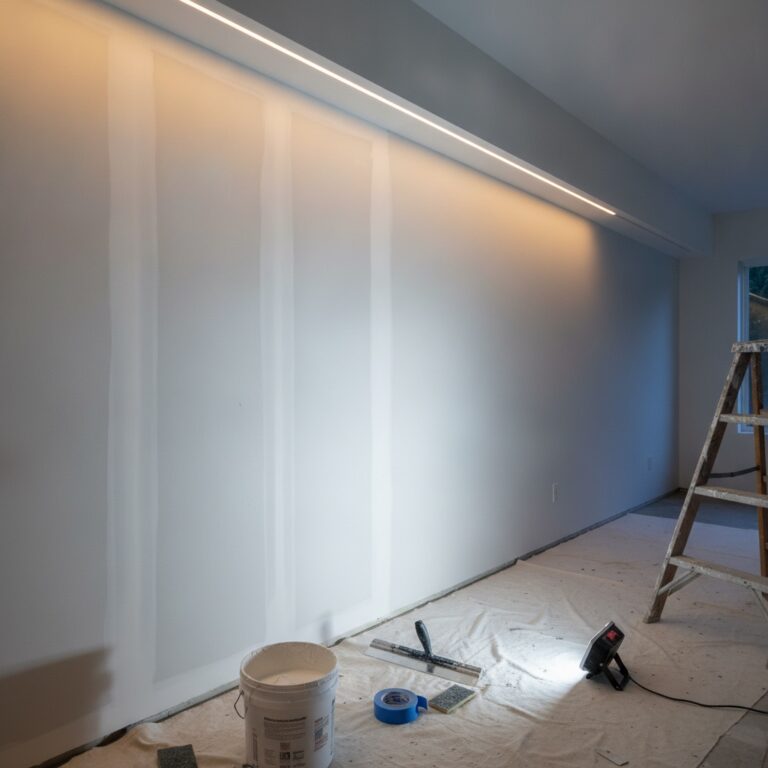
SoCal light is the quiet judge of every texture repair. Morning marine layer flattens a room and hides a lot. Early June is peak gloom season along the coast, and a patch can look flawless under that soft gray light. Then the layer burns off, the sun swings west, and by four in the afternoon it rakes across the wall at a low angle that throws a shadow off every bump and every flat island. A patch that vanished at 9 a.m. can stand out hard at 5 p.m.
This is why finish work should be judged in the light the room actually lives in. A knockdown accent wall in a Huntington Beach family room that faces the patio needs to be checked in late-afternoon side light before anyone calls it done. A smooth hallway in a Tustin interior with no direct sun has far more forgiveness. The texture is only half the match. The light it lives under is the other half, and the only honest way to know is to look at the wall at the hour it gets hit hardest.
If your wall has a patch that keeps catching your eye, or you are weighing a spot fix against retexturing the whole wall, the texture and the room’s light should drive that call together. We walk the wall at the time of day it gives you trouble, name whether it is orange peel or knockdown, and tell you straight whether a blended patch will hold up or whether the wall wants a full retexture. That look is a free in-home assessment, and it is the cheapest way to avoid paying twice for the same repair.
Morning-context sources used: Angi, Orange Peel vs Knockdown Wall Textures; AvilaCo Drywall, Knockdown vs Orange Peel vs Skip Trowel; AllBetter, Drywall Repair Cost 2026 and the Texture Match Trap; Homewyse, Cost to Repair Textured Drywall 2026; House Digest, The Smooth Drywall Trend Going Outdated; AccuWeather, What is June Gloom.