Request Your Free Quote!

Matching Paint After a Drywall Patch Without Repainting
A SoCal homeowner's guide to matching paint after a drywall patch: why patches flash, how to blend one spot, and when to just paint the whole wall.
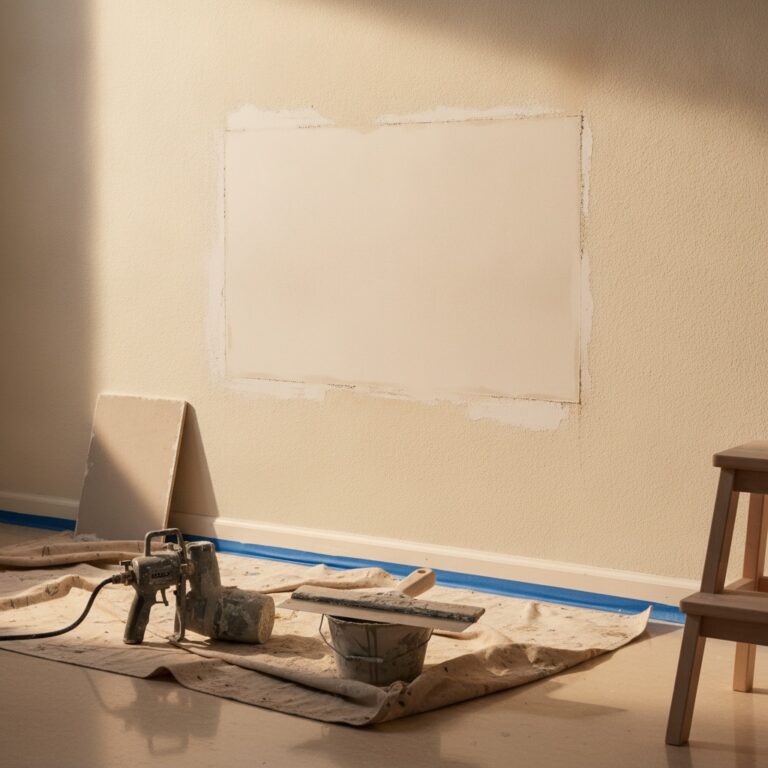
Stand in an Irvine living room at 4 p.m. with the west sun raking across the wall, and a paint touch-up you swore was invisible suddenly reads like a thumbprint. The patch is smooth, the color came off the same can, and it still flashes. This is one of the most common calls we get after a homeowner fixes a hole themselves. The repair was fine. The paint was the problem.
Color matching after a drywall patch is rarely about the color. It is about how the patched spot drinks paint and throws back light compared to the wall around it. Get that part right and a single-wall touch-up holds up in any light. Get it wrong and you end up repainting a whole room you never planned to touch.
Why a Perfect Color Match Still Shows
Fresh joint compound is thirsty. It is far more porous than the painted wall beside it, which already carries two or three coats sealing the surface. When you brush matching paint straight onto raw mud, the patch soaks it in and dries duller than the area around it. Painters call this flashing: an uneven sheen where the same paint looks glossy in one spot and flat in another. The color can be a perfect match and the repair still jumps out.
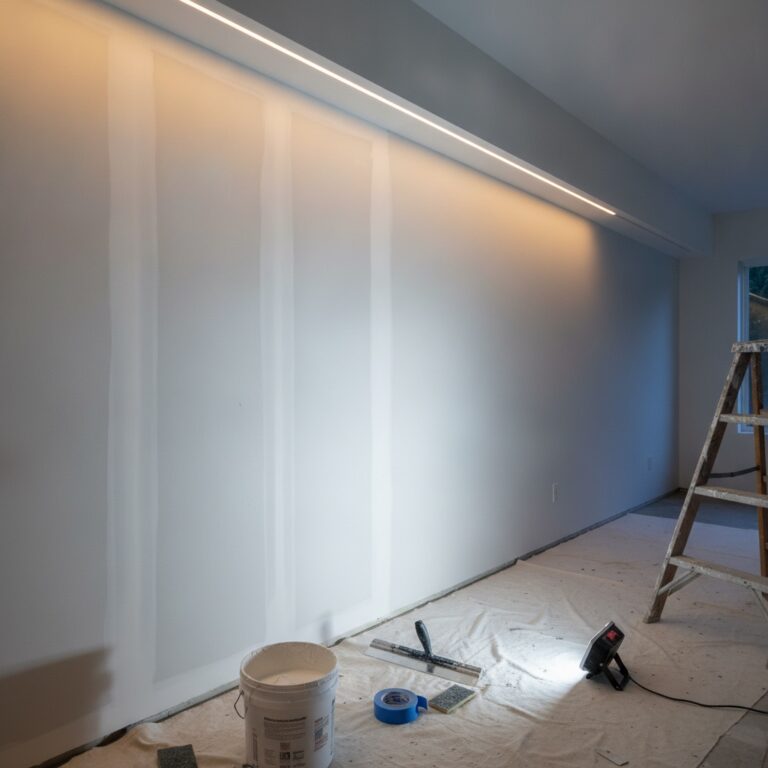
Light makes it worse in SoCal homes. A west-facing wall in Santa Ana or Long Beach catches hard side-light through the afternoon, and side-light is brutal on sheen and texture differences. A patch that disappears under morning’s soft glow can stand out by dinner. The fix is not a closer color match. It is sealing the patch so it reflects light the same way the rest of the wall does.
Texture is the other half of the problem. If the wall wears orange peel or knockdown and the patch is glass-smooth, no paint on earth hides that step. The patch has to carry the same texture as its neighbor before paint goes anywhere near it.
Match the Sheen Before You Match the Color
Sheen mismatch fools more people than color mismatch. You can nail the exact hue and still see the repair because the finish is wrong. Walls in Orange County homes are usually flat or matte in bedrooms and living rooms, eggshell in hallways, and satin in kitchens and baths. A flat patch on an eggshell wall reads as a dull rectangle no matter how close the color sits.
Before buying touch-up paint, figure out the existing sheen. Hold a flashlight parallel to the wall and watch the reflection. Flat throws almost no shine, eggshell gives a soft glow, satin reads slightly wet. Match that finish first. The 2026 move toward matte and warm-neutral walls actually helps here, because flat finishes hide minor surface differences better than glossier sheens do. If your wall is satin in a sunny kitchen, plan on more blending than a flat bedroom wall would need.
Color also shifts over time. A wall painted four years ago in a warm taupe has faded and yellowed a touch from sun and cooking. A perfect lab match to the original formula can look slightly off against the aged wall. When the can is long gone, a paint store can scan a chip cut from a hidden spot, like behind a switch plate, but expect the match to land close rather than exact.
Blending the Patch So You Skip Repainting the Whole Wall
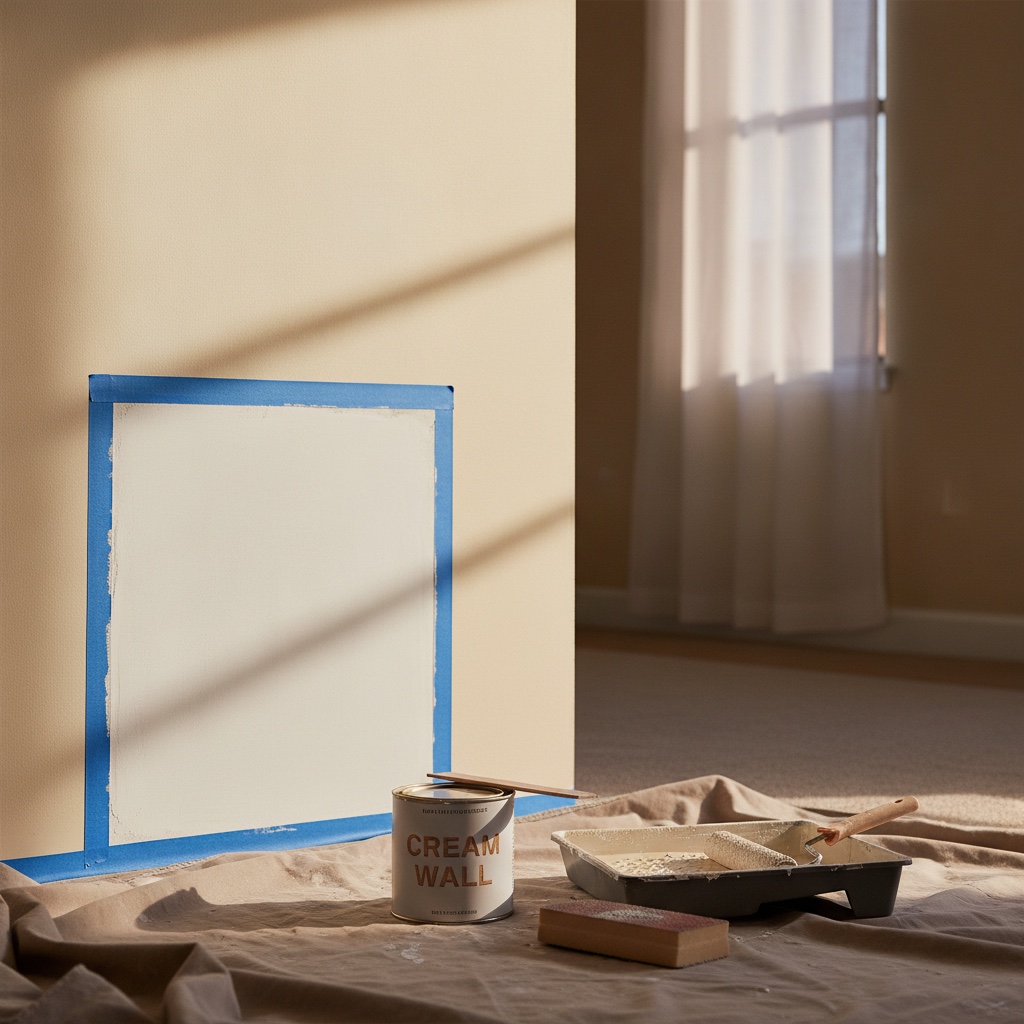
Here is the sequence that keeps a touch-up local. First, sand the patch flush and feather the compound several inches past the repair so there is no ridge under your fingers. Re-create the wall texture on the patch, whether that is a light orange peel spray or a rolled-and-knocked-down pattern, and let it match the surrounding wall before you prime.
Then prime. This is the step most homeowners skip and the reason most patches flash. A coat of PVA drywall primer over the repair seals the porous compound so it accepts the topcoat at the same rate as the wall. For water stains or heavy patches, a shellac or stain-blocking primer earns its keep. Skip the primer and you are painting two different surfaces and hoping they look alike under afternoon light.
When you paint, do not dab a tight square over the patch. Roll the topcoat and feather it outward in a wide pool, then carry it to a natural stopping point: a corner, a trim line, the edge of the wall. Sheen blends where you feather it, not where you cut a hard edge. Stopping at a corner is the single best trick for keeping one repaired wall from forcing you into the next. Two thin coats beat one heavy coat every time.
When Repainting the Whole Wall Is the Cheaper Answer
Sometimes the math says paint the wall. A large patch in the middle of a long Huntington Beach hallway, an aged color you cannot match, or a glossy satin finish that flashes at every angle all point the same direction. Painting one wall corner to corner removes the guessing and the flashing in one move. A gallon runs $20 to $55, and a single accent wall is often an hour of work once the patch is finished and primed.
Cost is where homeowners miscalculate. A DIY patch and touch-up might cost $10 to $55 in materials, but a blend that has to be redone twice eats a Saturday and still looks patched. Hire it out and most pros charge $100 to $160 for a small patch in California, with many adding $125 or more for paint matching alone. Larger repairs that need a new piece of rock run $300 to $800 once texture and paint are included. California labor sits 20 to 35 percent above the national average, so the gap between a clean first attempt and a do-over is real money.
Resale is the last factor. Buyers in OC notice flashing on a walkthrough even when they cannot name it, and a patchy wall reads as deferred maintenance. If the home is heading to market, a full-wall repaint in the correct sheen is worth the extra hour.
If a patch in your home keeps showing no matter how carefully you match the can, the texture or the primer step is usually the culprit, not the color. We offer a free in-home assessment across Orange County and the surrounding area, where we read the existing texture and sheen, tell you whether a local blend will hold or the wall wants a full coat, and give you a flat number before any work starts. Book a walkthrough and stop fighting the same patch twice.
Morning-context sources used: Sherwin-Williams: How to Fix Paint Flashing; EPF Pro Services: Why Drywall Patches Show Through Paint; JLC: Preventing Drywall Patches From Telegraphing Through; BEHR: 2026 Paint Color Trends; Angi: How Much Does Drywall Repair Cost (2026 Data); California Home Costs: Drywall Repair Cost in California (2026).