Request Your Free Quote!

Living Through a Summer Drywall Remodel Without the Dust
Staying in your SoCal home during a summer drywall remodel? Here is the containment, timeline, and dust control that keeps the rest of the house clean.
Your contractor called it a two week job, and in Irvine in late June that is true on paper. What the bid does not spell out is that you are living in the house the whole time, the AC is running because it is 92 degrees outside, and that same air handler is happy to pull drywall dust from the back bedroom straight into your kitchen. Summer is the busiest drywall season in Orange County. It is also the hardest one to live through clean. The fix is not luck. It is containment planned before the first sheet of rock comes down.
Why summer is the hardest season to stay in the house
Two things collide in June, July, and August. Crews book out weeks ahead, so you take the slot you can get and you stay put rather than pay for three weeks in a rental. And your HVAC runs almost nonstop. That second part matters more than most homeowners expect. A central return register in the work room acts like a vacuum, drawing fine gypsum dust into the ductwork and spreading it to every room the system feeds. A 200 square foot bedroom remodel in Anaheim can leave a gray film on the dining table 40 feet away if those returns are never sealed.
Kids home from school add the second wrinkle. The work zone needs a hard boundary they cannot wander through, and the daily cleanup has to assume bare feet and curious hands. Industry data backs the timing pressure too. The Joint Center for Housing Studies projects remodeling spending growth easing through late 2026, which means crews are protecting their summer calendars hard right now. The good slots fill first. None of that changes the dust problem. It just means you plan around it instead of hoping it stays put.
Containment that actually keeps dust out of the living room
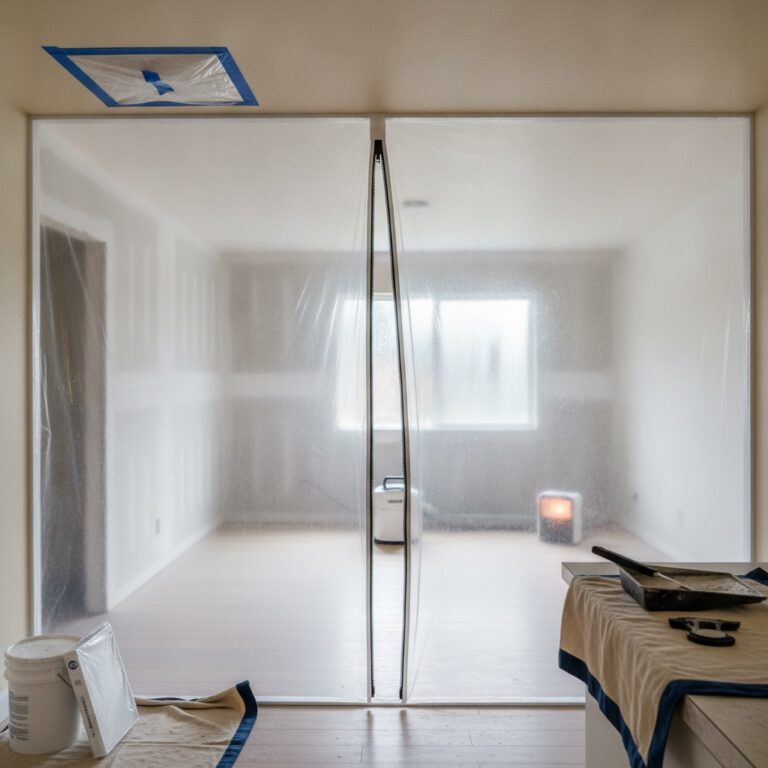
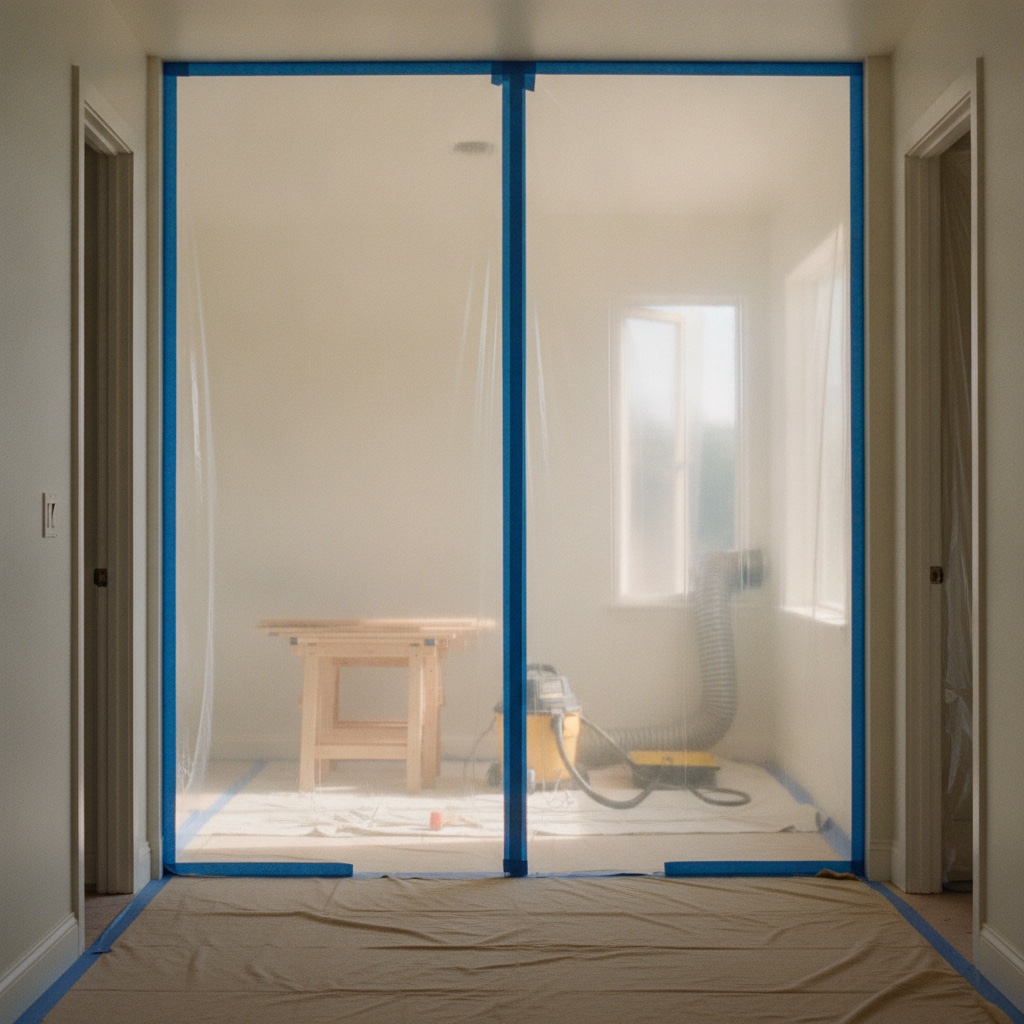
Real containment is a system, not a bedsheet taped to a doorway. The base layer is 6 mil poly sheeting sealed over every opening into the work room, including the door, any pass throughs, and every supply and return register tied to the HVAC. Sealing the returns is the single highest payoff step in an occupied SoCal home, because that is the path dust uses to reach the rest of the house. A spring loaded pole barrier, the kind most crews call a ZipWall, gives you a zippered entry so workers come and go without breaking the seal.
The next layer is air pressure. A negative air machine is a fan that pulls air through a HEPA filter and pushes it out a window, so the work room stays at lower pressure than the hallway. Air moves into the zone, never out of it. Pair that with a HEPA vacuum hooked to the sanders and you catch dust at the source and again at the boundary. The EPA recommends this layered approach for occupied remodels, and it is the difference between a wall you can sleep next to and a house you cannot breathe in.
Where the dust really comes from
Homeowners brace for demo day, but demo is chunky debris, not the fine stuff that travels. The dust that coats your whole house comes later, during finishing. Joint compound gets applied in coats, dries, then gets sanded smooth, and that sanding throws microscopic gypsum into the air. A level-4 finish, standard for most painted walls, runs three coats and one sanding pass. A level-5 finish, the smooth skim coat you want under raking window light or gloss paint, adds a full skim and another round of sanding. More finish quality means more dust days, and a Newport Beach great room chasing level-5 runs dustier than a level-4 hallway in Riverside.
There is a way to cut it down. Wet sanding with a damp sponge, or pole sanders fitted with HEPA dust collection, pull most of the airborne load before it leaves the work zone. Newer drywall sanders feed straight into a vacuum, and a careful crew will mist and vacuum as they go rather than blow everything out at the end. Ask how the finishing crew handles sanding before you sign. The answer tells you how your house will feel for the back half of the job.
A realistic two week timeline you can live in
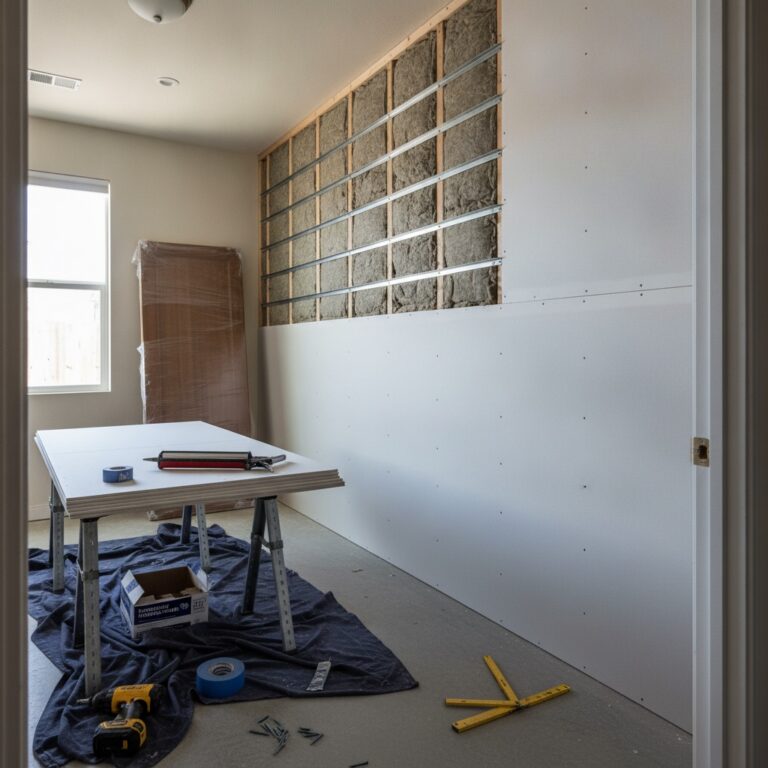
Here is how an occupied single room job sequences in a SoCal home. Day one is consult and containment: the crew hangs poly, seals registers, and sets the ZipWall and negative air machine. Days two and three are demo and hang, the loud days but not the dusty ones. Days four through eight are tape and finish, the stretch where containment earns its keep, with sanding clustered into set hours you can plan around. Days nine and ten are paint. Then the crew runs a HEPA clean, waits the 24 to 48 hours pros use to let fine dust settle, and does a final wipe before pulling the barriers.
That final settle window is not padding. Drywall dust hangs in the air long after the last sanding pass, and a clean done too early just gets recoated overnight. A crew that walks you through this sequence on day one, and tells you which days will be loud and which will be dusty, is a crew that has stayed in occupied homes before. Vague answers about timing are the warning sign. You want days on a calendar, not a shrug.
Booking it for summer in Southern California
The calendar is the real constraint right now. Contractors across Orange County, the Inland Empire, and coastal San Diego are booked deep into the season, and city permit desks run slower in summer because everyone files at once. If your project needs a permit, a kitchen layout change or anything structural, build two to four weeks of plan review into the front of your timeline. A simple single wall repair or a texture match usually needs no permit and can slot in faster.
The point of all of this is that a summer remodel and a livable house are not opposites. They just require a crew that plans containment before demo, names the dusty days out loud, and cleans on a schedule instead of an afterthought. We build the dust plan into every occupied job and walk it with you before the first sheet goes up. If you are weighing a summer project and want a straight read on timing and how to keep the rest of the house clean, a free in-home assessment is the place to start.
Morning-context sources used: EPA, Best Practices for Indoor Air Quality When Remodeling Your Home; Residential Contractor, Summer 2026 Renovation Trends; Joint Center for Housing Studies, Remodeling Growth Set to Downshift in Late 2026; Sanitmax, 2026 Drywall Dust Disaster: Why HEPA Alone Isn’t Enough; Falcon Builders Group, House Renovation San Diego: Best Time to Start.