Request Your Free Quote!

Closed-House Season: Dust Control for a Fall Drywall Remodel
Windows shut for El Nino rain? Here's how to contain drywall dust in a lived-in OC home, plus a six-week fall remodel timeline that finishes before guests.
A family in Fountain Valley calls in mid-October. They want the wall between the kitchen and the family room opened up, about 180 square feet of new drywall, a level-4 finish, and paint before their in-laws land on November 20. The schedule works. The part they have not thought about is the air. By late October the windows in most OC homes are shut for good, either against Santa Ana smoke or against the first real storm. That changes how drywall dust behaves inside a house, and it changes how a remodel should be planned.
Why Closed-House Season Changes the Dust Math
In August, a crew can crack every window, run a box fan pointed out, and let the cross breeze carry fine sanding dust out of the house. That trick disappears once the weather turns. The Weather Company’s fall outlook, published September 26, calls for a cooler, wetter transition across the Southwest by November as the subtropical jet switches on. Forecasters are now giving this El Nino a strong chance of being the most powerful on record. For a homeowner, that means four to five months of a sealed house, right when indoor remodel season peaks.
A sealed house is good for keeping rain out and bad for clearing dust. Joint compound sanding dust is mostly calcium carbonate and talc, with particles small enough to hang in the air for hours. With no fresh air moving through, those particles ride the return air into the HVAC system and come back out of every supply register in the house. One sanding day on a 12 by 15 family room can put a visible film on a bedroom dresser 40 feet away if nobody plans for it. Santa Ana smoke can also load the filter before work even starts.
The Four Things That Actually Contain Drywall Dust
Plastic sheeting alone does not do it, and neither does a shop vac at the end of the day. A wall of 6-mil poly taped to the ceiling with blue tape will sag, peel, and leak at the corners within two days in a cool, damp house. What works is a short list, done in this order, before any demo starts.
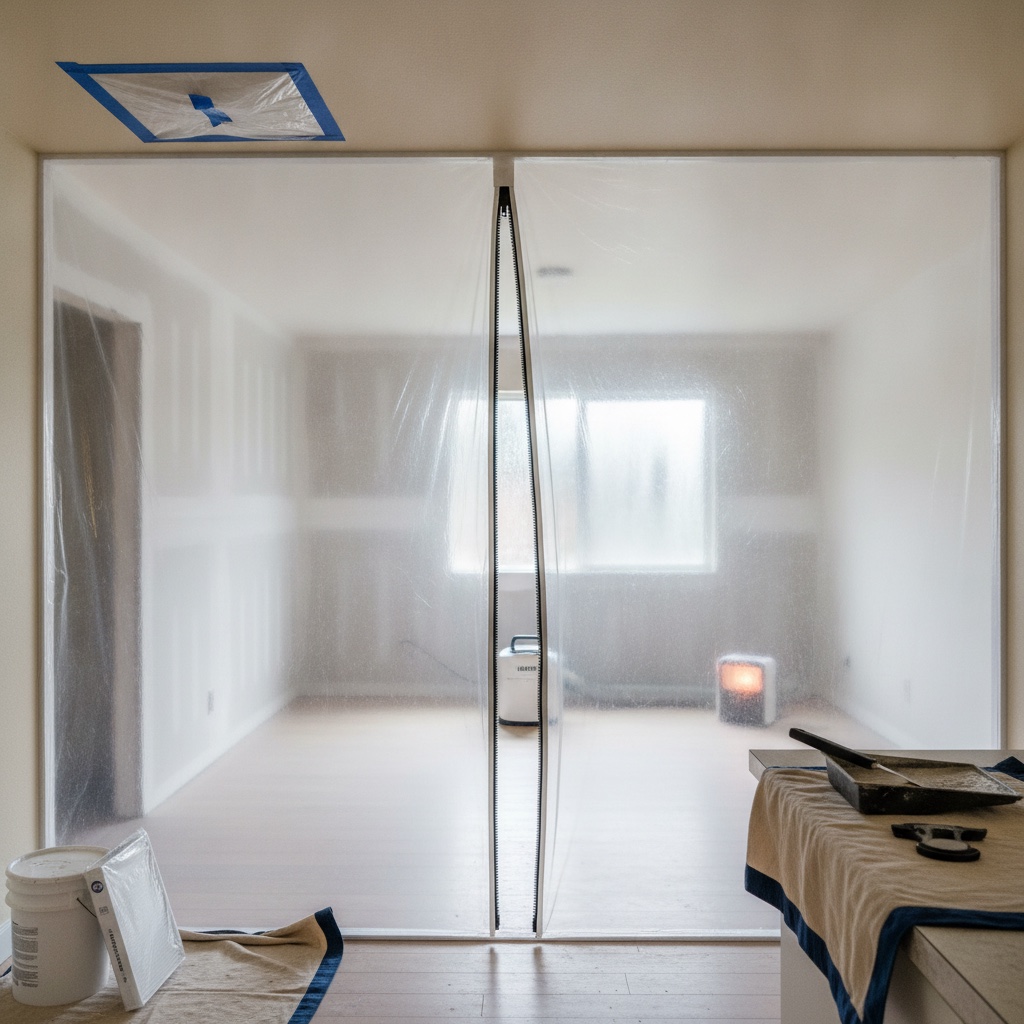
- A zipper-door dust wall. Spring-loaded poles hold 6-mil poly tight from floor to ceiling, with a self-adhesive zipper for the crew entrance. Expect $150 to $300 in materials for a typical doorway or opening.
- Negative air in the work room. A HEPA air scrubber, or at minimum a fan exhausting out one window, keeps the work zone at slightly lower pressure than the rest of the house. Air leaks in, not out. A rented scrubber runs about $60 to $120 a day in Orange County.
- Sealed returns and registers. Every supply and return in the work room gets covered with poly and tape on day one. If the only return in the hallway sits next to the work zone, the thermostat goes off during sanding days.
- A MERV-13 filter swap. Put a fresh MERV-13 filter in the furnace before work starts and another one the day after final sanding. It is a $25 to $40 line item that saves a duct cleaning later.
Dustless sanding helps too. Vacuum-attached sanders pull most of the fine dust at the source, and many finishers now use them on every level-4 and level-5 job. They do not replace containment, though. They reduce the load the containment has to handle.
A Realistic Six-Week Timeline for a Living-In Remodel
Here is how the Fountain Valley job lays out if the consult happens the first week of October. The point is to show where the dusty days fall, so the household can plan around them instead of being surprised.
- Week 1: In-home consult, measurements, finish level decided (level 4 for a flat-paint family room, level 5 if the wall faces a big west window). Containment plan agreed in writing.
- Week 2: Permit check. Removing a non-structural wall in most OC cities is a quick over-the-counter review or no permit at all. A bearing wall adds an engineer and two to four weeks, which pushes paint past Thanksgiving.
- Week 3: Containment goes up, demo, framing, rough electrical. Demo day is the dirtiest day of the job, with chunks and plaster grit, not fine dust.
- Week 4: Hang, tape, first and second coats. Mud needs 24 hours per coat in dry weather. In a cool, damp week it can take 36 to 48, so a dehumidifier in the room keeps the schedule honest.
- Week 5: Final coat, sanding, primer. This is the fine-dust week. Plan errands, school drop-offs, or a weekend away around the two sanding days.
- Week 6: Paint, containment comes down, HEPA vacuum of the house, filter swap, final walk.
That puts the walk-through around November 13, with a week of cushion before guests arrive. Start the consult after October 20 and that cushion is gone. A single rainy week that slows mud drying, or one surprise behind the wall, would then push paint into the same week the guest room needs to be ready. Early October is the safer start.
What to Fix While the Wall Is Open
The house in this example was built in 1974, which makes it about average for owner-occupied homes in the country. A September 23 Stacker piece on remodeling trends pointed out that the median owner-occupied home is now 42 years old, and that more homeowners are spending on what sits behind the walls: old wiring, failing supply lines, missing insulation, and hidden water damage. Rainy season makes that list more urgent. A slow leak that stayed quiet through a dry summer will show up as a brown ring by January.
When the wall is already open and the containment is already up, adding work costs far less than reopening later. Common add-ons on an OC family-room job include replacing an old galvanized supply line, blowing insulation into an exterior wall cavity, adding a dedicated circuit for a TV wall, and running low-voltage cable. Each of these adds a day or two, not a week. Decide on them at the consult. A separate Stacker piece from September 19 made the same case: most remodel delays come from mid-project changes, so locking decisions up front is what keeps a timeline tight.
How to Book It Before the Rain Calendar Fills
Remodel demand nationally has cooled a bit. Point’s Homeowner Remodeling Index, reported by HousingWire on September 29, showed renovation interest slipping to its weakest quarter since early 2024, with high mortgage rates and material costs keeping some owners on the fence. Western states held steady. In Orange County, though, the fall calendar fills for a different reason: every water stain, ceiling leak, and insurance patch from the first storms lands on the same crews in December and January.
That makes October the cleanest window for planned interior work. Crews have room, mud dries in reasonable time, and the house can still be aired out on a dry afternoon. If a wall is coming down this fall, the best move is to get the containment plan and the timeline on paper now. We offer a free in-home assessment that covers scope, finish level, permit needs, and a dust plan sized to how the household actually lives. Book it this month and the walls can be painted, dry, and dust-free well before the holidays.
Morning-context sources used: The Weather Channel, Super El Nino fall outlook (Sept 26, 2026); HousingWire, Point Homeowner Remodeling Index Q3 2026 (Sept 29, 2026); Stacker via ABC17, upgrading what’s behind the walls (Sept 23, 2026); Stacker via ABC17, the push for faster renovations (Sept 19, 2026).