Request Your Free Quote!


Orange Peel vs Knockdown: Matching Texture After a Repair
Patching a textured SoCal wall? How pros match orange peel and knockdown so the repair disappears, what it costs in OC, and when to skim coat instead.
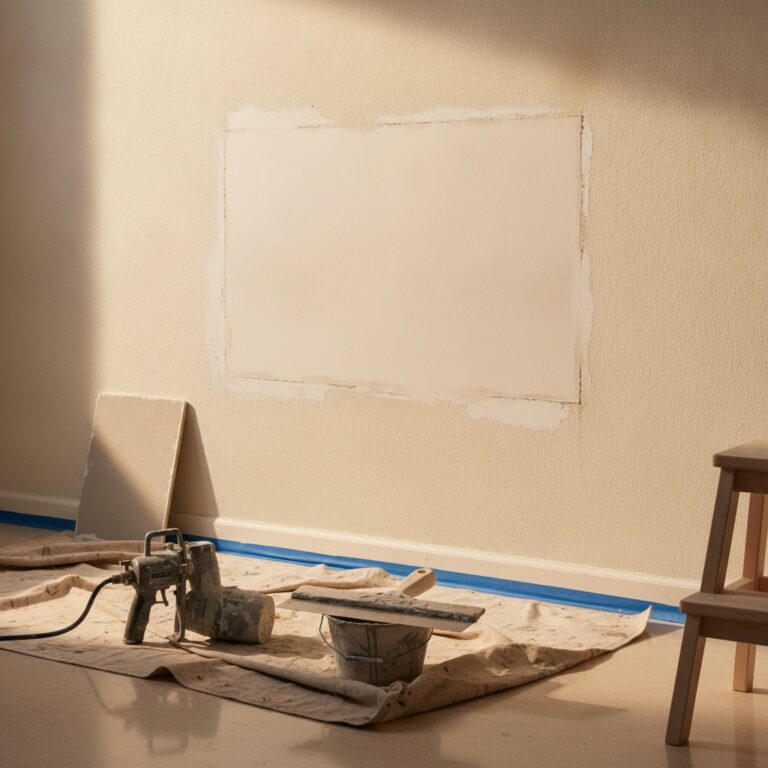
The patch looked fine until 4 p.m. Then the afternoon sun raked across a west-facing living room wall in Mission Viejo and a smooth rectangle showed up in the middle of an orange peel field. The paint matched. The texture did not. In August, when SoCal light comes in low and hot through the back windows, a bad texture match is the most visible flaw in the house.
This is the week we get those calls. A handyman patched a water stain or a doorknob hole, primed it, painted the whole wall, and the repair still announces itself every afternoon. More paint will not fix it. The fix is matching the texture, and that starts with knowing exactly which texture you have.
Orange peel or knockdown? Read the wall first
Orange peel is sprayed splatter left alone. Small rounded droplets, evenly scattered, like the skin of the fruit it is named for. Run your palm across it and it feels pebbly but consistent. Builders sprayed it through most Orange County and Inland Empire tract homes from the 1980s on because it hides minor framing movement, paints easily, and moves fast on a production schedule.
Knockdown starts the same way, then gets flattened. The crew sprays a heavier splatter, waits for it to lose its wet shine, then drags a wide knife across the peaks. The result reads like a mottled plateau, flat islands with shallow valleys between them. It throws softer shadows than orange peel and shows up constantly in 1990s and 2000s SoCal builds, especially on ceilings.
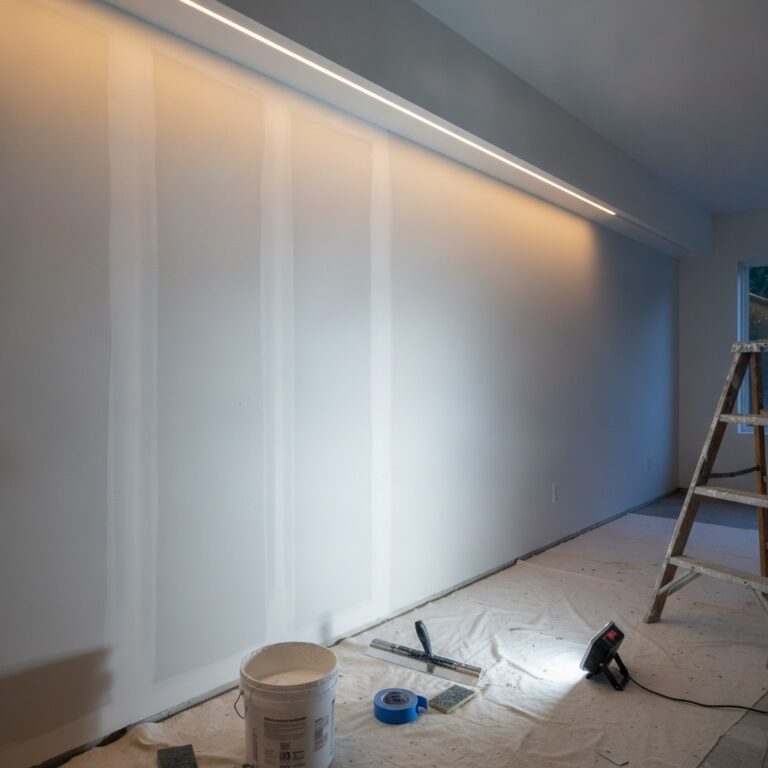
Check your wall in raking light before anyone mixes mud. Hold a flashlight flat against the surface at night and look across it, not at it. Distinct round dots mean orange peel. Flattened, irregular islands mean knockdown. Plenty of homes carry both, orange peel on walls and knockdown overhead, so check every surface the repair touches before you approve a quote.
Why matching is a skill, not a spray can
The hardware store sells texture in an aerosol can, and for a doorknob hole inside a closet it might pass. On a big open wall it usually fails, because a real match depends on three settings the can cannot give you: mud thickness, air pressure, and spray distance. Droplet size and density have to agree with a pattern somebody else set twenty or thirty years ago.
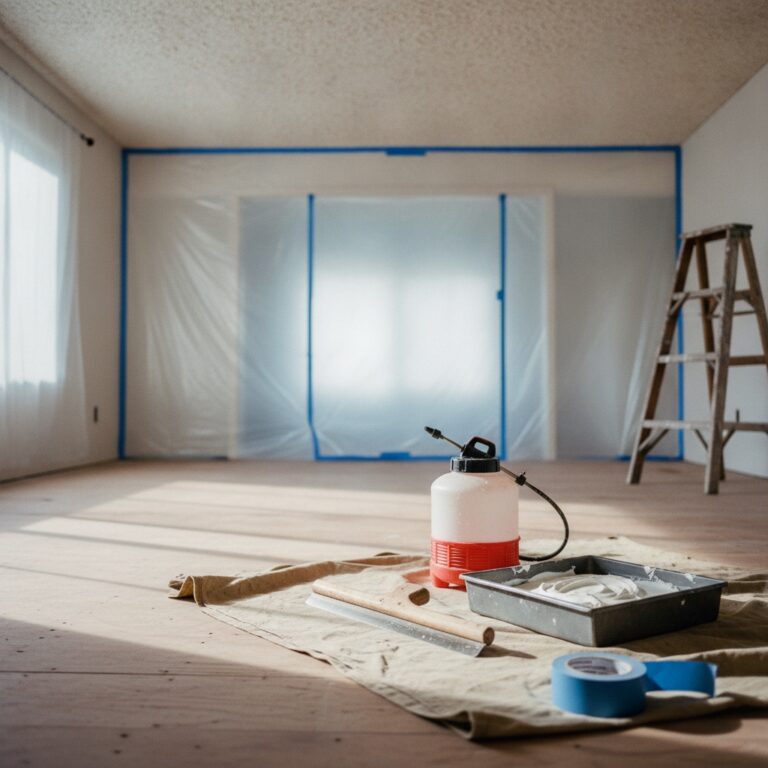
A pro dials that in on a test board first. We thin joint compound to the right consistency, load a hopper gun, and spray cardboard until the droplet size and spread match the wall next to the patch. Only then does the gun touch your wall. Industry guides updated this year make the same point: test the pattern on scrap before you commit, then feather past the patch edge so there is no hard line for the light to catch.
Knockdown adds a timing problem. Wipe too soon and it smears. Wait too long and it will not flatten. The crew watches the sprayed splatter turn from shiny to dull, then knocks it down with a flexible blade in one light pass. That window can close in under ten minutes on a hot August afternoon, because dry inland air pulls moisture out of the mud faster than most tutorials admit.
Age matters too. A wall textured in 1995 carries decades of paint over its pattern, which rounds the peaks and softens the contrast. A fresh match sprayed to factory spec can look too crisp beside it. Good matchers copy the wall as it stands today, not as it left the builder.
What a texture-matched repair costs in Orange County
National cost guides for 2026 put new texture application at roughly $0.80 to $2.00 per square foot, with knockdown running about $1.00 to $2.50 depending on surface and prep. Those numbers describe spraying a whole prepared surface. A small matched repair prices differently, because most of the cost is labor, setup, and skill rather than material.
In Orange County, a single patch with a texture match, say a 2 by 2 foot section from a plumbing access or a doorknob strike, typically lands between $250 and $450 including the paint blend. A larger repair, like a 4 by 8 foot section after a slab leak dry-out in Irvine or Lake Forest, usually runs $500 to $900. Ceiling work trends higher than wall work because everything overhead moves slower.
One honest caveat: paint sheen can betray even a perfect texture match. Flat paint hides the transition. Eggshell and satin reflect it. If your wall carries any sheen at all, budget for painting the full wall corner to corner, not just the patched area. That line item is the difference between a repair you forget and one you notice every single afternoon.
When matching is the wrong call
Sometimes the smart move is to stop matching and change the finish. If a wall already carries three or four old patches that each almost match, another almost-match will not save it. Skim coating the whole wall smooth costs more up front, but it resets the surface completely. Trend coverage for 2026 keeps pointing toward hand-applied, plaster-look finishes, while smooth ceilings still help resale in coastal OC. Either direction beats a wall of ghost rectangles.
The math favors a full retexture or skim coat when the repair covers more than about a third of the wall, when the existing texture is a heavy hand pattern nobody can copy cleanly, or when you already plan to repaint the room. At that point matching buys you nothing. You would be paying for pattern-copying skill on a surface you are about to redo anyway.
There is also the popcorn exception. If the surface that needs patching is an old acoustic ceiling, stop before anyone sands or scrapes. Homes built before the mid-1980s can carry asbestos in that material, and California requires testing before it is disturbed. That rule applies to a one-square-foot patch just as much as a full removal, so get the test first.
Every good match starts with looking at the wall in its own light. JNL brings test boards, sprays samples, and holds them against your wall at the hour the flaw shows worst, which in a west-facing SoCal room means late afternoon. If you have a patch that appears every day at 4 p.m., or a repair coming up that you want invisible from day one, schedule a free in-home assessment and we will read your texture before anyone opens a bucket of mud.
Morning-context sources used: https://www.angi.com/articles/orange-peel-vs-knockdown-paint-textures.htm; https://www.angi.com/articles/cost-to-texture-drywall.htm; https://homeguide.com/costs/cost-to-texture-drywall; https://www.housedigest.com/2026697/once-popular-wall-treatment-trend-smooth-drywall-outdated/; https://www.trim-tex.com/blog/drywall-design-trends-for-2026