Request Your Free Quote!

Skim Coating a Textured Wall: When It Is Worth It in OC
Skim coating a textured wall runs $1.40 to $1.90 per sq ft in Orange County. Here is when it beats replacement, what it costs, and how it reads in real light.
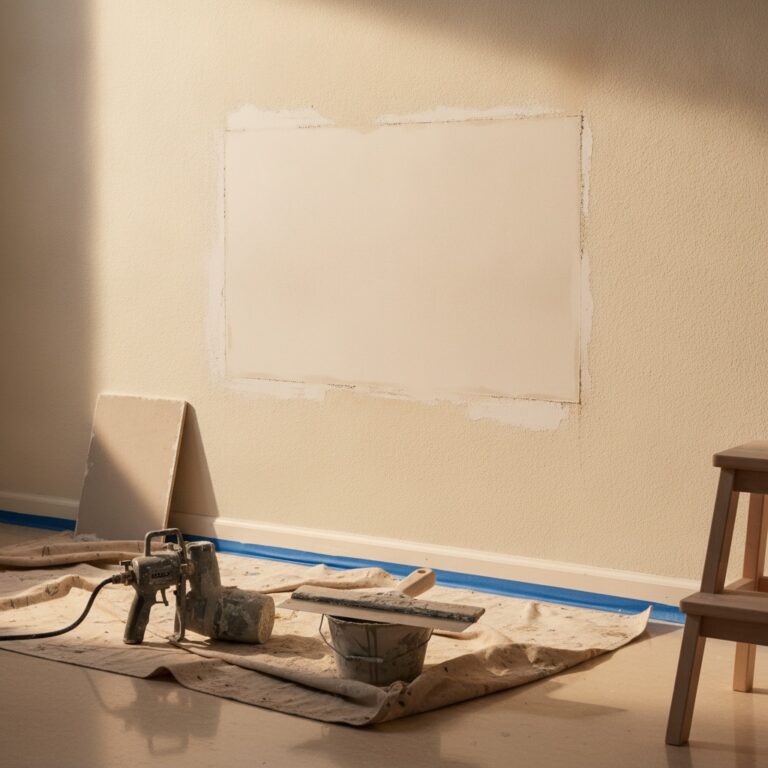
A homeowner in Tustin called about a living room wall buried under heavy splatter texture from 1988. She wanted it flat. The first quote said tear out the old rock and hang new sheets, roughly $2,400 for 320 square feet of wall. The second quote said skim coat it for about $420. Both were honest numbers. Only one of them fit that wall, and the deciding factor sat behind the texture rather than on top of it.
Skim coating gets talked about like a shortcut, the cheap way out of a texture you hate. It is not that. It is a specific finishing method with a narrow set of conditions where it wins outright, and a handful of situations where it quietly wastes your money and leaves you repainting a year later. Homeowners rarely get told which one they are looking at. Here is the plain-English version, with SoCal numbers attached.
What a Skim Coat Actually Is
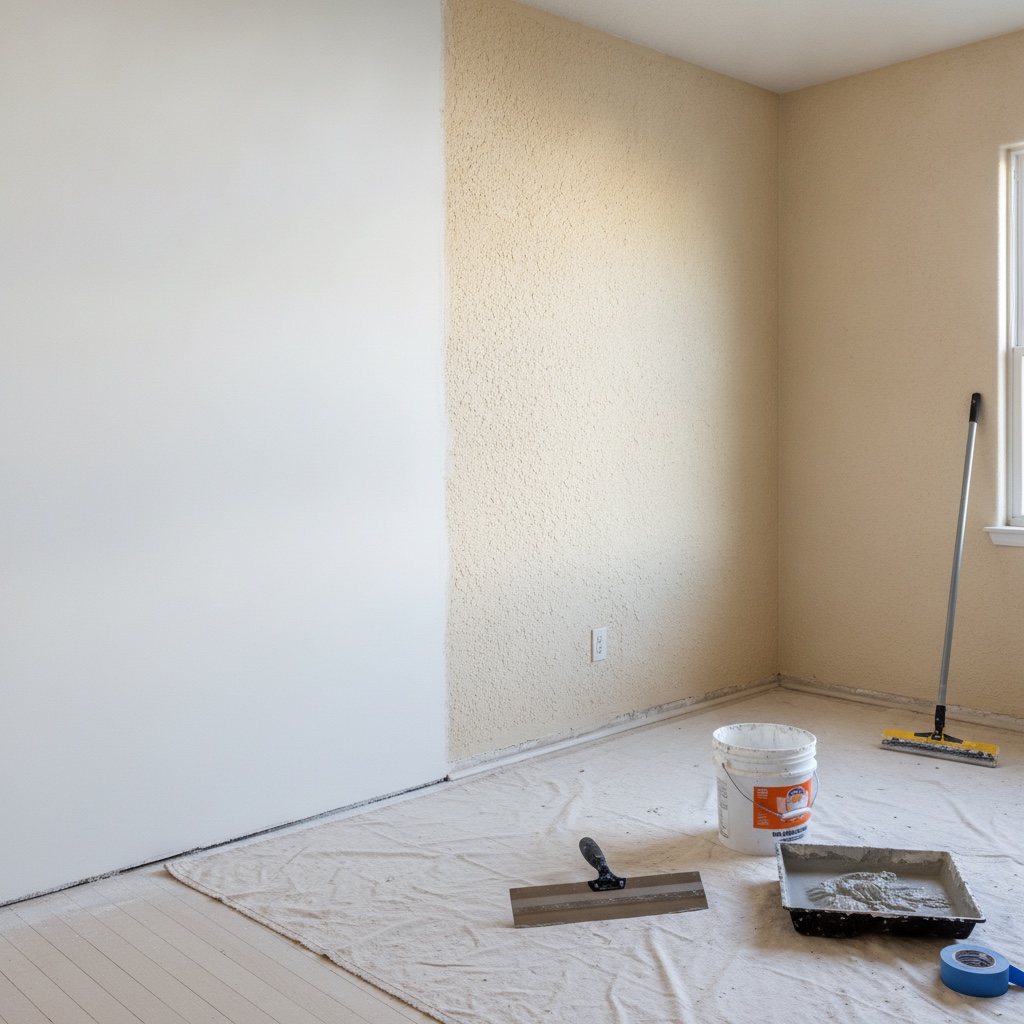
A skim coat is a thin layer of joint compound spread across an entire wall or ceiling surface, not just over a patch. The mud fills the low spots in the existing texture until the surface reads flat. Then it gets sanded, primed, and painted. Most walls need two coats. Heavy popcorn or thick splatter can need three.
Contractors also use the term when they mean a level-5 finish on new drywall. That is the same technique applied for a different reason. On new board, the skim evens out the sheen difference between paper face and taped joints. On an old textured wall, the skim erases pattern. Same trowel, same mud, two separate problems.
The compound goes on in passes of maybe an eighth of an inch. That thinness matters. A skim coat rides on whatever it covers. It cannot straighten a bowed stud, hide a soft water-damaged section, or fix a seam that has already cracked twice. It only changes the surface.
When Skim Coating Beats Tearing Out the Wall
Skim coating is the right call when the drywall underneath is sound and the only complaint is texture. Press your palm flat against the wall and push. If it feels solid with no give, no crunch, and no soft spot, the board is fine. Run a light along it at a low angle. If you see pattern and nothing else, you are looking at a skim coat job.
It is the wrong call in four situations. Water staining that has not been traced to a source. Drywall that flexes or sounds hollow when tapped, which usually means failed screws or crumbled gypsum. Seams that have cracked, been patched, and cracked again along the same line, which points at framing movement. And any popcorn ceiling in a SoCal home built before 1981 that has not been tested for asbestos. That last one is not a cost question. It is a lab test first, always.
There is a middle case worth naming. Homes in Huntington Beach and Seal Beach that sat through a few wet winters often have one wall that is fine and one that is not. Skimming the good walls and replacing the bad section is normal, and a decent finisher can blend the two so the transition disappears. Do not let anyone talk you into replacing 900 square feet because 40 of it went soft.
What It Costs in Orange County Right Now
National skim coat pricing sits around $1.00 to $1.30 per square foot for walls, and $1.00 to $1.50 for ceilings, with labor making up roughly 70 percent of that. Coastal metros run 30 to 50 percent above the national line, so Orange County, Long Beach, and coastal San Diego land closer to $1.40 to $1.90 per square foot on wall surfaces once you account for local labor rates near $75 to $100 per hour.
Put real numbers on it. A 12 by 12 bedroom with 8-foot walls gives you about 384 square feet of wall. Skim coat both coats, sand, and prime, and you are in the $540 to $730 range in most of OC. Add the ceiling and it climbs another $200 to $260. Compare that to full replacement, where drywall installation in Los Angeles and Orange County runs $3.10 to $5.40 per square foot installed and finished. The same bedroom crosses $1,200 easily before paint.
Two things move the number. Heavier existing texture multiplies the rate, since deeper valleys need more mud and often a third pass. And going past two coats adds 50 to 100 percent to the total, which is why an honest walkthrough matters more than a phone estimate. Nobody can price a skim coat off a photo.
How a Skimmed Wall Reads in Real Light
This is the part most quotes skip entirely. A flat wall is unforgiving. Texture exists partly because builders wanted to hide framing waves, minor seam telegraphing, small dents, and the spot where a doorbell chime used to hang. Take the pattern away and the wall shows you everything it has been hiding since it was built. That is the honest tradeoff of going smooth, and it is worth understanding before the first bucket of mud opens.
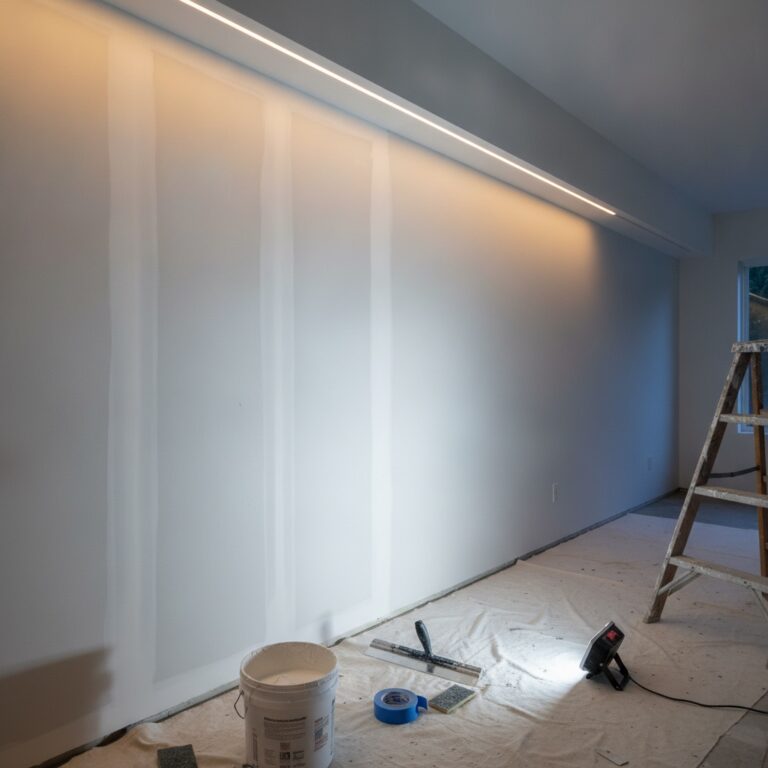
At 8 a.m. with north light, a properly skimmed wall looks clean and expensive. Paint reflects evenly, color reads true, and edges look sharp. At 4 p.m. in a west-facing Anaheim Hills living room, the same wall gets raking side-light, and any ridge left by a trowel edge throws a visible shadow line. That is the test that separates a $420 job from a $700 one. The extra money buys a third pass and a sanding session under a work light held at a low angle, on purpose, looking for exactly those ridges.
Ask for that light test before final paint goes on, while fixing a ridge still costs an hour instead of a repaint. A finisher who is confident in the work will hold the light and walk the wall with you without being asked twice. If a crew brushes the request off or tells you it will look fine once it is painted, the wall probably has ridges they already know about. Paint does not fill anything.
The Timeline, and What August Heat Does to It
A single room usually runs three working days. Day one is prep, masking, and the first coat. Day two is the second coat after the first has fully dried. Day three is sanding, dust cleanup, and primer. Paint follows on day four if you want the surface fully cured underneath.
August works in your favor here. Inland Empire and north OC afternoons in the mid-90s dry joint compound fast, sometimes cutting a full half day off the schedule compared to a February job. The tradeoff is working time. Mud that sets too quickly gets dragged and leaves chatter marks, so good crews mix smaller batches, work in smaller sections, and keep the AC running rather than opening every window. If a crew shows up in an August heat wave and tries to skim an entire great room in one pass, that is a warning sign, not efficiency.
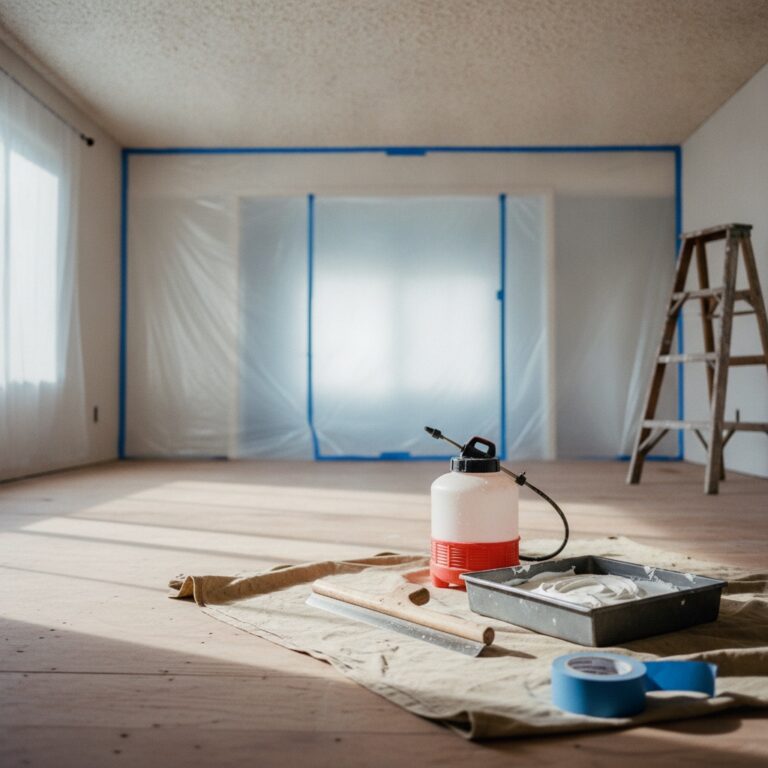
One more note on dust, because it drives most of the complaints homeowners have after the fact. Skim coating produces far less debris than scraping texture off a ceiling, but sanding still fills a room with fine gypsum powder that finds every vent and every closet. Plastic sheeting on the doorways, covered floor registers, and a negative-air fan in a window are standard practice on a clean job, not an upsell line item.
If you are staring at a textured wall and cannot tell whether it needs a skim or a rebuild, that is exactly what a walkthrough answers in about twenty minutes. JNL Drywall does free in-home assessments across Orange County, the Inland Empire, Long Beach, and north San Diego, and we bring finish samples so you can hold a skimmed panel next to your existing wall in your own light before you commit to anything. Call and we will get you on the schedule.
Morning-context sources used: https://homeguide.com/costs/cost-to-skim-coat-walls, https://www.angi.com/articles/cost-to-skim-coat-drywall.htm, https://www.angi.com/articles/what-cost-install-drywall/ca/los-angeles, https://www.homeyou.com/ca/drywall-los-angeles-costs, https://www.stonedevelopmentinc.com/resources/cost-guide, https://www.paint-techs.com/blog/removing-textured-walls