Request Your Free Quote!

Drywall Remodel with Kids Home: A SoCal Summer Staging Plan
How to stage a drywall remodel across OC, IE, and San Diego while kids are home for summer. Clean-room sequencing, dust control, a real six-week schedule.
Schools in most of Orange County let out the week of June 15. By the time you read this, two of your kids are already counting down. If a drywall remodel is on your summer list, the staging plan you build over the next ten days will decide whether the project feels like a controlled inconvenience or a six-week argument.
We see two kinds of summer drywall jobs at Just Like New. One is a full open-concept conversion in a Mission Viejo or Eastvale tract home. The other is a stack of medium repairs: a popped-ceiling fix in Carlsbad, a hallway crack run in Anaheim, a new wall in a Long Beach garage-to-office. Both kinds of jobs are workable with kids in the house. Neither one works without a staging plan.
This post walks through how we set those projects up so the family can actually live there while the dust flies.
Plan Backward From the First Day of Summer Camp
The first move is not a contractor call. It is a calendar pull. Get every camp drop-off, sleepover week, vacation flight, and grandparent visit on one shared family calendar before you book any drywall crew. The trade schedule has to read against the kid schedule, not the other way around.
Most SoCal day camps run weekly sessions from about June 22 through August 14. The high-impact drywall work, demo and hanging and the loudest sanding, fits cleanly into those weekday windows when the kids are out of the house from 8 to 3. Tape and finish can stretch into evenings because the noise drops. Paint goes last and is the quietest of all.
If your family has a real one or two week summer trip planned, hand that window to the crew as the heaviest workday block. A 1500 sq ft single-story in Garden Grove with two bedrooms torn open can be hung, taped, and second-coated in those ten working days. You come home to fresh smooth walls and a clean job site instead of a stack of dust trays.
Stage One Room, Not the Whole House
A summer remodel with kids in the house works when you treat the project as a series of zones, not one giant construction site. Pick one room to be the family’s clean room. Keep that room sealed off, dust-free, and stocked with a small fridge, a tablet, and the snacks. The rest of the house can be active.
In a typical Huntington Beach four-bedroom, the family room becomes the clean room while the kitchen and the two front bedrooms get worked. In an Irvine townhome, the upstairs primary suite becomes the clean room while the downstairs gets a flooring tear and new drywall behind the new range. The point is the same. Kids need one undisturbed square footage to land in after camp.
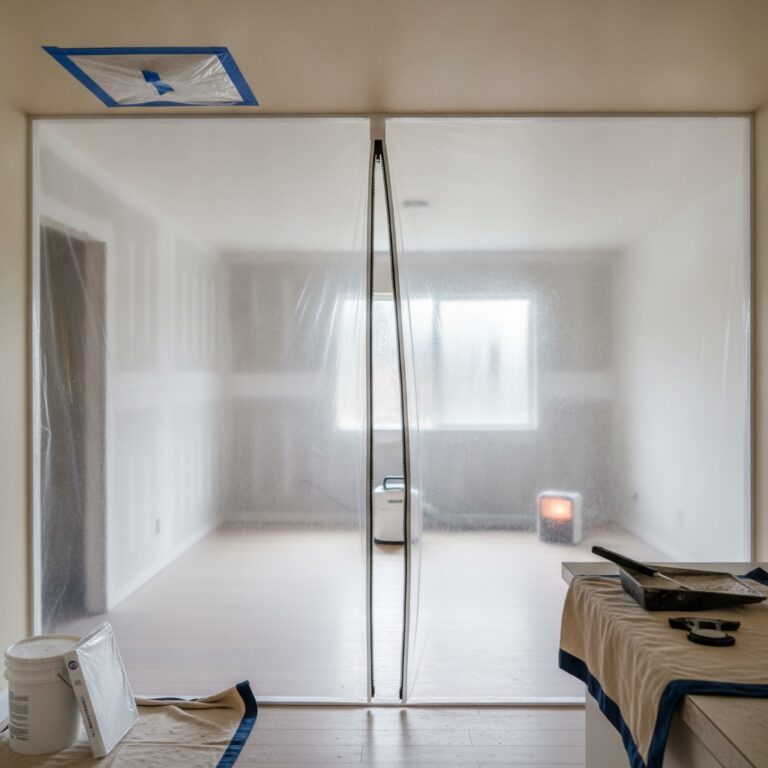
Tell your crew about that room on day one. We tape it off, seal the door gap with a foam strip, and keep our boots out of it from sunrise to walk-down. A clean room that gets contaminated on day three becomes a battleground the rest of the project.
Dust Containment That Actually Holds in a Lived-In House
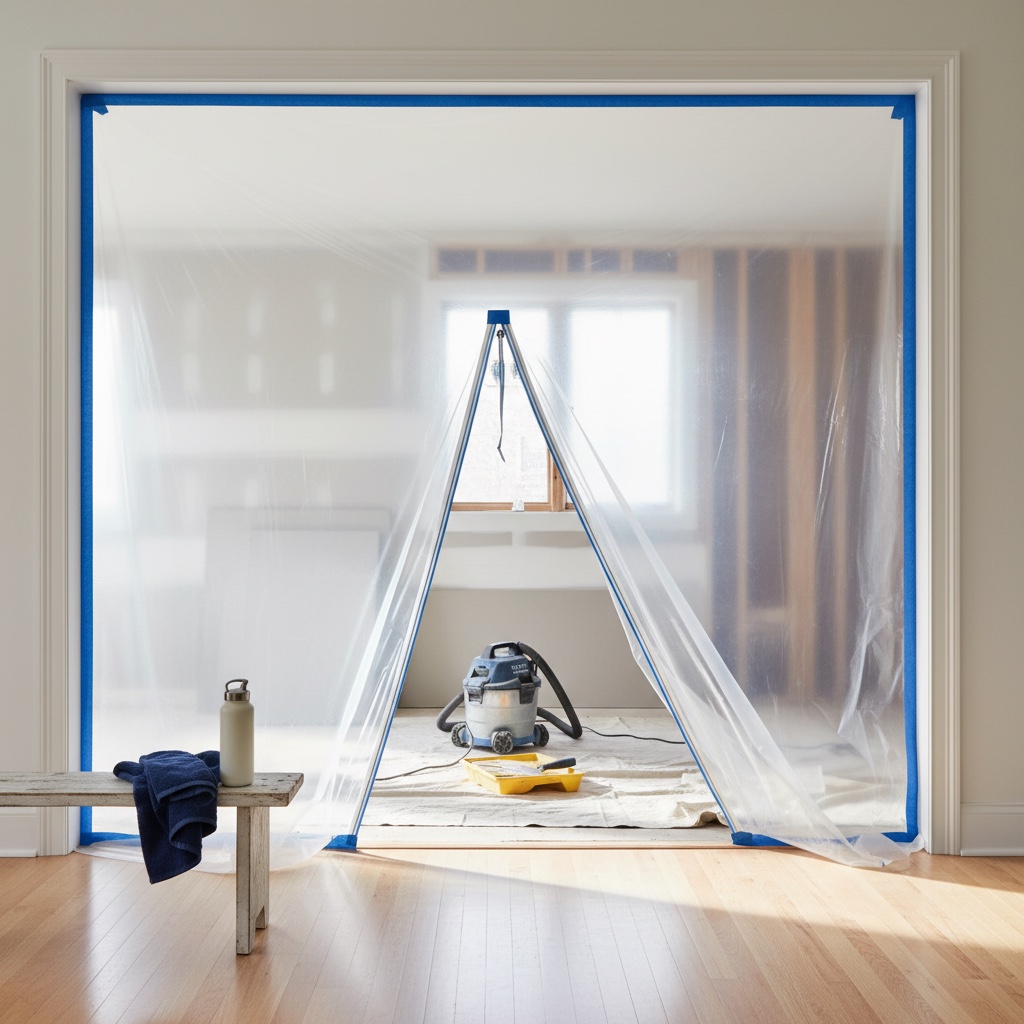
Real dust control on a lived-in drywall job is six things working at once. Hung 6 mil poly sheeting in every doorway between the work zone and the clean zone, with a zipper door at the main pass-through. Painter’s tape sealing the edges of the poly to baseboard and casing, not stretched across the middle of the floor where it gets walked off. HVAC return vents covered with HVAC film. Air movers blowing out an open window, not stirring the work zone. A HEPA shop vac at the cut station, not a regular one that just relaunches the dust. Wet sanding wherever it works, which is most interior patches.
We learned the hard way that a single missed return vent is the difference between a clean house at 6 pm and a film of fine dust on the kitchen counters by 9. Houzz’s guide to dust control during remodeling lays out the same priorities and is worth a read before the crew arrives. The Silver Lining repair team also publishes a short homeowner checklist that mirrors what we do on site.
If your crew shrugs when you ask about HVAC film and zipper doors, that is a tell. Ask another crew.
A Real Six-Week Schedule for a Two-Room Drywall Project
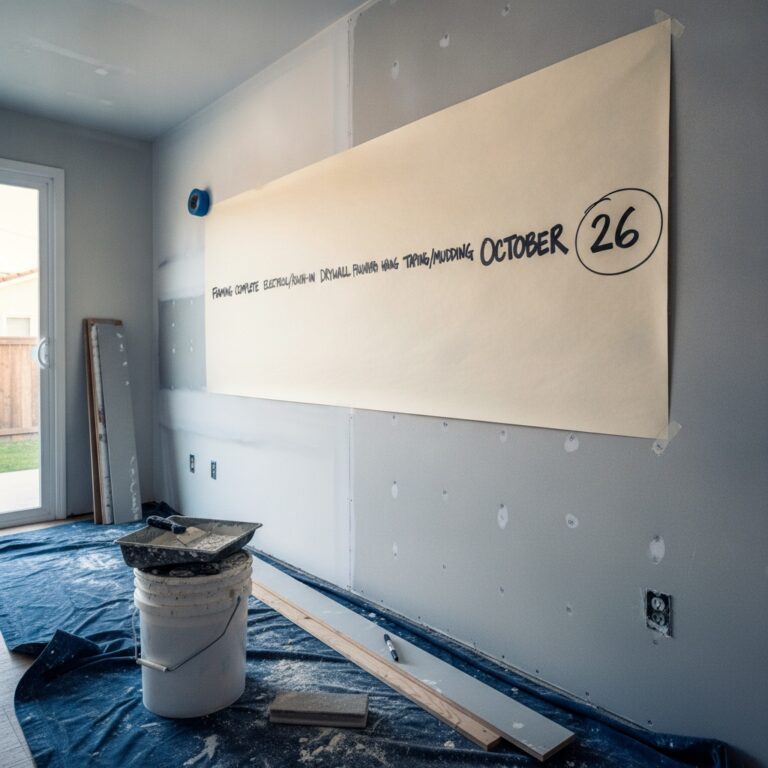
Here is the timeline we run for a two-room drywall scope in a kids-at-home summer. Square footage about 600 wall sq ft total, level-4 finish, smooth ceilings, paint included.
Week 1: walkthrough and final scope sign-off Monday. Materials staged in the garage Wednesday. Family clean room set up Friday. Kids confirm camp drop-off times for the next four weeks.
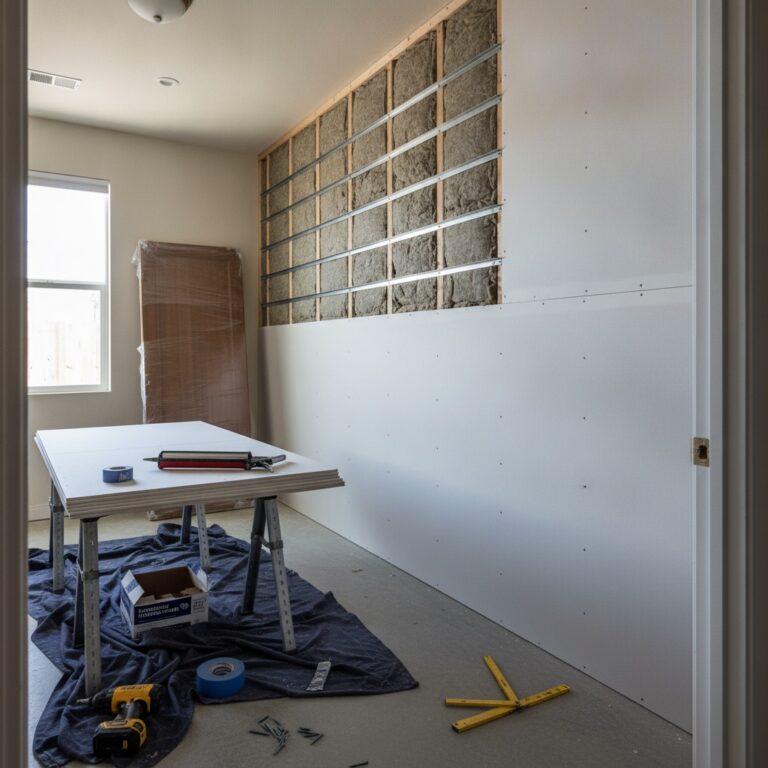
Week 2: Monday and Tuesday demo. Wednesday and Thursday frame patch and electrical rough adjustments. Friday hang sheets. Crew on site 7:30 to 3:30, out before the camp van comes back.
Week 3: Tape and bed Monday. First coat Wednesday. Sand and second coat Friday. Quiet days, lighter dust, easy to slide kids past the work zone with headphones on.
Week 4: Skim and final sand Monday. Prime Wednesday. Final paint Friday. The clean room stays sealed until walk-down.
Week 5: Punch list Monday. Touch-ups Wednesday. Crew walk-down Friday with you, room by room. Pay against a punch list, not a calendar.
Week 6: Buffer. Always build a buffer week into a summer schedule. A delayed material delivery, a 95 degree heat day that pushes tape time, or a kid who came home sick from camp can all eat two days. Six weeks lets the schedule absorb that without bleeding into August.
When to Push to Fall Instead
Not every drywall project belongs in a summer with kids home. If you have a baby under one, push to fall. If a parent works a high-stakes deadline from a home office and there is no other room to relocate them to, push to fall. If the project is the kitchen and you have no second cooking setup, push to fall. If you are pulling permits in a city with a long review queue and have not started yet, push to fall.
A September start on a six-week scope finishes mid-October. Kids are back in school. Dust has somewhere to go. Crews are still in good rhythm before the first atmospheric river. That window is sometimes a smarter pick than forcing a July build that runs into back-to-school week.
If you want to talk through whether your project belongs in this summer or the next quiet window, we offer a free in-home assessment. We will read the room, look at the family clean room candidates, and tell you the honest tradeoff. Either we set you up to start in three weeks, or we put you on the fall calendar. Both answers are fine.
Morning-context sources used: RenoFi: planning your summer remodel, Model Remodel: remodeling with children in the home, Houzz: controlling dust during remodeling, SB Remodeling: LA permits and timelines 2026, The Silver Lining: keeping drywall dust to a minimum.