Request Your Free Quote!

Why Drywall Nail Pops Keep Coming Back After You Spackle
A SoCal heat wave is popping drywall nails along hallways this week. Here is why spackle alone fails and what a lasting fastener fix costs in OC.
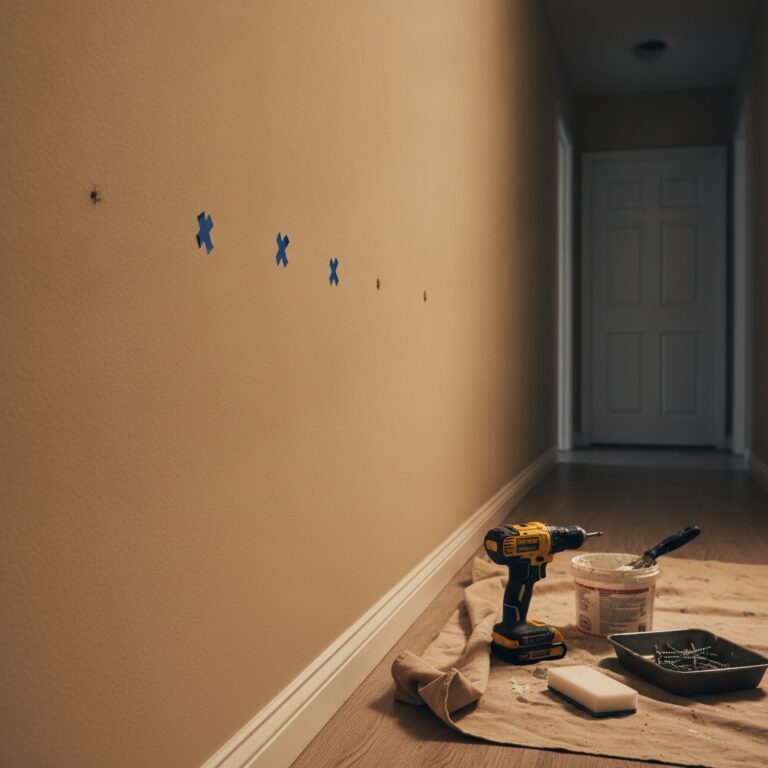
A hallway in a Fullerton tract home is usually the first place a nail pop shows up. The wall runs long and narrow, the afternoon sun rakes across it, and three little bumps line up at shoulder height like they planned it. This week makes them worse. An Extreme Heat Watch covers Orange County from Tuesday through Thursday, with inland highs pushing into the high 90s and low 100s. Heat like that moves the wood behind your drywall, and moving wood is what pushes a fastener back out.
Most homeowners grab a tub of spackle, smear it over the bump, and call it done. Two months later the bump is back in the same spot. That repeat is not bad luck. It is a sign the first fix treated the symptom and left the cause sitting in the wall. Here is what is really happening behind that hallway, and what a lasting repair costs in Orange County.
What a nail pop actually is
A nail pop is a fastener backing out of the stud, lifting a small cap of joint compound with it. The drywall did not move. The wood did. Framing lumber expands and contracts as humidity and temperature swing, and Southern California gives it plenty of both. A dry winter, a damp marine-layer spring, then a June heat wave in the 90s. Each cycle shifts the stud a hair, and a nail without enough bite slides out a hair with it.
Builder-grade homes from the 1970s through the 1990s used nails on a lot of that framing. Nails hold by friction alone. When the lumber dried out after construction, often with high moisture content the day it went up, that friction loosened. Add twenty or thirty SoCal summers, and a long hallway in Anaheim or Tustin starts showing a row of pops along the same stud line. The pattern is not random. It traces the framing.
Why hallways show it first
Hallways take the worst of it for three plain reasons. They are narrow, so the two walls sit close and you read every bump from a few feet away. They often run down the center of the house, away from windows, where the drywall was hung fast and fastened light during the original build. And they carry a lot of traffic, with doors slamming and shoulders brushing the same stud lines for decades.
Put that together and a center hallway in Orange or Garden Grove becomes the canary for the whole house. When pops start there first, they are telling you the framing is cycling and the fasteners are tired. The bumps are easy to see in a hallway because the light skims the wall at a low angle morning and evening. That same low light is your friend during the repair, since it shows whether a patch is truly flat.
Why spackle alone keeps failing
Spackle fills the dimple. It does nothing about the fastener that made it. The original nail is still in the stud, still loose, still riding the seasonal movement of the wood. The next heat cycle pushes it right back through your fresh patch. You sanded, you primed, you painted, and the wall undid all of it by August.
There is a second problem. Lightweight spackle has almost no structural strength. It is made to fill, not to fasten. Skim a wide film of it over a moving nail and it cracks at the edges as the panel flexes. That is why the patch often looks worse the second time, with a faint ring around the bump where the compound let go. A real fix has to grab the panel and pull it tight to the framing again. Spackle cannot do that on its own.
The fix that actually holds
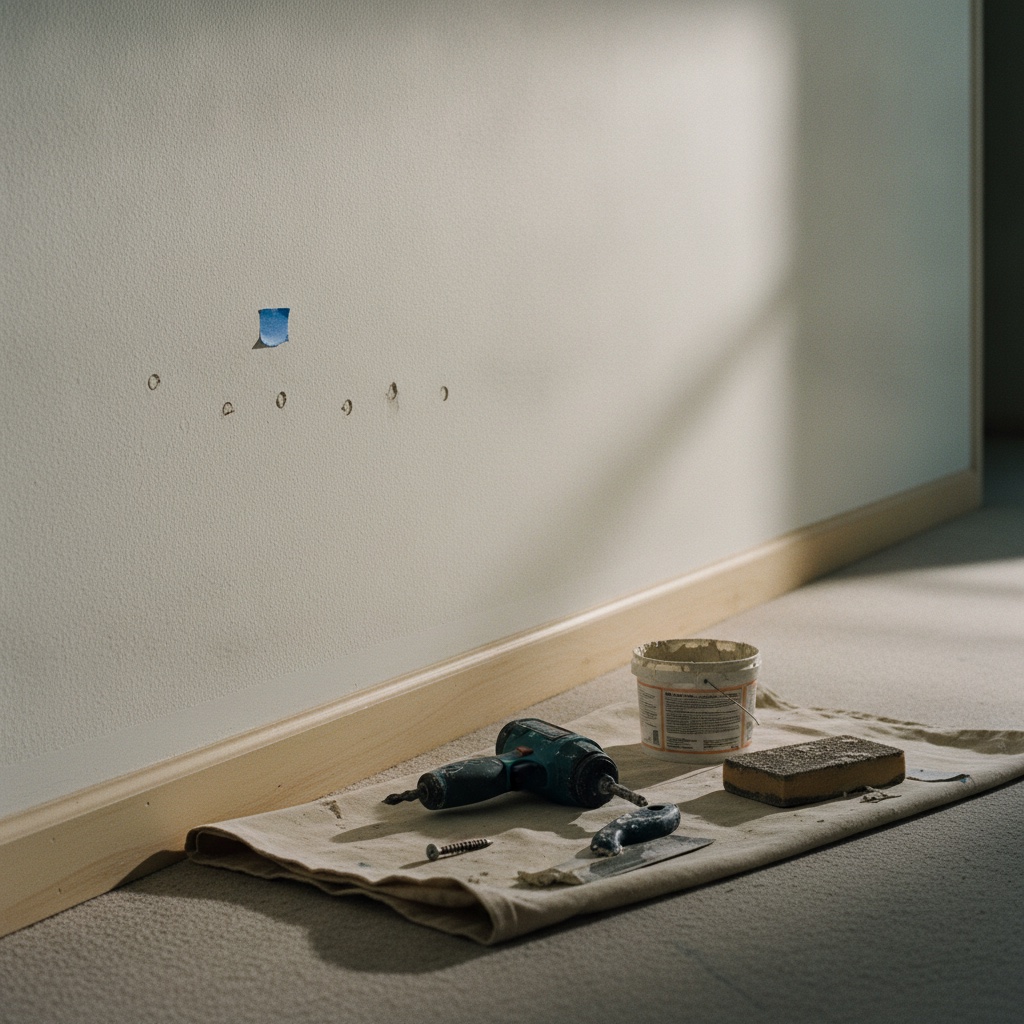
The honest repair refastens the panel and retires the bad nail. A drywall screw, not a nail, goes in about an inch above the pop, and a second goes about an inch below it. Coarse-thread screws bite the wood and pull the drywall snug against the stud. Those two screws carry the load and bypass the weak spot the old nail left behind. That is the step a spackle-only patch skips, and the reason it comes back.
Next the old nail gets set just below the surface, not yanked out, which would tear the paper face. Then three thin coats of setting-type joint compound go over all three points, each one feathered wider than the last. Sand between coats. Prime the bare compound so it does not flash through the topcoat. A level-4 finish covers a hallway like this. A level-5 skim is only worth it on a wall that catches hard side light, like a west-facing entry in Mission Viejo where every flaw shows at 5 p.m. Done that way, the pop does not return, because the thing that caused it is no longer holding the panel.
When a row of pops means something bigger
One or two pops along a hallway is normal aging. A whole wall of them, or pops that march in a straight diagonal, can point past simple fastener fatigue toward framing or foundation movement. The tell is the company they keep. Watch for cracks that run from the corners of doorways, gaps that open at the ceiling line, or doors in the same hall that have started to stick. Slab-on-grade homes across the Inland Empire move with the soil, and that movement reads in the drywall first.
Cost-wise, a single nail pop runs about $75 to $140 in Orange County, and one pop rarely justifies a trip charge on its own. Bundling a hallway of six or eight pops into one visit is the smart play, usually landing in the $300 to $500 range with finish and touch-up paint included. Most crews bill $60 to $90 an hour for this kind of work. If the pops turn out to be riding a structural problem, the math changes, and the right move is a look before the patch, not after.
If your hallway in Fullerton, Anaheim, or anywhere across Orange County is showing a row of pops after this week’s heat, the bumps are telling you something the spackle cannot fix. We read the pattern first, check for the cracks and sticking doors that change the diagnosis, then repair the wall so it stays flat through the next heat wave. A free in-home assessment costs you nothing and tells you whether you are looking at a quick afternoon patch or something worth a closer look. Reach out and we will come read the wall.
Morning-context sources used: ABC7 Los Angeles, SoCal Extreme Heat Watch (June 2026); LAist, SoCal heat wave what to know (June 2026); Angi, Drywall Repair Cost (2026 Data); Bob Vila, Popped Nails repair guide; Angi, 10 Types of Drywall Cracks and When to Worry; The Real Seal, Drywall Nail Pops homeowner guide.