Request Your Free Quote!


Nail Pops After the October Heat Wave: Fix Them Before El Nino
A week of 100-degree heat, then El Nino rain. Why SoCal drywall nail pops show up this fall, what they mean, and the screw fix that holds, with OC costs.
A homeowner in Tustin walks down the hallway on a Sunday afternoon in October and notices a neat row of small round bumps along the wall, spaced about 16 inches apart. A couple have cracked the paint into tiny rings. One has a hairline dimple beside it. None of them were there in August. Then the thermostat reads 97 inside the garage and the question writes itself: is the house moving, or is this just drywall being drywall?
Most of the time, it is a nail pop. And this fall is close to a perfect setup for them. Extreme Heat Warnings covered the coast and valleys from Ventura through Orange County, the Inland Empire, and San Diego County from October 2 to October 8, with valley highs up to 105 and warm nights that never let attics cool off. Behind that heat sits NOAA’s outlook for a very strong El Nino and a wetter-than-normal November and December. Hot and bone-dry, then soaked. Framing lumber hates that swing, and your walls show it first.
What a Nail Pop Actually Is
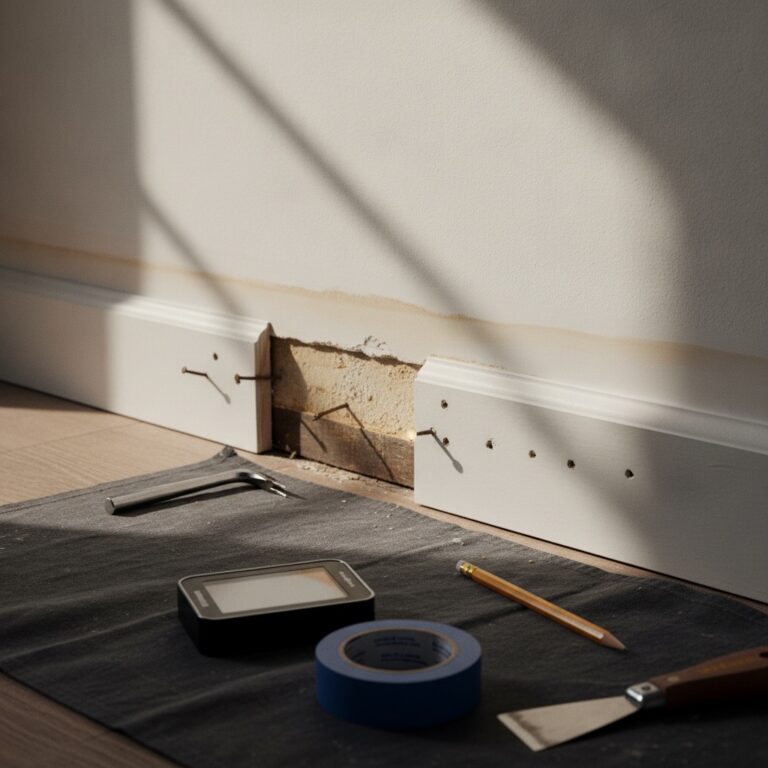
Drywall hangs on wood studs and ceiling joists with nails or screws. When the panels went up, the installer drove each fastener just below the paper face and buried the head under two or three coats of joint compound. A nail pop happens when the fastener backs out of the wood, or the wood pulls away from the fastener, and pushes that buried head toward the surface. You see a bump, a crescent crack, or a perfect circle of lifted paint about the size of a dime.
Pops show up most in homes built from the 1960s through the early 1990s, when ring-shank nails were standard and screws were not. Tracts in Garden Grove, Fountain Valley, Mission Viejo, and Rancho Cucamonga are full of them. Newer homes with screwed panels pop too, just less often. A pop is a fastener problem and a framing-movement problem. It is almost never a structural problem on its own, and that difference matters before you start pricing foundation work you do not need.
Why an October Heat Wave Plus El Nino Rain Sets Them Off
Wood framing gains and loses moisture with the air around it. A 2×4 in a coastal Huntington Beach wall might sit near 12 percent moisture content most of the year. A week of 100-degree days, Santa Ana winds gusting 40 to 50 mph through the foothills, and nights stuck in the 70s pull that number down. The stud shrinks slightly across its width. A nail that was snug in July now has a sliver of play, and the drywall’s own weight starts working it loose.
Then the rain arrives. Forecasters expect the wet signal to show up in Southern California first, with November and December favored for above-normal rain near the coast. Humidity climbs, the same lumber swells back, and the panel flexes against a fastener that already lost its grip. Each cycle pushes the head a little further out. That is why homeowners often say the pops appeared “all at once” in late fall. They were loosening for weeks. The first damp week just made them visible.
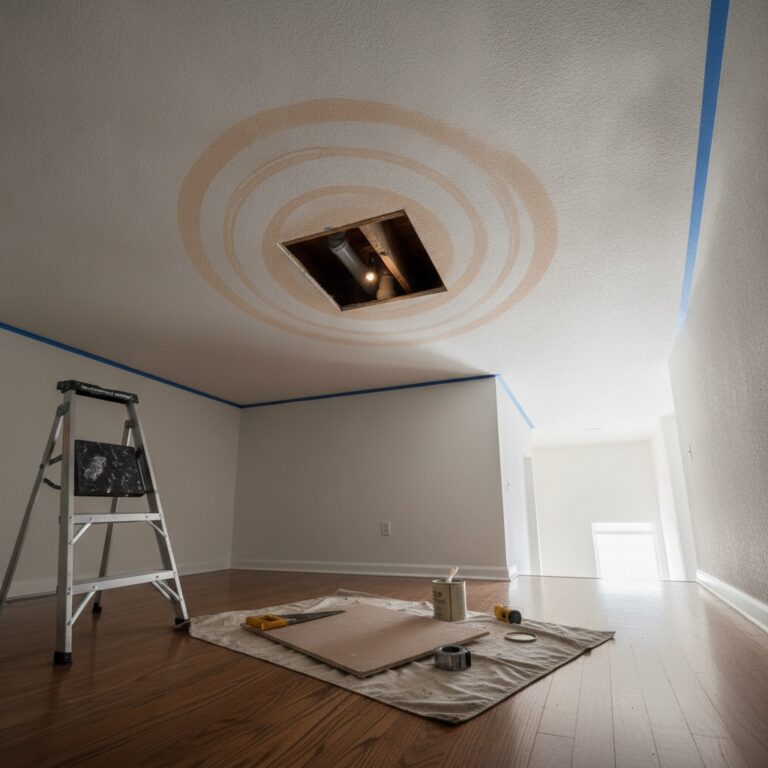
Ceilings get it worst. Attic air over Corona or Escondido can top 140 degrees during a heat wave, while the room below sits at 74 with the AC running. Roof trusses can bow upward a fraction of an inch under that difference, a pattern called truss uplift, which pulls ceiling drywall away from the top of interior walls. You see pops along the ceiling plus a clean crack right at the wall-ceiling corner.
Pop, Crack, or Something Bigger
Before anyone touches a wall, sort what you are seeing. Use a flashlight held flat against the surface in a dim room. Raking light shows every bump and seam. Then walk through this short checklist:
- Round bumps in straight lines, 16 or 24 inches apart. Classic nail pops. Cosmetic, fixable in a day.
- Pops plus a crack where the ceiling meets an interior wall. Likely truss uplift. Still cosmetic, but it needs a flexible fix or it reopens every summer.
- Diagonal cracks off the corners of doors and windows. Settling or framing movement. Usually minor, worth a look if the crack is wider than a credit card.
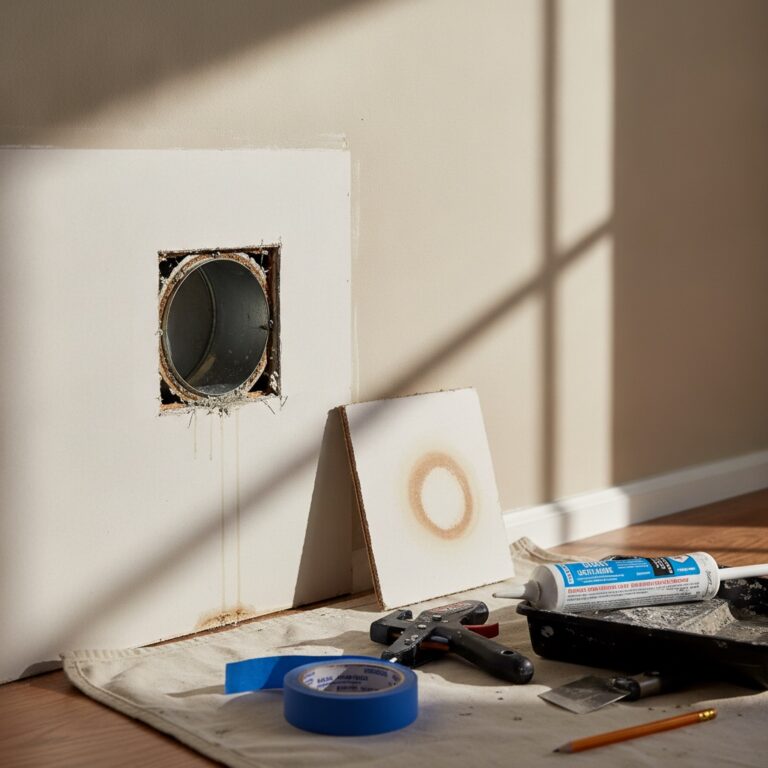
- Pops with a brown ring, rust bloom, or soft drywall around them. That fastener is wet. Find the water before you fix the wall.
- Doors that suddenly stick, cracks wider than 1/4 inch, or sloping floors. That points past drywall. Call a structural engineer first.
The rust-ring case deserves extra attention this year. A pop that sits under a bathroom, below a window, or on an exterior wall can be the first visible sign of a slow leak. A moisture meter reading above 17 percent on drywall around the fastener means stop and investigate. Patching over a wet pop just buries the evidence until El Nino rain turns a dime-sized ring into a soggy 4-by-4 section that needs to come out.
The Fix That Holds, and What It Costs in OC and SD
The common shortcut is pressing the nail back in with a hammer and smearing spackle over it. That lasts until the next temperature swing, because the nail is still loose in a hole it already stretched. The repair that holds goes like this. Drive a 1-1/4 inch coarse-thread drywall screw into the stud about 1-1/2 inches above the pop and another below it. Those screws pull the panel tight. Then set the old nail below the surface or pull it out, and tape any cracked paper.
Finishing is where the cost hides. Each spot needs two or three thin coats of compound, a light sanding, primer, and a texture match. On a smooth wall finished to level 4, that means feathering each patch 8 to 10 inches wide so it disappears under paint. On orange peel or light knockdown, the patch gets sprayed or hand-textured to blend with the existing pattern. Skip primer on fresh mud and the patches flash through flat paint as dull spots under evening light.
Typical ranges for this work across Orange County and North County San Diego this fall:
- 5 to 10 pops in one room, smooth or orange peel: $175 to $350, texture-matched and primed, ready for paint.
- A full hallway or ceiling with 20 to 40 pops: $450 to $900, including texture blend and spot paint.
- Truss-uplift corner crack plus ceiling pops, 12×14 room: $350 to $650, using a floating corner or flexible bead so the joint can move without cracking again.
- Wet pops with soft drywall: leak repair first, then a panel section replacement, usually $400 to $1,200 depending on size and texture.
Timing matters too. Mud and primer cure slowly on the humid days that follow a storm. A batch of repairs done in a dry stretch of late October cures faster and sands cleaner than the same work in a damp December week, when every drywall crew in Irvine and Oceanside is already chasing ceiling leaks.
When to Fix Now and When to Wait
If the pops are dry, cosmetic, and grouped in one or two rooms, fixing them now makes sense. You get dry weather for curing, an easy calendar, and walls that look right before family arrives for the holidays. If the house is still riding out the heat, wait a few days until temperatures settle near normal so the framing stops moving. A repair done mid-heat-wave locks in a stud that will shift again the moment the air cools.
If any pop shows rust, staining, or soft drywall, do not wait for the season to decide. Have the moisture source traced before the first atmospheric river reaches the coast. That small dimple in the hallway is a 30-minute fix today. The same spot after six weeks of wet weather can mean pulling a panel, drying the cavity, and treating for mold.
Not sure whether you are looking at simple pops or something with water behind it? JNL Drywall offers a free in-home assessment across Orange County, the Inland Empire, and North County San Diego. We bring a moisture meter, check the pattern with raking light, and tell you plainly what it is and what it costs. Book a visit before the rain makes the call for you.
Morning-context sources used: Air Sports Net, Southern California Extreme Heat Warnings Oct 2-8 (Oct 2, 2026); UPI, October heat wave brings 100-degree temps to California (Oct 1, 2026); KTLA, extreme heat warning across Southern California (Oct 2026); OJ Insulation, Southern California home prep for the 2026-27 El Nino (Sep 17, 2026); NOAA Climate Prediction Center, ENSO Diagnostic Discussion; AWCI, Nail Pops and Efflorescence.