Request Your Free Quote!

Brown Ceiling Stain? Five Things It Could Be Before El Nino
A brown ceiling stain can mean a roof boot, upstairs bath, AC drain, attic moisture or an old leak. How to read it and what OC repairs cost before El Nino.
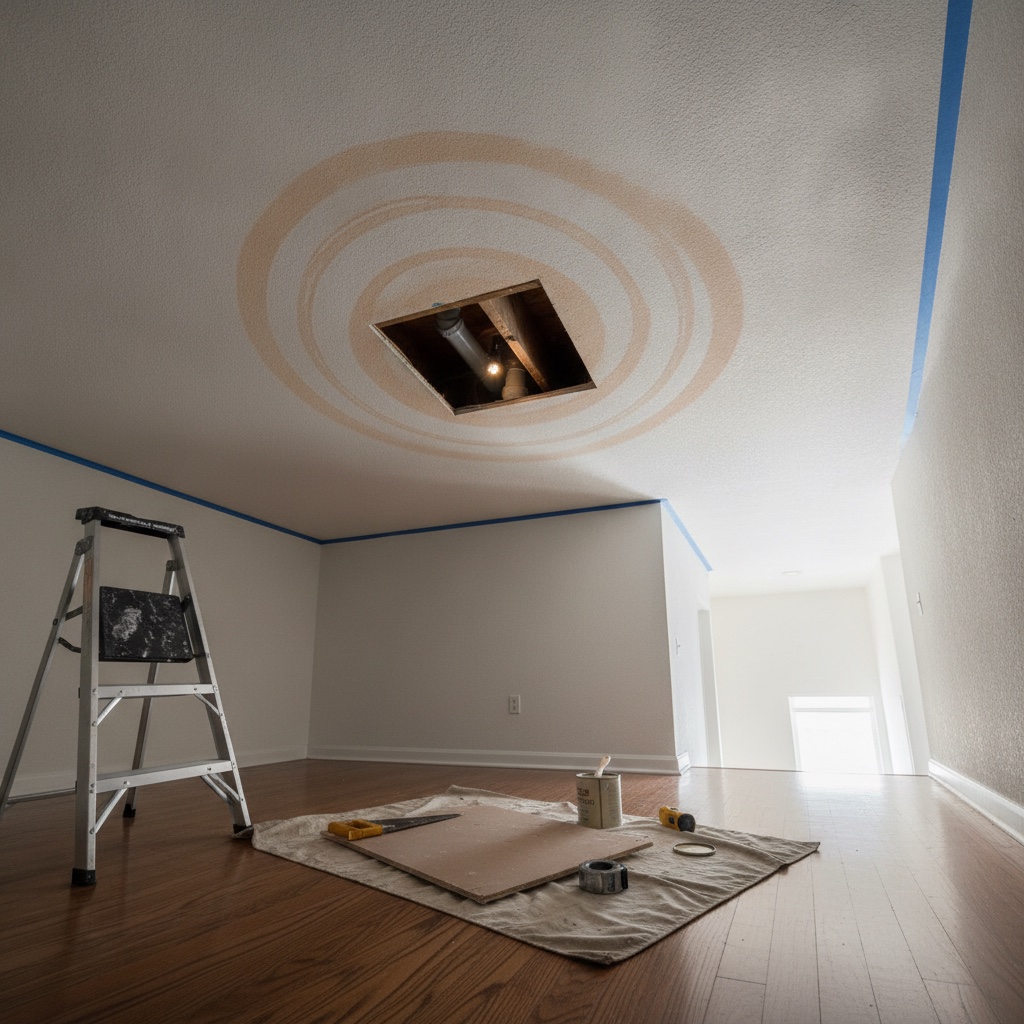
A tan ring the size of a dinner plate shows up on a hallway ceiling in Tustin. It wasn’t there in August. There has been exactly one real rain since spring, the September 6 soaker from Hurricane Marie’s leftovers that dropped close to an inch on parts of LA County. Now Hurricane Polo is pushing muggy tropical air into San Diego and Orange County this week, and the ring looks a little darker every morning. The homeowner’s question is simple: is this a $250 patch or a $3,000 problem?
The honest answer is that a brown ceiling stain is a symptom, not a diagnosis. The drywall is only telling you that water reached the back of the paper and dried there, leaving minerals and tannins behind. Where that water came from decides the whole bill. Governor Newsom declared a statewide El Nino emergency on September 21, and NOAA now gives coastal Southern California 50 to 60 percent odds of above-normal rain from December through April. A stain you ignore in October becomes a sagging panel in January.
Read the Stain Before You Paint It
Every stain carries clues. Start with shape. A tight ring with a hard brown edge usually means one wetting event that soaked in and dried. Several nested rings, like a tree trunk cut in half, mean the leak has come and gone more than once. A long streak that follows a straight line usually tracks a joist, a pipe, or a duct run above the ceiling. A stain that fans out from a corner tends to start at an exterior wall, not in the middle of the roof.
Next, check timing. Did it appear within a day or two of the September 6 rain, or has it grown on dry, sunny weeks? Weather-linked stains point up to the roof and walls. Stains that grow on dry days point to plumbing or HVAC. Then press gently with a fingertip. Firm and dry is one story. Soft, cool, or spongy means water is still arriving, and the gypsum core is losing strength. A ceiling panel that sags more than a quarter inch between framing needs to come down, not get painted.
Five Things a Brown Ceiling Stain Could Be
1. A roof penetration. Plumbing vent boots, bath fan jacks, and skylight curbs are the usual suspects on tract roofs from Irvine to Mission Viejo. The rubber collar on a vent boot cracks after 10 to 15 years of SoCal sun. The leak lands in the ceiling field below the vent, often 2 to 4 feet downslope because water runs along the roof deck or a rafter before it drips. These stains show up after rain and stay the same size between storms.
2. An upstairs bathroom. A failed wax ring, a loose shower valve, a cracked grout joint at the tub, or a split supply line upstairs puts water straight into the ceiling below. These stains ignore the weather. They grow slowly on dry weeks, and they usually sit directly under the toilet, tub, or vanity. If the stain is under a bathroom in a two-story Aliso Viejo or Carlsbad home, run the shower for ten minutes and check the ceiling an hour later. A darker edge is your answer.
3. HVAC condensate. Attic air handlers in Inland Empire and North County homes produce gallons of condensate on humid days. When the drain line clogs or the secondary pan overflows, water spills onto the ceiling below. Humid spells like this week’s Polo moisture make it worse. These stains cluster near the return grille or the attic hatch, and they often show a pale yellow tint rather than dark brown.
4. Attic condensation. Poor attic ventilation lets warm, moist air condense on the underside of the roof deck and on nail tips. It drips in dozens of small spots rather than one big ring. This one is rarer in coastal SoCal, but beach-close homes in Huntington Beach and Oceanside with blocked soffit vents see it during long marine-layer stretches.
5. An old, dry stain. Sometimes the leak was fixed years ago and nobody sealed the stain before painting. Tannins bleed through latex paint every time humidity climbs. If the stain is firm, reads dry on a moisture meter, and matches a known past repair, it may just need a stain-blocking primer and a coat of ceiling paint.
Repair or Replace: Where the Line Falls
The decision turns on three things: how wet the gypsum got, how long it stayed wet, and how big the affected area is. A dry, firm stain under 2 square feet with no sag is a cosmetic fix. That means an oil or shellac-based stain blocker, a texture match, and paint. In Orange County and coastal San Diego, that job typically runs $200 to $450, depending on whether the ceiling is smooth, orange peel, or acoustic popcorn that tests clear of asbestos.
Once the paper delaminates, the panel sags, or a moisture meter reads high after a week of dry weather, the damaged section comes out. A clean cutout to the nearest framing, new 1/2-inch or 5/8-inch board, taping, a level-4 finish, texture blending, and paint lands around $450 to $1,200 for a 4-by-4 to 4-by-8 section. Full room ceilings with water damage across several joist bays, or any sign of mold on the back of the paper, move into the $1,800 to $3,500 range once you add containment and drying.
One rule never changes: fix the source first. Patching drywall under an active leak is money spent twice. If the stain came from a vent boot, a roofer needs to replace it before the drywall crew arrives. If it came from a wax ring, the plumber goes first. A good drywall contractor will tell you which trade to call rather than paint over the question.
What to Do This Week, Before the Big Storms
Take a dated photo of the stain with a tape measure beside it. Check it again in a week. Growth on dry days means plumbing or HVAC, and it will not wait for winter. Pull the attic hatch and look above the stain with a flashlight for dark wood, rusty nail tips, or a wet drain pan. Check the condensate line outlet outside the house and make sure it drips when the AC runs.
If the source is the roof, book the roofer now. Laguna Beach was already handing out sandbags on September 25, and every roofer in the county will have a waiting list by Thanksgiving. Get the ceiling patched after the roof is sealed but before December, so a fresh storm does not hit a panel that is already weak. A stain blocker over a dry, firm patch in October is cheap. A collapsed section of wet gypsum on a living room floor in February is not.
Not sure which of the five you have? JNL Drywall offers a free in-home assessment across Orange County, the Inland Empire, and North County San Diego. We check the stain with a moisture meter, look above it where we can, tell you plainly whether it is a paint job or a panel replacement, and point you to the right trade if the source is not drywall. Call before the rain does the deciding for you.
Morning-context sources used: California Governor’s Office, El Nino state of emergency (Sep 21, 2026); The Watchers, NOAA outlook and statewide emergency (Sep 22, 2026); NBC Los Angeles, what to expect from Hurricane Polo (Sep 2026); FOX 5 San Diego, Hurricane Polo impacts (Sep 2026); CBS Los Angeles, Hurricane Marie rain (Sep 6, 2026); City of Laguna Beach, El Nino preparation.