Request Your Free Quote!

Skim Coating in a Rainy November: What It Costs and How Long
Skim coating orange peel to smooth in a wet SoCal November? See why storm weeks slow drying, real OC costs per sq ft, and a five-day room timeline.
A Huntington Beach homeowner calls the week of the second November storm. She wants the dated orange peel in her 14×16 living room gone before family arrives for Thanksgiving. The room is about 600 square feet of wall surface. The skim coat itself is simple work. The weather is the part that decides whether it lands on time. A wet, cool week on the coast can double the time a coat of mud needs to dry, and a skim coat is three coats stacked on top of each other.
What a Skim Coat Actually Is
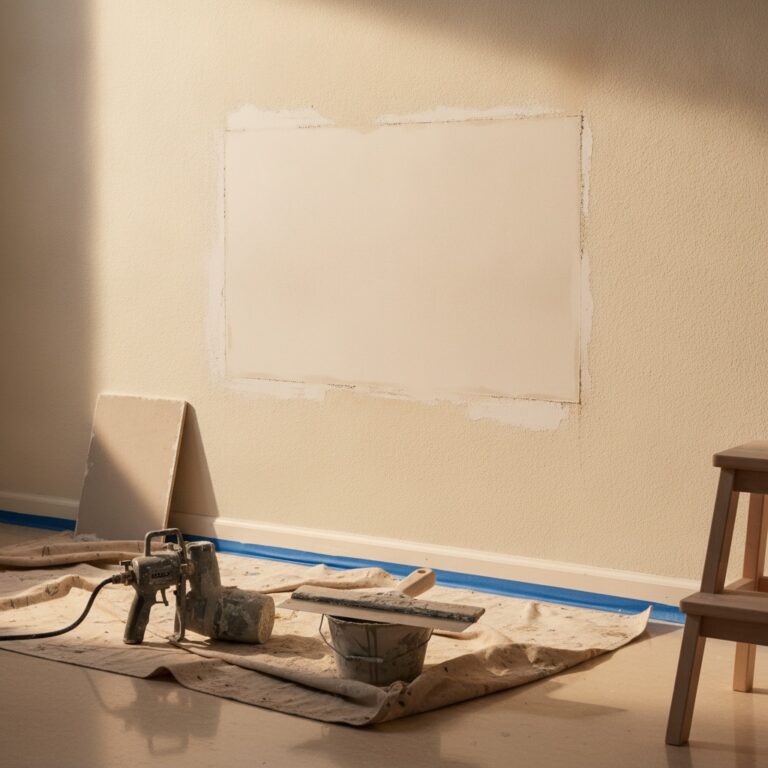
A skim coat is a thin layer of joint compound troweled over an entire wall or ceiling, not just over a patch. On a textured wall, the first coat fills the low spots in the orange peel or knockdown. The second coat flattens what the first one left behind. A third coat, when the wall needs it, brings the surface close to a level-5 finish. Each coat goes on at roughly a sixteenth of an inch or less. After the last coat dries, the wall gets sanded, primed with a high-build primer, and painted.
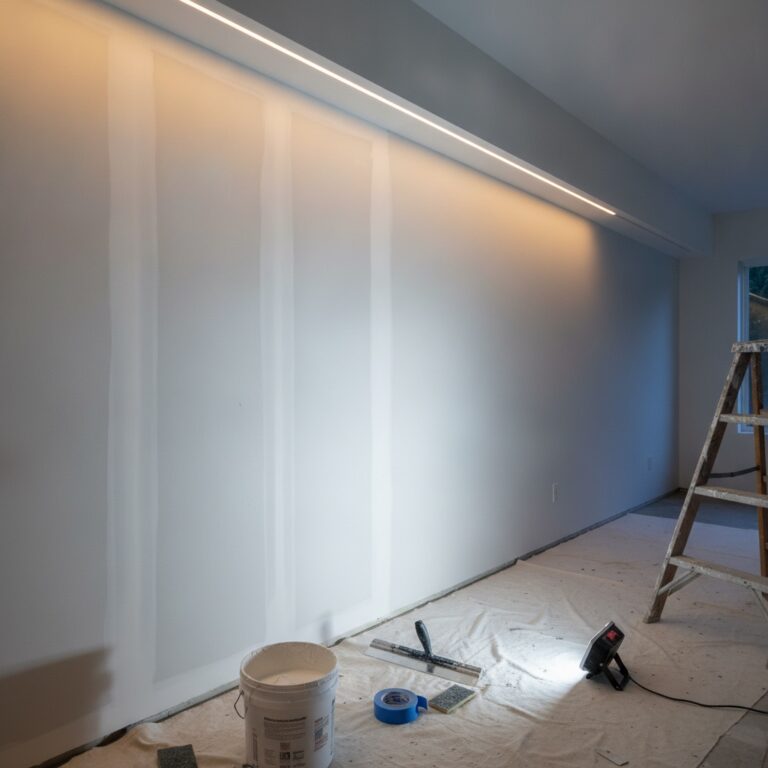
Homeowners often hear “skim coat” and “level 5” used as if they mean the same thing. They overlap. A level-5 finish on new drywall is one full skim over taped and finished board. Skim coating an existing textured wall is the same idea applied to a wall that already has a pattern on it. Either way, the goal is a flat, even surface that reads smooth in morning light and does not show trowel marks when the afternoon sun rakes across it. In Orange County living rooms with big west-facing sliders, that raking light is the real test.
Why Cool, Wet Weeks Change the Schedule
Joint compound dries by evaporation. Warm, dry air pulls water out fast. Cool, humid air does not. In August, a thin coat in a Temecula living room can be ready to recoat in four to six hours. During a coastal storm week in November, the same coat in a Huntington Beach or Encinitas house may need 18 to 24 hours. The mud can feel dry on the surface while it is still soft underneath. Recoating too early traps moisture, and the result is bubbling, soft spots, or hairline cracking a week after the paint goes on.
This November is a good example. San Diego forecasters called for a quarter to half an inch of rain across the region in the storm that arrived on November 13, with temperatures running well below average into this week. UC San Diego’s atmospheric river outlook from November 16 projected another one to two inches for coastal Southern California through November 19, and flagged a possible larger storm around November 23 to 25. Every one of those days adds humidity inside the house, even with the windows shut.
None of that makes November a bad month for a skim coat. It makes it a month where the schedule needs room. A crew that plans for one coat per day instead of two will still finish a 600 square foot room in about five working days, including sanding, prime, and paint. A crew that tries to rush three coats into two days in wet weather is setting up a callback.
How We Keep the Job Moving in Rainy Weather
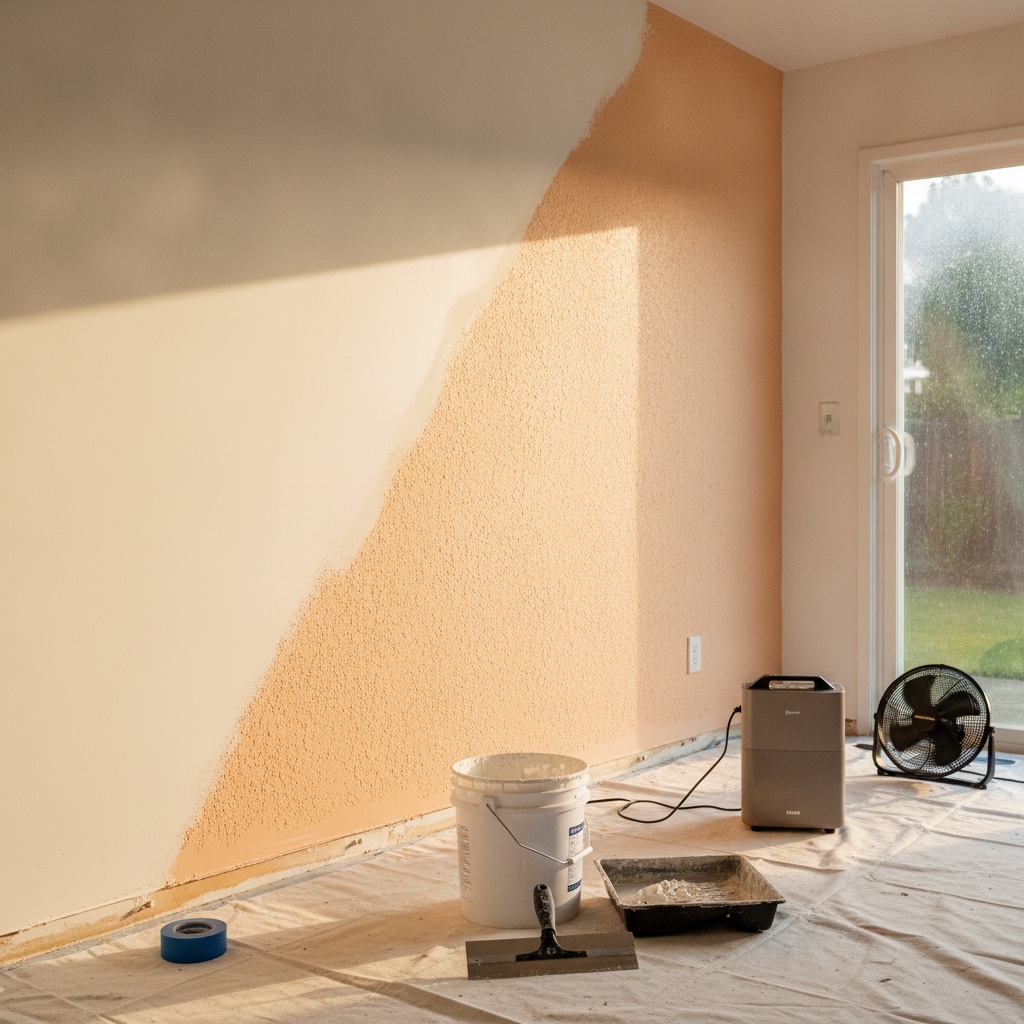
The fix for slow drying is airflow and steady warmth, not blasting heat. On a cool coastal job, a few habits make the biggest difference:
- Run the home’s furnace at a normal setting, around 65 to 70 degrees, through the whole job. Cold walls dry slowly no matter how much air moves past them.
- Set two or three box fans or air movers low and pointed along the wall, not straight at it. Direct blasts can dry the surface skin too fast and crack it.
- Use a dehumidifier in closed rooms during storm days. Pulling indoor humidity down toward 45 to 50 percent can cut recoat time by several hours.
- Choose the mud for the conditions. A setting-type compound for the first fill coat cures by chemical reaction, so it hardens on schedule even when the air is damp. Lighter premixed topping mud works best on the final coat.
- Test before recoating. Press a thumbnail into a low spot. If it dents, the coat waits.
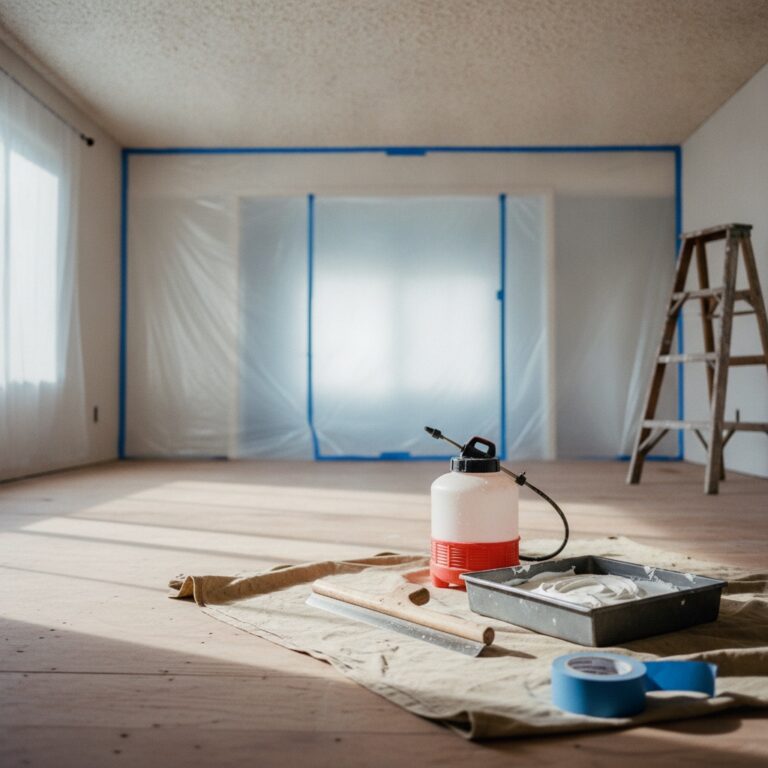
Dust control matters more in winter too. With the windows closed for rain, sanding dust has nowhere to go. Zip walls, sealed HVAC returns, and a vacuum-attached sander keep the fine powder out of the kitchen and the bedrooms. On a living room job in Irvine last winter, a sealed doorway and a single HEPA air scrubber kept the rest of a 2,100 square foot house clean enough that the family stayed home through the whole project.
What a Skim Coat Costs in SoCal
Skim coating is priced by the square foot of surface, not the square foot of floor. A 14×16 room with 8-foot ceilings has roughly 480 to 600 square feet of wall area once doors and windows come out. For Orange County and coastal San Diego, a two-coat skim on walls usually runs $2.50 to $4.00 per square foot. A three-coat level-5 quality skim runs $3.50 to $5.50 per square foot. Ceilings cost more, often $4.00 to $6.50 per square foot, because the work is overhead and slower.
For that Huntington Beach living room, a realistic range is $1,800 to $3,000 for a two-coat skim on the walls, plus prime and paint. If the ceiling has popcorn texture, it needs an asbestos test before anyone scrapes it, and the removal becomes its own line item. Homes built before the early 1980s in Garden Grove, Westminster, and Fountain Valley are common candidates for that test.
Resale is part of the math. Smooth walls and ceilings photograph well in listing shots, and buyers in Orange County tend to read smooth finishes as updated. Design writers have started pushing plaster, limewash, and hand-troweled finishes as the next trend, and those finishes all start from a flat, sound wall. A skim coat is the base layer whether the final look is smooth paint or a Venetian-style plaster.
When a Skim Coat Is the Wrong Call
A skim coat covers texture. It does not fix what is behind it. If the wall has active water staining from a roof or window leak, the leak gets fixed first and the drywall gets checked for moisture with a meter. Skim coating over wet board traps the problem and hides it until it shows up as mold or peeling paint. With two more storms forecast before Thanksgiving, that check is worth the extra hour.
Skim coating is also the wrong move when the drywall paper is torn over large areas, when the board itself is soft or crumbling, or when old wallpaper glue is still on the wall. Each of those needs prep first. Torn paper gets sealed with a shellac-based or oil-based primer so the mud does not bubble. Glue residue gets washed off. Soft board gets cut out and replaced. Skipping prep is the most common reason a skim coat fails in the first year.
If you are looking at a dated orange peel or knockdown wall and wondering whether smooth is worth it before the holidays, we can walk the room with you, check the wall for moisture, and show you finish samples in your own light. The in-home assessment is free, and you will leave with a real number and a realistic schedule for this rainy stretch.
Morning-context sources used: ABC 10News San Diego, Nov 12, 2026; UC San Diego CW3E AR Outlook, Nov 16, 2026; House Digest, Nov 18, 2025; Angi skim coat cost guide.