Request Your Free Quote!

Book in November, Start in January: SoCal’s Best Drywall Window
SoCal's first atmospheric river is a scheduling signal. See why a November walkthrough lands a January drywall start, with a real Irvine room timeline.
The first atmospheric river of the season rolled into Southern California this week, with the National Weather Service calling for 1 to 3 inches of rain across most of the region and up to 5 inches on south-facing foothills. Orange County got gusty, soaking hours Wednesday night and Thursday. If you have a ceiling stain to watch or a remodel you keep putting off, this storm is your calendar talking. The homeowners who book now, the week before Thanksgiving, are the ones whose walls are finished before spring.
The math is simple. A drywall remodel that starts the first week of January needs its scope written, its permit filed if one applies, and its material ordered by mid-December. That means the walkthrough happens in late November or the first days of December. Wait until after New Year’s to make the first call and the realistic start date slides to late February, right as the spring rush begins and every other homeowner in your tract is calling the same crews.
What January Through March Gets You Indoors
Winter is the most productive stretch of the year for interior drywall in SoCal, and it has little to do with the trades being slow. The work itself goes better. Indoor temperatures sit in the 60s, which joint compound likes. There is no August heat making mud skin over in the pan before it gets feathered. Crews are not working around kids home on summer break or holiday guests arriving with suitcases. And a rainy week that stops a roofer or a stucco crew does not stop a taper working inside a closed house.
There is a real catch. Wet weeks slow drying. Joint compound that cures overnight in a dry October can take 36 to 48 hours when outdoor humidity sits above 80 percent and the windows stay shut. A good crew plans for that with a dehumidifier, a couple of box fans, and the thermostat held at 65 to 68 degrees overnight. Build two extra days into any winter schedule and the job will finish on time. Skip that buffer and a level-5 finish can get sanded before it is truly hard, which shows up later as soft spots and flashing under paint.
The national numbers point the same direction. Harvard’s Joint Center for Housing Studies projects remodeling spending growth will slow to about 0.5 percent year over year by the second quarter of 2027, with big discretionary projects softest and repair work holding steadier. For a homeowner, that usually means calmer contractor calendars for planned work in early 2027 compared with the frantic years after 2020. Calmer does not mean empty, though. In SoCal the early January slots still go first, because everyone who waited out the holidays calls in the same two weeks.
A Real Timeline: A 480-Square-Foot Irvine Family Room
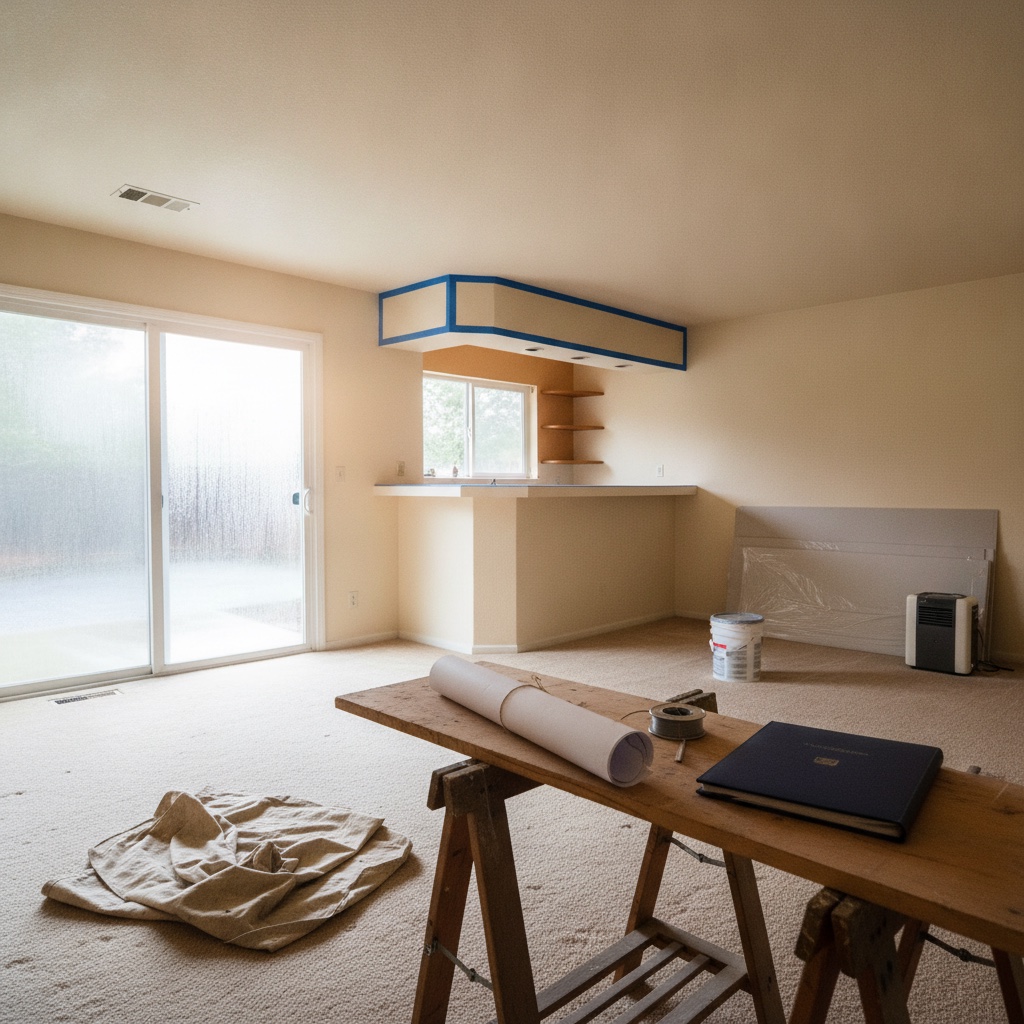
Take a composite project that looks like many of the calls that come in this time of year. An Irvine tract home from the late 1980s, a 480-square-foot family room with heavy orange peel walls, a dated soffit over the wet bar, and a 9-foot opening to the kitchen the owners want widened to 14 feet. The goal is smooth level-5 walls, a flat ceiling where the soffit used to be, and a new header handled by the framer. Here is how that project slots into a January start.
- Week of November 30: in-home walkthrough, measurements, and a moisture check on the exterior wall after this week’s rain.
- Week of December 7: written scope and quote. Because the wider opening touches a bearing wall, an engineer’s letter gets ordered.
- Mid-December: permit application filed. Structural changes usually go through plan check rather than an over-the-counter stamp, so budget a few weeks, not a few days.
- January 4 to 6: demo the soffit and the old opening, and the framer sets the new header.
- January 7 to 8: framing inspection, then hang 5/8-inch board on the ceiling patch and 1/2-inch on the walls.
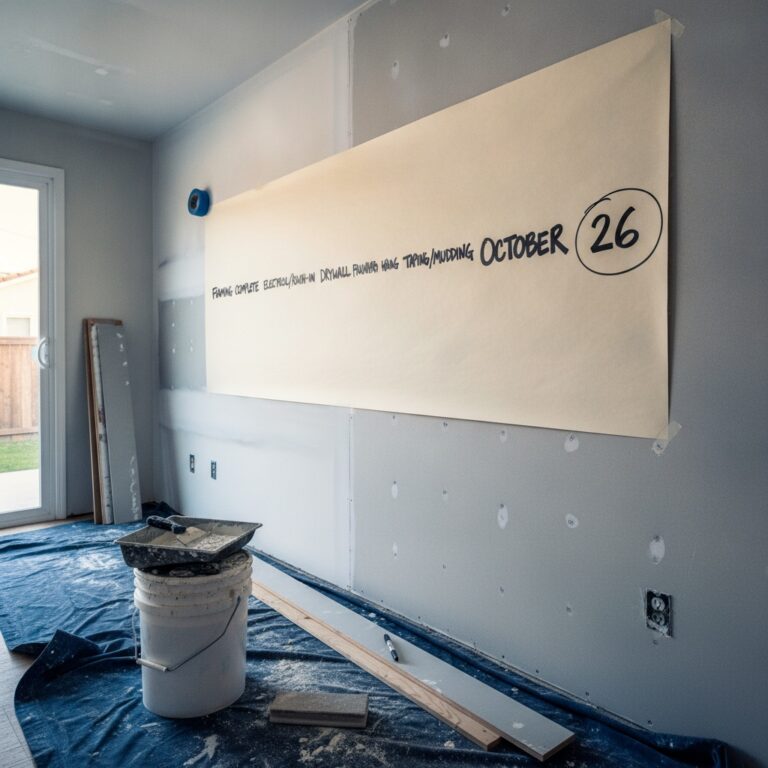
- January 11 to 15: tape, three coats, then a full skim coat over every wall for level 5. Add two days if the week is wet.
- January 18 to 20: prime, touch up any flashing, and paint.
- January 21: final walk with the homeowners.
That is roughly three weeks of on-site work after five or six weeks of planning. The planning is the part people underestimate. A homeowner who calls on January 10 for the same project is looking at a walkthrough in mid-January, a permit filing in early February, and a start somewhere near the first of March. Same job, eight weeks later, and now the dust overlaps spring break and the first warm weekends everyone wants to spend in that room.
On budget, a project like this typically lands between $9,000 and $14,000 in Orange County for the drywall and finish scope alone, before framing, engineering, permit fees, and paint. Dropping from level 5 smooth to a level-4 finish with a fresh light knockdown can trim 20 to 30 percent off the finish portion and roughly two days off the schedule. Neither choice is wrong. It depends on how the room is lit and how picky you are about raking afternoon light on a long wall.
The Tradeoffs Nobody Mentions About Winter Work
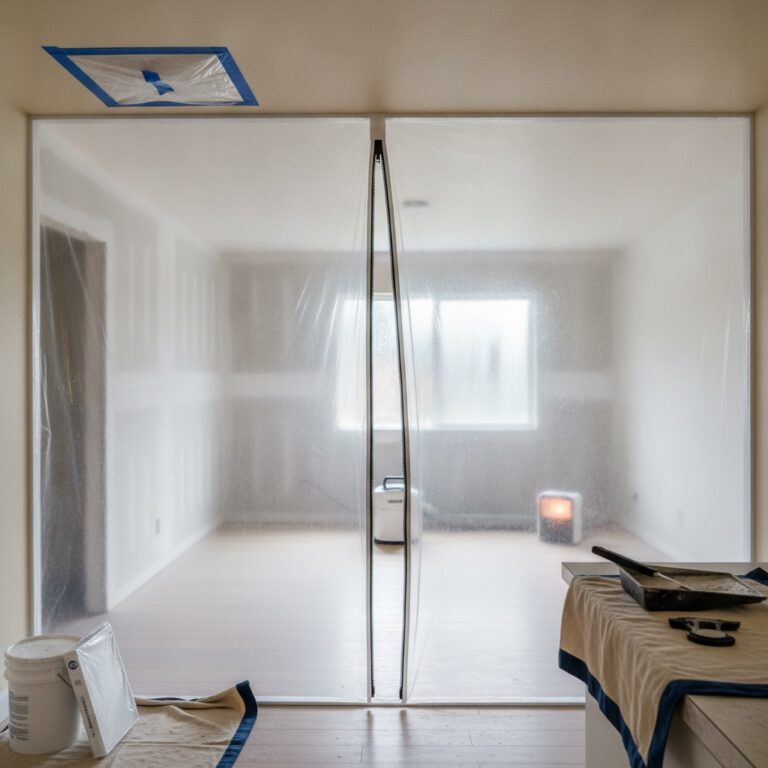
Winter has costs too, and they deserve a straight answer. The house is closed up, so dust stays inside. Plastic zipper walls, a negative-air fan exhausting out a window, and sanding with vacuum-attached tools are not optional in January. Ask any contractor exactly how they handle dust before you sign. You will also live with a dehumidifier humming for a week or so, and a furnace running a little more than usual while the mud dries between coats.
Water is the other trap. If the reason for the remodel is a stain on the ceiling under a deck or a soft spot on an exterior wall, the source has to be fixed first. Hanging fresh drywall over a flashing problem the next storm will find is money thrown away. After a storm like this one, the best time to look is 24 to 48 hours later, when stains are fresh and a moisture meter still tells the truth. High readings mean the leak gets found and fixed before any new board goes up.
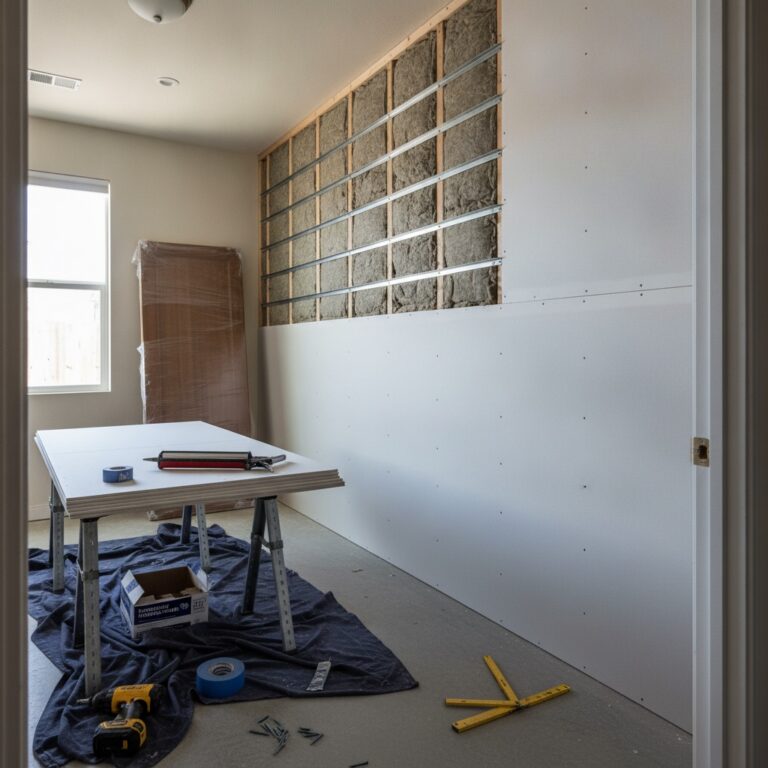
Home offices are where winter timing pays off most. If you work from home and the office shares a wall with the family room, January is the time to open that wall, add insulation in the cavity, and go back with resilient channel or a second layer of 5/8-inch board with Green Glue between the layers. A standard interior wall with 1/2-inch board on both sides sits around STC 33 to 35. The upgraded wall can reach the mid 40s, which turns a muffled TV into near silence during calls.
What to Lock In Before the Holidays
If January is the goal, three things need to happen before December 20. First, get the walkthrough done so the scope is written, not guessed. Second, decide the finish. Level 4 with a light orange peel or knockdown costs noticeably less than level 5 smooth, and that choice drives both the price and the schedule. Third, find out whether a permit applies. Moving or widening openings, touching a bearing wall, or adding circuits usually triggers one. A straight re-skin of existing walls usually does not.
If a remodel has been sitting on your list, this week’s rain is a good nudge. JNL offers a free in-home timing assessment across Orange County, the Inland Empire, and north San Diego County. We will look at the room, check for any storm-related moisture, and hand you a written scope with a realistic start date, so the January slot ends up on your calendar instead of someone else’s. Book the walkthrough before Thanksgiving and the planning is done before the holidays get busy.
Morning-context sources used: Spokesman-Review / LA Times, Nov 16, 2026; FOX 11 Los Angeles, Nov 17, 2026; Patch Orange County, Nov 10, 2026; Harvard Joint Center for Housing Studies, LIRA release, 2026.