Request Your Free Quote!


When a Drywall Patch Is Honest and When It Hides a Problem
A patch that keeps coming back is not a finish problem. How SoCal homeowners tell an honest drywall repair from a cover-up, with 2026 OC costs.
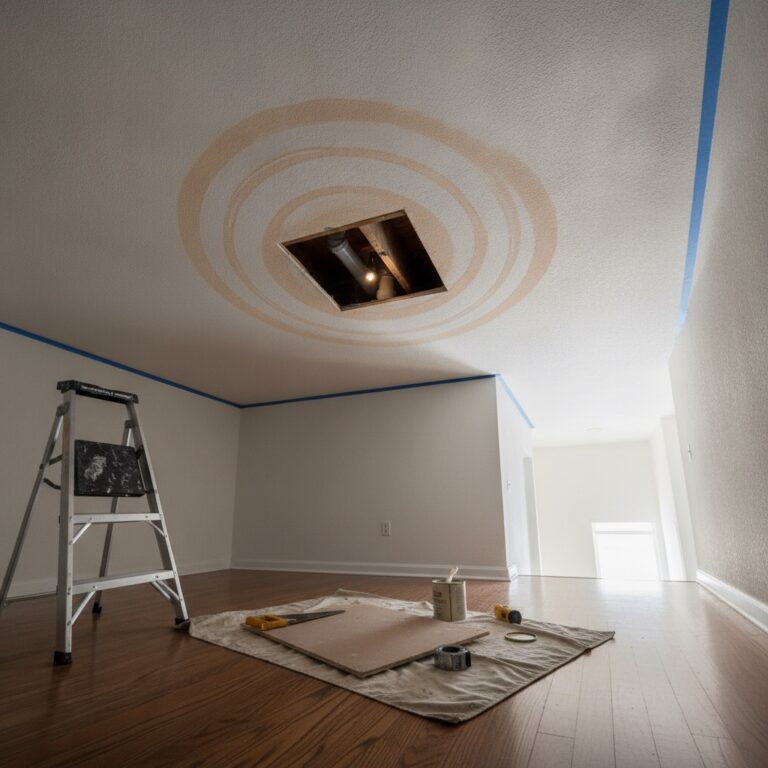
A homeowner in Fullerton called about a ceiling patch that had been repaired twice in eighteen months. Both times a crew cut a 12-inch square, screwed in a backer board, mudded it, and sprayed texture over the top. Both times the brown ring came back by the next summer. The patch was never the problem. The patch was the third symptom of an AC condensate line that had been weeping into the ceiling cavity since 2023. Anyone can close a hole. The better question is whether closing it counts as honest work or as a cover story.
What an Honest Patch Actually Fixes
An honest patch handles damage that already stopped happening. A doorknob through a guest bedroom wall in Irvine. A 4-inch hole where a shelf bracket tore out. A hairline crack above a doorway in a Tustin tract home that has measured the same width for six years. The cause is over. Nothing behind that wall is still leaking, settling, or heat-cycling. In those cases a properly backed patch, taped with paper or mesh, feathered 10 to 12 inches past the cut, and textured to match, is permanent. It should never come back.
The craft matters more than most homeowners expect. Patches that fail cosmetically almost always failed at the feather. Mud stacked in a tight 4-inch band around the cut leaves a hump that afternoon side-light finds every single day. On a knockdown wall in Anaheim Hills, texture pressure matters just as much. Flatten the knockdown too hard and the repair reads as a bright island from ten feet away. That is still an honest repair. It is just a finish problem, and a finish problem has a finish answer.
Five Signs the Patch Is Covering Something Bigger
These are the flags that move a job out of patch territory and into diagnosis territory. Any one of them earns an inspection hole before anyone opens a bucket of mud.
- The stain came back. A sealed and painted water stain that reappears means the water source is still live. Stain-blocking primer hides color. It does not stop a drip.
- The crack is wider at one end. A tapered crack points to movement, usually foundation or framing. A crack of even width along a seam is typically tape failure and is genuinely patchable.
- The area feels soft, cool, or spongy. Gypsum that gives under thumb pressure has already lost its core. Mud on top of soft rock buys you maybe one season.
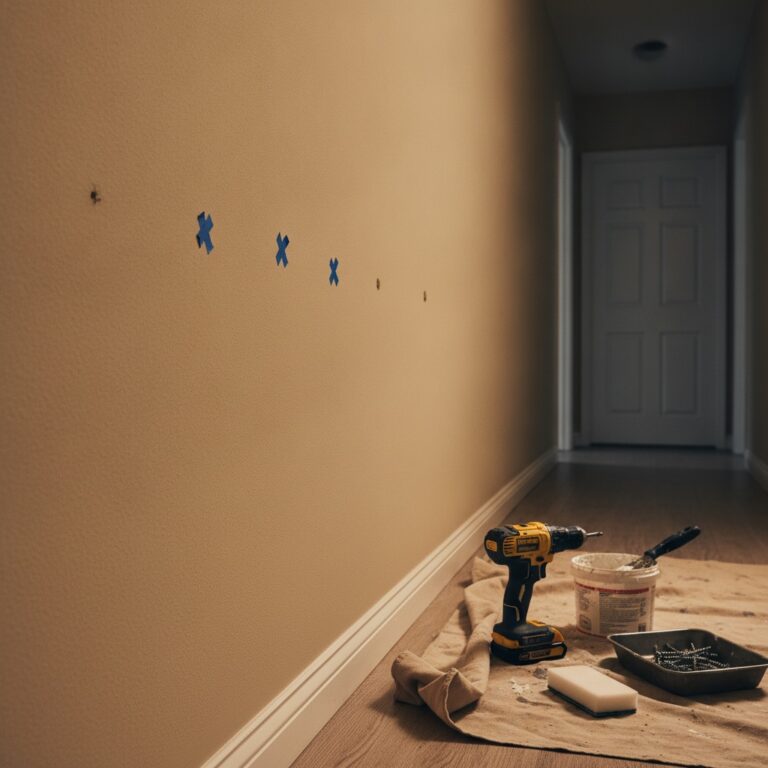
- Nail pops march in a straight line. One pop is a bad fastener. Eight in a row down a Rancho Santa Margarita hallway means the framing is drying out and shrinking, and spackle alone guarantees a repeat visit.
- There is a smell. A musty note near a repaired area, especially in a bathroom or laundry wall, is the paper facing feeding something. That is a tear-out, not a touch-up.
Behind a ceiling stain, the realistic suspects are a slow supply or drain leak, roof flashing at a penetration, and HVAC condensate. In coastal Orange County during August, condensate leads the list by a wide margin. The stain shape helps. A tight ring that grows slowly usually means condensation or a pinhole drip. A wide irregular blot that expanded fast usually means a plumbing or roof event.
The Repair-or-Replace Threshold, With Orange County Numbers
Homeowners want a line they can apply themselves, so here is the one used on most JNL walkthroughs. Replace the sheet when damage covers roughly a third or more of a single wall plane, when a plane already carries three or more previous patches, or when a moisture meter reads above about 17 percent in the gypsum. Below those marks, patch it. Above them, cutting to the studs is cheaper over five years than the fourth repair on the same square foot of wall.
Current pricing gives that math weight. A single small hole repair in Orange County generally runs $175 to $450 once trip minimum, backing, two or three mud coats with dry time between them, and texture are counted. National 2026 data puts drywall repair at roughly $2 to $6 per square foot, with textured surfaces landing 30 to 40 percent above smooth work because matching orange peel or knockdown takes a second visit. Full replacement of hung and finished drywall runs about $3 to $8 per square foot in this market, and water-damaged sections that need drying first sit near the top of that band.
Finish level changes the number too. A level-4 finish is the standard for textured walls and covers most repairs in tract homes across Mission Viejo and Yorba Linda. A level-5 skim coat, which every serious painter wants under a flat sheen or in a room with big west-facing glass, adds material and labor across the whole plane. Patching a level-5 wall and stopping at the patch edge does not work. The skim has to carry to a natural break, usually a corner.
Why a SoCal August Makes a Weak Patch Worse
This month has been unusually sticky along the coast. Dewpoints near or above 70 degrees have been common as ocean temperatures stay warm, and UCLA’s mid-August synopsis noted monsoon moisture nosing into the region with heat advisories driven as much by humidity as by air temperature. That matters for drywall in two ways. Air conditioners run longer and produce more condensate, which finds any pan crack or clogged line. And any cavity that is already damp dries far more slowly.
The mold clock is short. Paper-faced gypsum can start growing mold within 24 to 48 hours of getting wet, and renovation guidance for summer work flags indoor humidity spikes above 70 percent as the trigger. Sealing a damp cavity behind a fresh patch in August is the fastest way to turn a $300 repair into a $2,500 remediation by November. Cut it open, dry it, verify with a meter, then close it. In that order, every time.
What to Do Before Anyone Mixes Mud
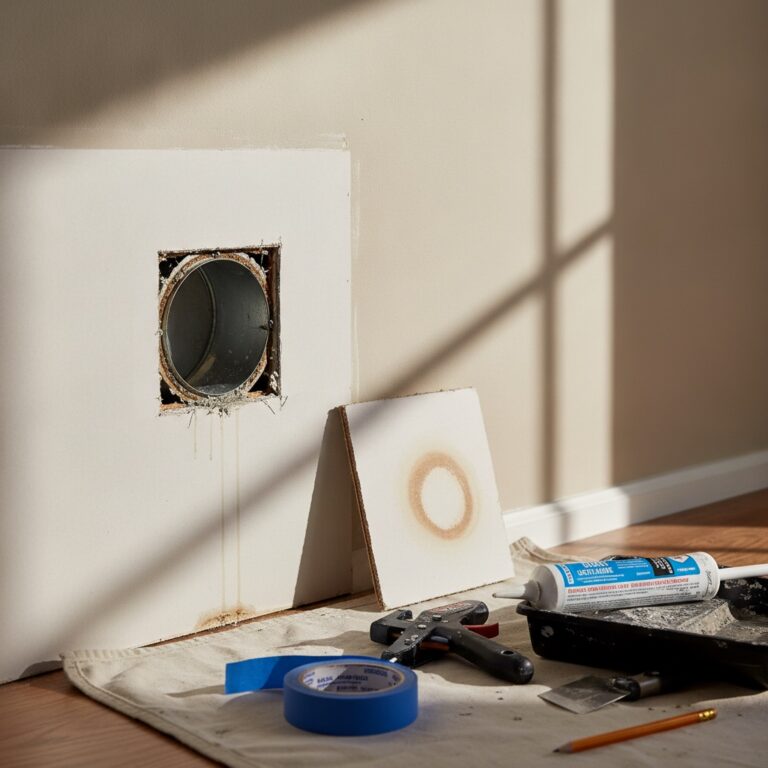
Three steps cost almost nothing and settle the question. First, outline the stain with a pencil and write the date next to it. If the mark grows past the line in a week, the source is active. Second, get a moisture reading on the drywall and on the framing behind it, not just the surface. Third, cut a 6-inch inspection hole at the low point of the stain and look with a flashlight. A 6-inch hole costs one patch. Guessing wrong costs a ceiling.
Photograph everything before repair. If the cause turns out to be plumbing or roofing, that documentation is what the insurance adjuster wants, and carriers move slowly enough without a claim that lacks dated photos. Keep the moisture readings too. A written number carries far more weight than a homeowner saying the wall felt damp.
If a patch on your ceiling or wall has already come back once, stop paying to close it and start paying to understand it. JNL Drywall Repair walks homes across Orange County, Long Beach, and north San Diego County with a moisture meter and gives a straight repair-or-replace answer with a written scope, at no charge and with no pressure to book. Bring the photos, the dates, and the history of what was tried before. Thirty minutes at your kitchen table usually settles what three patches could not.
Morning-context sources used: https://atmos.ucla.edu/weather-synopsis/weather-synopsis-august-17-2026/ | https://weatherwest.com/archives/43959 | https://laist.com/news/climate-environment/southern-california-humidity-explainer | https://homeguide.com/costs/drywall-repair-cost | https://www.angi.com/articles/how-much-does-drywall-repair-cost-small-holes.htm | https://moldcompass.com/blog/summer-remodeling-mold-prevention-renovation-2026