Request Your Free Quote!

A West-Facing Irvine Great Room Gets a Level-5 Finish
See how a 520 sq ft Irvine great room earned a level-5 drywall finish, why west-facing afternoon light demanded it, and what the skim coat cost in 2026.
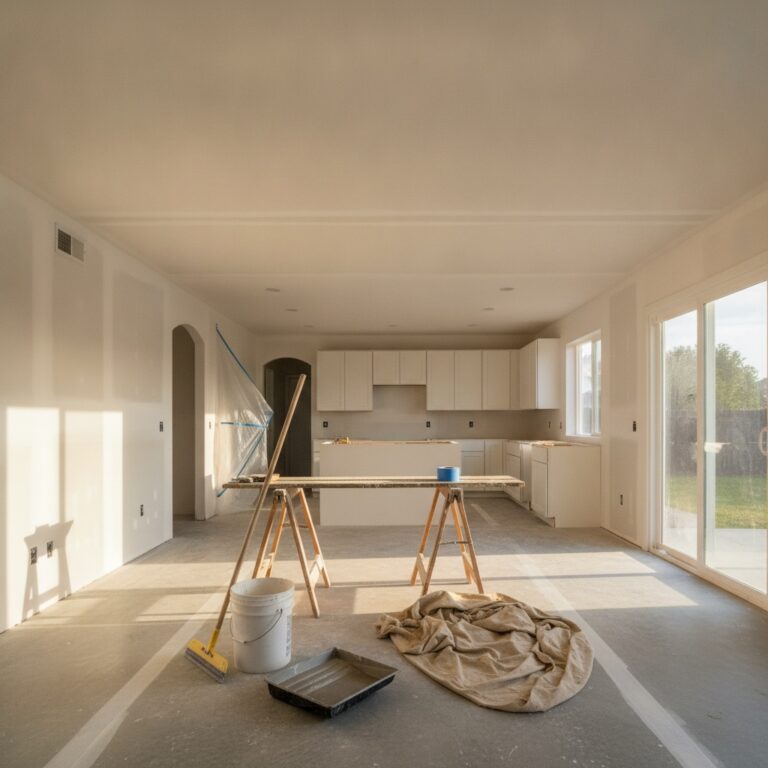
The great room in this Irvine remodel had one stubborn problem before a single tool came out. West-facing windows flooded the space every afternoon, and the old kitchen wall threw a hard line of shadow across the dining area at 4 p.m. The homeowners in the Westpark neighborhood wanted one open room. They also wanted walls that looked flawless in that raking summer light. Those two goals drove every choice on this 520 square foot project, from the header that replaced a wall to the level-5 finish that closed it out.
This is a composite of recent JNL work, with details blended from several Orange County great-room jobs so the timeline reads true without naming a client. The decisions are real. So are the numbers.
The Irvine great room that fought its own light
The starting layout was a closed galley kitchen walled off from the living room by a 12 foot partition. That wall did three jobs. It hid the cooking mess, it carried a short run of upper cabinets, and it took part of the second-floor load. Knocking it out was never a paint-and-patch afternoon. A structural engineer confirmed it was load-bearing and drew a beam to carry what the wall had been holding.
Permits matter here. In Orange County a layout change like this needs a plan review, and most reviews run one to three weeks. This home sat in an HOA, which added a couple of weeks of architectural sign-off before the city ever saw the plans. The homeowners booked the consult in early May, knowing the open wall would not come down until the engineer stamp and permit cleared. That patience kept the whole job clean later.
Demo day: the wall that boxed in the kitchen
Demo on a load-bearing wall is slow on purpose. The crew set temporary shoring on both sides of the partition first, then opened the wall in sections. Removing a load-bearing wall in a single-story California home commonly runs $4,000 to $10,000 once you add the engineer at $500 to $2,000 and the permit. Two-story homes climb fast, and lateral bracing for seismic code can add real money. This Irvine home was single-story over a slab, which kept the structural cost on the lower end.
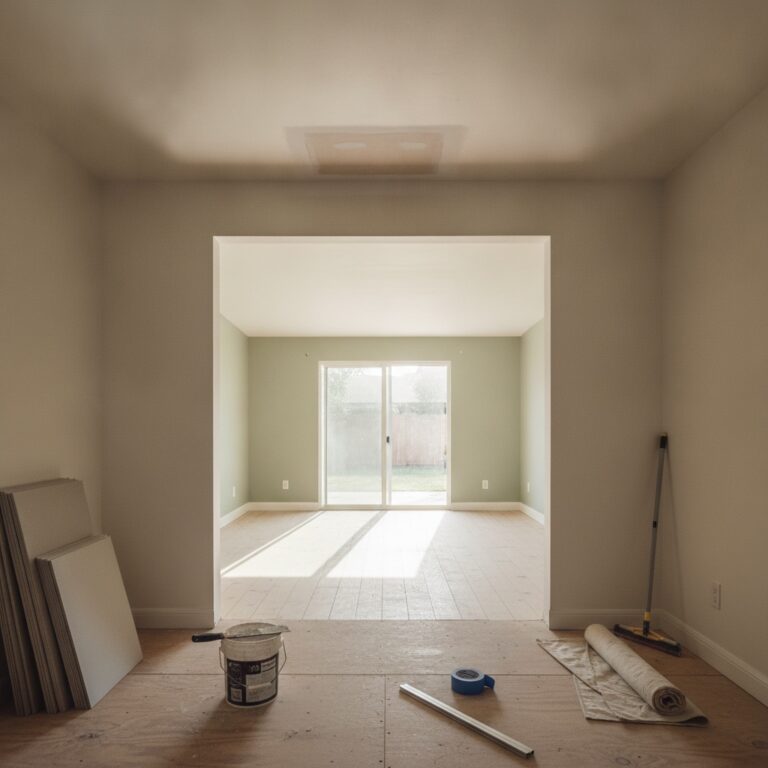
With the wall framed open and a flush beam tucked into the ceiling, the room changed shape in an afternoon. The new ceiling line ran unbroken from the front windows to the back slider. That flush line became the star of the finished room, but it also raised the bar for the drywall. A continuous ceiling under hard afternoon light shows every flaw a bumpy seam can hide in a smaller space.
Hang, tape, and the level-5 call
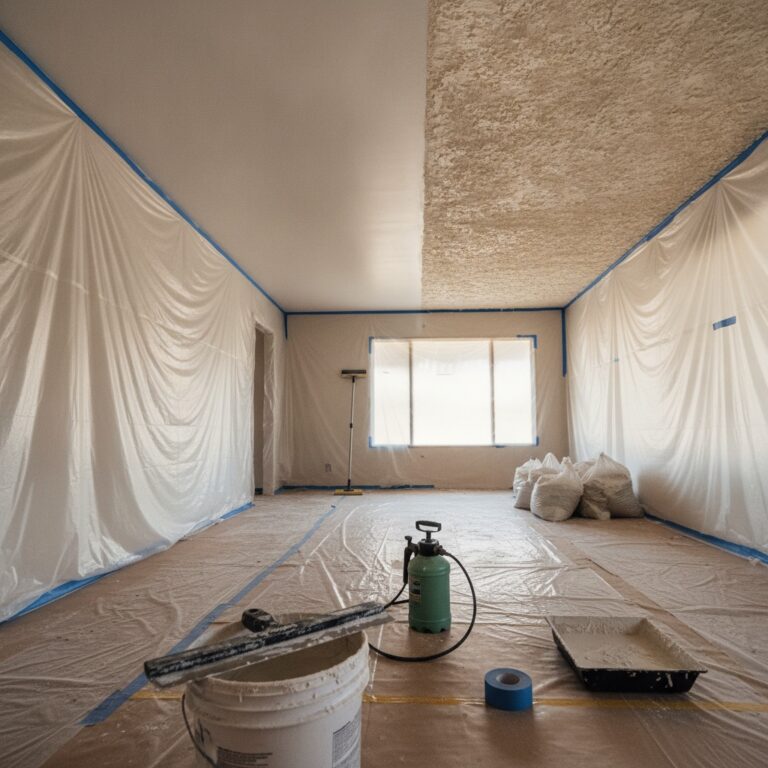
Hanging went quick once framing passed inspection. The crew hung the ceiling first, then the walls, screwing on a tight pattern and keeping butt joints off the sightlines from the front door. Taping is where a great room is won or lost. Every factory edge got paper tape and three coats. The butt joints got floated wide, 12 inches or more, so the buildup reads flat instead of crowned.
Then came the real question for this room. Level-4 or level-5? A level-4 finish is the SoCal default for most walls. It covers tape, screws, and seams with three coats and sands clean. Under soft or side-lit conditions it looks great. The trouble is critical light. West windows, recessed cans, and a long open ceiling are exactly the conditions where a level-4 wall can flash, meaning the smooth compound and the paper face of the board reflect paint differently and the old seams ghost through.
The fix is a level-5 finish. That means a thin skim coat of compound over the entire surface, not just the seams, so the whole wall reads as one material. For this great room the crew skim-coated the ceiling and the three most light-struck walls. The back hallway, out of the critical light, stayed level-4 to hold the budget where it did not show.
What level-5 changed under west-facing afternoon sun
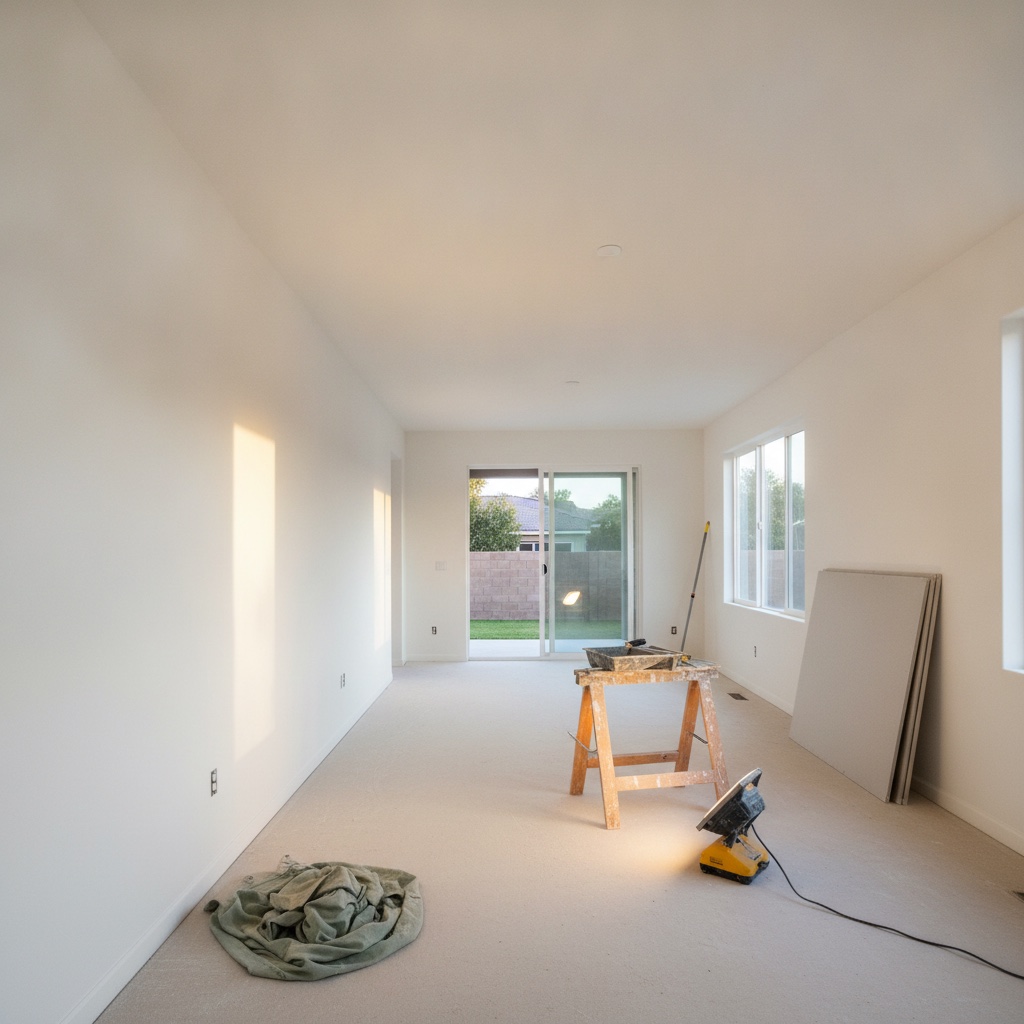
The payoff showed up the first afternoon the primer went on. Side light that used to expose every seam now slid across a single flat plane. No banding, no ghost lines where the old wall used to stand. A level-5 finish carries a labor premium of roughly 30 to 60 percent over level-4, which in 2026 pencils out to about $250 to $625 per room depending on size. On a great room of this scale, the skim coat added a few hundred dollars and saved the homeowners from staring at flashing seams every sunset for the next decade.
There is a design wrinkle worth naming. The 2026 finish chatter leans toward texture, limewash, and Venetian plaster, and some designers now call dead-flat drywall outdated. That trend has its place on a feature wall. For an open great room with punishing light, a clean level-5 base is still the smartest call, and it is the right canvas if the owners ever do want a plaster accent later. Smooth and flawless first. Decorative texture is a choice you add on top, not a flaw you cover up.
The final walk
The last step was the walk with a work light. The crew runs a bright handheld lamp at a low angle across every finished wall, the same trick that exposes flaws before paint hides them. A couple of spots got one more pass of fine sanding. Then primer, two coats of a soft warm white, and the room was done. From the front door you now see straight through to the patio, with a ceiling line that never breaks and walls that hold their light from noon to dusk.
If you are weighing an open-concept project in Irvine, Tustin, or anywhere across Orange County, the level-4 versus level-5 question is worth settling before demo, not after. We walk every great-room job in person, read the light the way your room actually gets it, and tell you straight where a skim coat earns its keep and where it does not. A free in-home assessment is the easy first step, and it costs you nothing but an afternoon.
Morning-context sources used: CBL Drywall, drywall finish levels explained (May 2026); National Gypsum, level 4 vs level 5 differences; Angi, 2026 cost to remove a load-bearing wall; OC Builders Group, Orange County remodeling guide 2026; Trim-Tex, drywall design trends for 2026; House Digest, plaster wall treatment trend 2026.