Request Your Free Quote!

Multi-Room Drywall Remodel: Which Room Goes First and Why
Sequencing a multi-room drywall remodel in Orange County: which room to start, how crews batch the work, and what the order does to cost and calendar.
An Anaheim Hills family wants three rooms done before the third week of August: the kids’ shared bedroom, the hallway that feeds it, and a home office still wearing its 1990s orange peel. It is the second week of July. The math is tight but honest. Sequenced right, a three-room drywall remodel fits inside six weeks. Sequenced wrong, the same scope slides past Labor Day and costs more. The difference is rarely the size of the rooms. It is the order they get done in.
Order matters more this summer than it did a year ago. Harvard’s Joint Center for Housing Studies projects homeowner improvement spending near $518 billion for 2026, with growth around 2.1 percent at midyear before it cools in the fall. Houzz reports half of surveyed homeowners plan a renovation this year. Crews are booked. A muddled sequence wastes crew days that nobody can spare in July.
Start With the Room That Sets the Rules
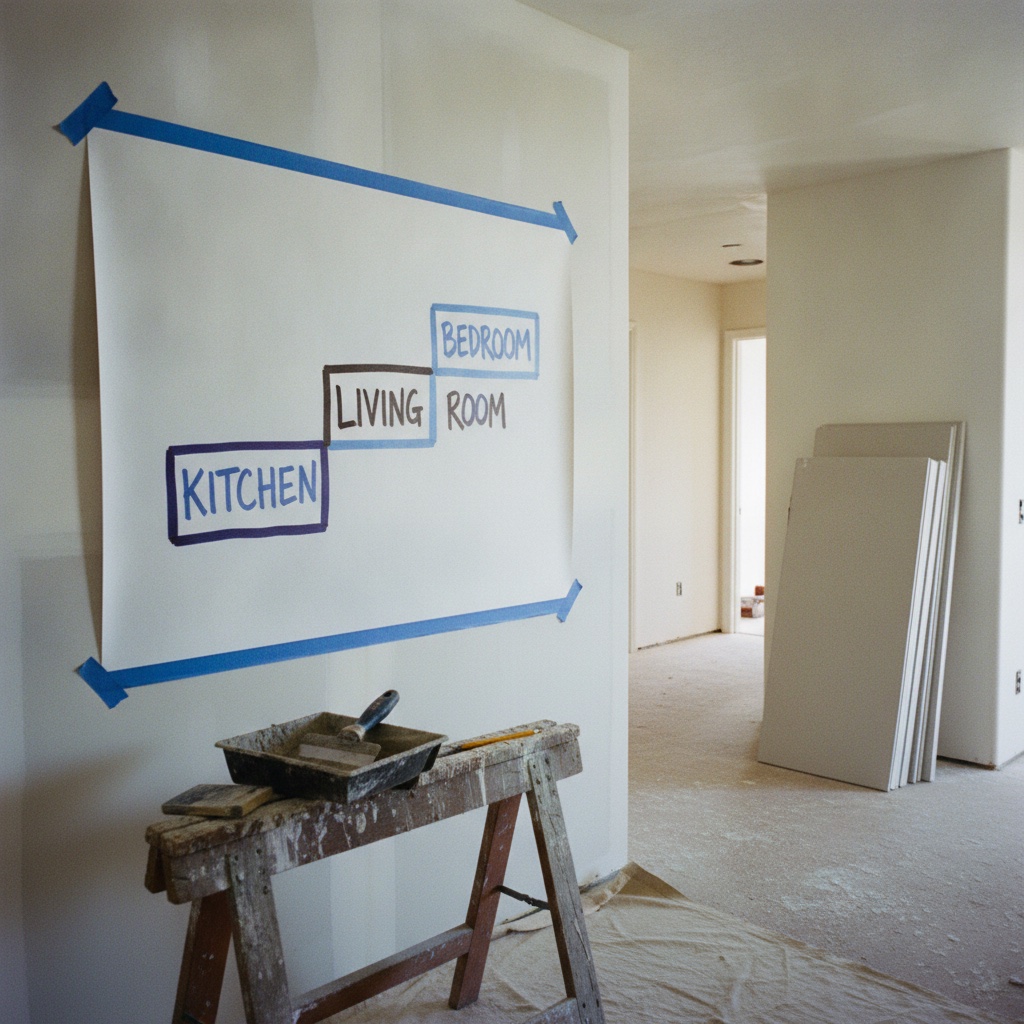
The first room finished becomes the reference standard for every room after it. Finish level, texture, corner profile, paint sheen: those choices echo down the hallway. That is why the room connecting to the most other spaces should usually go first. In most SoCal floor plans that means the hallway or the main living area, not the back bedroom.
Here is the trap with starting small. A guest bedroom finished at level-4 with a light orange peel looks fine on its own. Then the great room gets a smooth level-5 skim three months later, and suddenly the two read like different houses. Designers say the public rooms drive the design language. Drywall agrees. Set the finish standard where guests stand, then carry it back through the private rooms.
Two exceptions outrank everything. If any room involves structural work, a moved wall or a new header, that room goes first, because framing surprises change budgets. And if a bathroom is in the mix, its rough plumbing and electrical must pass inspection before anyone closes a wall, so that room’s schedule answers to the inspector, not to preference.
The Order a Drywall Crew Actually Wants
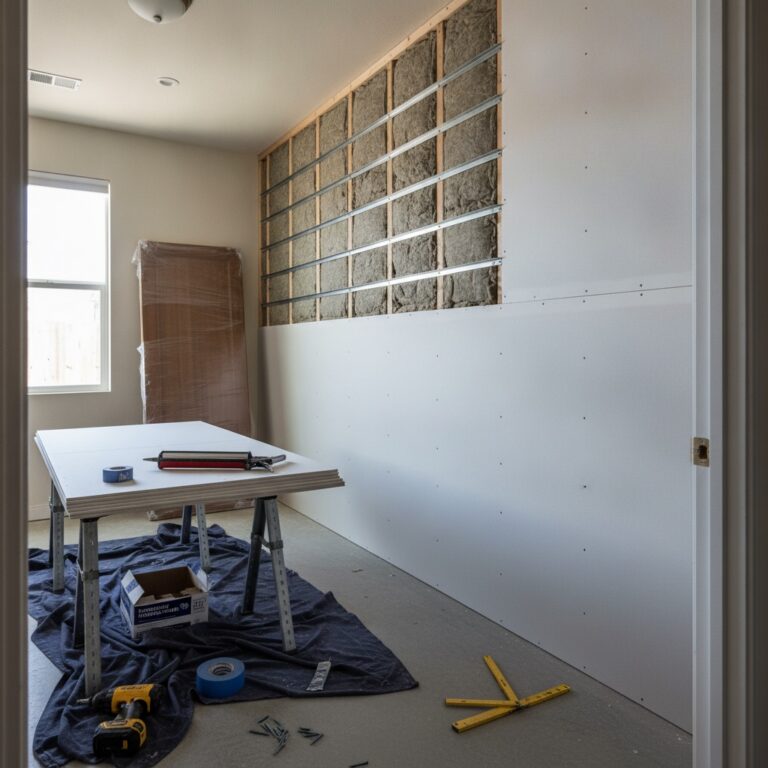
Ask a finisher how to run three rooms and the answer is almost always the same: demo everything at once, hang everything at once, then let the mud move through the house in one wave. Joint compound sets on its own clock. While the bedroom’s second coat dries, the hallway takes its first. While the hallway dries, the office gets coated. No one stands around watching mud dry, which is where room-by-room schedules quietly bleed money.
The wave has a rhythm worth knowing. Tape and first coat, then a second coat the next working day, then a third pass where the light is unforgiving, with sanding between. Each coat wants overnight dry time, and it wants longer when a marine-layer morning keeps humidity up near the coast in Costa Mesa or Huntington Beach. Three rooms in one wave stack those waits on top of each other instead of end to end.
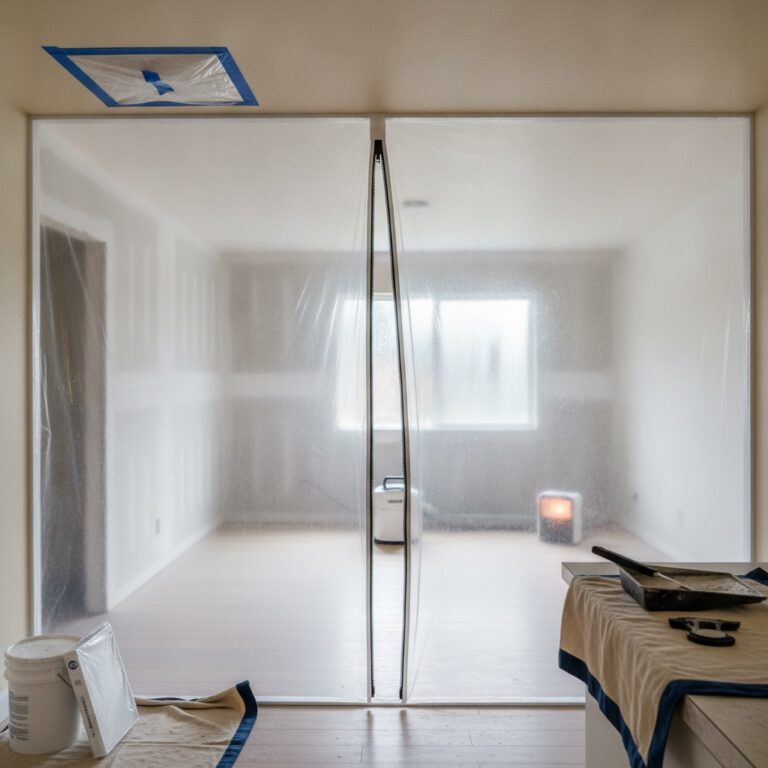
Batching also means one containment setup instead of three. Plastic barriers, zipper doors, floor protection, and a negative-air fan go up on day one and come down once. Texture gets sprayed in a single pass, so the knockdown in room one matches the knockdown in room three because it came out of the same hopper on the same afternoon. Same story for primer and paint.
Strict room-by-room still has its place. If the family needs every room but one livable at all times, the crew can run two rooms in the wave and hold the third. That costs a second mobilization, but it keeps a bedroom usable. The point is to choose that tradeoff on purpose, not to fall into it by default.
What the Sequence Does to the Invoice
Every separate start costs money before a knife ever touches mud. Mobilization in Orange County runs roughly $150 to $400 per trip once travel, setup, and floor protection are counted. Three rooms run as three separate projects can add $600 to $1,200 against the batched version of the same scope, and that is before the containment materials get bought twice more.
The square-foot math stays familiar. Hang-tape-finish on remodel work in OC typically lands around $2.50 to $3.50 per square foot at level-4, and $4.00 to $5.50 where a level-5 skim is the right call, paint separate. A three-room package near 1,100 square feet of wall and ceiling prices meaningfully better per foot than the same rooms quoted one at a time, because the crew’s dead time disappears from the bid.
Watch the change-order seams too. The most common multi-room surprise is what shows up when the hallway wall opens: an undersized junction box, old water damage at a bath wall, insulation that stops halfway. Batched demo surfaces every surprise in week one, when there is still calendar left to absorb it. Room-by-room demo can spring the worst surprise in week five.
Payment usually follows the wave, not the rooms. A typical JNL multi-room agreement invoices at demo complete, at finish complete, and at final walk. That keeps the paper trail matched to milestones a homeowner can see on the walls, instead of the room-by-room pattern where a fresh deposit lands three separate times.
A July Start That Beats the School Bell
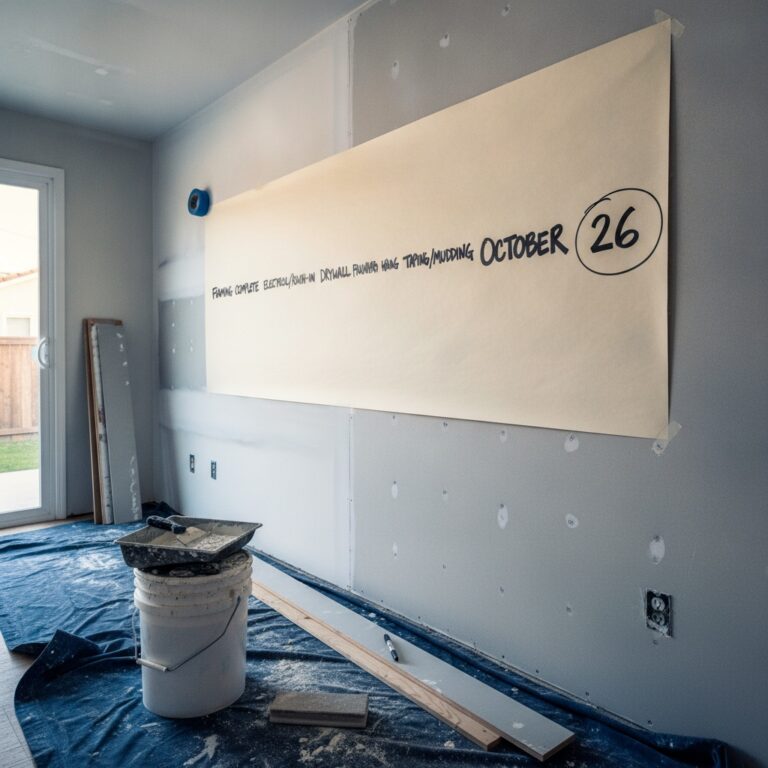
Most Orange County districts are back in session by mid-to-late August, so a July start has a real deadline. A workable calendar from a consult this week looks like this. Week one: walk the rooms, fix the scope, pick finishes against physical samples. Most cosmetic drywall work needs no permit, but if a wall moves or circuits relocate, first plan check commonly runs about ten business days in local OC jurisdictions, so file immediately.
Week two: demo all rooms in one or two days, containment up, surprises found and priced while there is room to react. Weeks three and four: hang, then run the tape-and-finish wave, four to six working days of coats and dry time across the three rooms. Week five: texture, prime, and paint in single passes. Week six: punch list, final walk, and furniture back before the first bell rings.
Kids home in July is the one real complication. Cutting happens outside, the work zone stays zipped, and the crew’s day ends before dinner. A good sequence keeps the open-wall window short in the rooms kids actually use, which is one more argument for putting the bedroom early in the wave, not last.
Sequencing is a fifteen-minute conversation when someone who runs drywall crews walks the actual rooms. JNL does that walk for free across Orange County and nearby Long Beach, Inland Empire, and north San Diego neighborhoods. We look at what connects to what, flag the permit triggers, and hand back a room order with dates on it. Book the free in-home assessment while July still has weeks left in it, and the house is quiet again before school starts.
Morning-context sources used: Harvard Joint Center for Housing Studies, “Remodeling Growth Set to Downshift in Late 2026” (jchs.harvard.edu); Houzz Pro, “Renovation Nation: 9 Home Remodeling Trends for 2026” (pro.houzz.com); Creekstone Design + Remodel, “How To Decide What Room To Tackle First In a Multi-Room Renovation Project” (creekstonedesigns.com); Block Renovation, “Home Renovation Order: What Comes First in a Remodel” (blockrenovation.com); OC Development Services, Permit FAQs (pwds.oc.gov); Jaspector, Orange County 2026 Building Permit Guide (jaspector.com).