Request Your Free Quote!

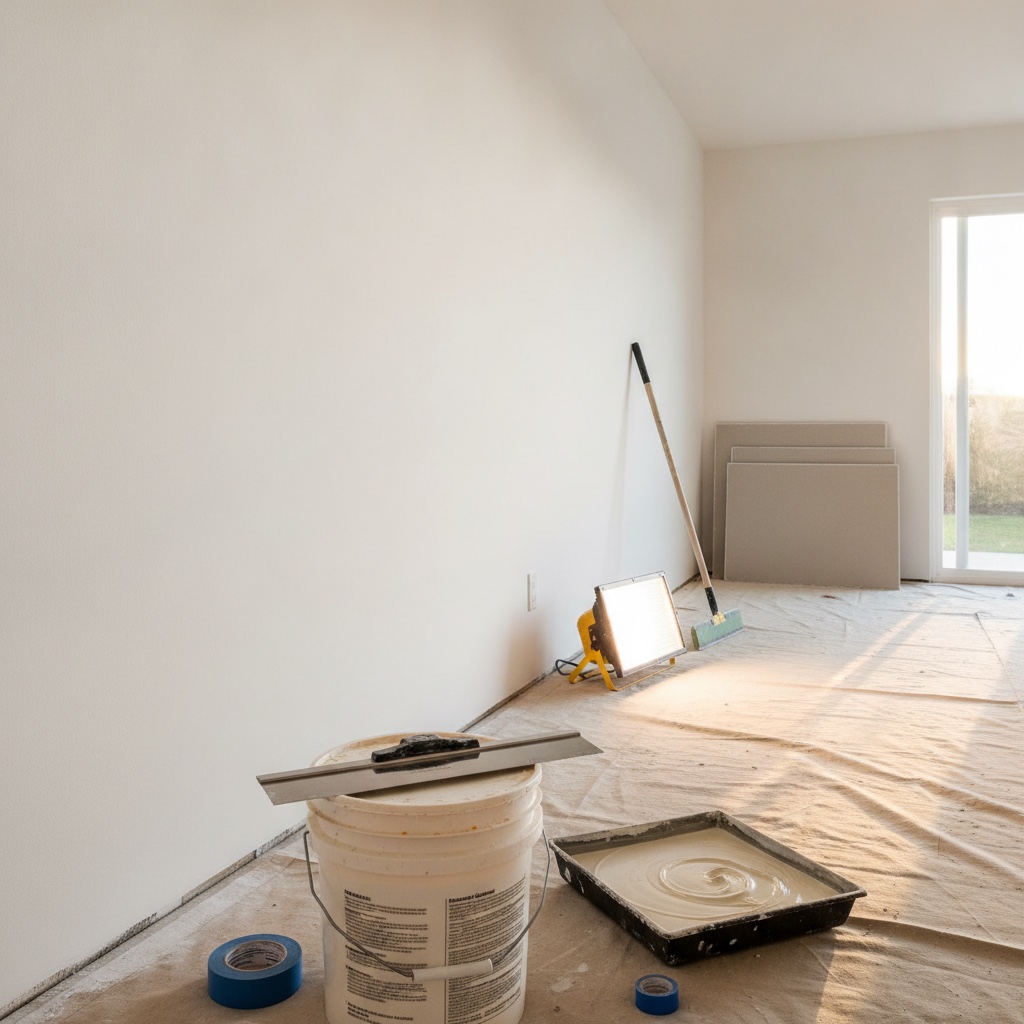
Flat Walls, West Light: A San Clemente Level-5 Great Room
A San Clemente great room went from orange peel to a level-5 flat finish in nine working days. The full timeline, the two decisions, and the real cost.
A 1996 tract home in San Clemente, four blocks up from the 5, with a great room that runs 22 feet by 17 feet under a ceiling at 9 feet 4 inches. West-facing sliders. The owners had lived with orange-peel texture for eleven years and never once minded it, right up until they picked a deep charcoal for the fireplace wall and held the sample against the plaster at four in the afternoon. Every low spot, every taped seam, every roller lap from the last paint job read like a topographic map.
That is how most level-5 conversations start in south Orange County. Not with a contractor pitching an upgrade. With a homeowner holding a paint chip up in raking light and realizing the texture is about to fight the color and win. What follows is the whole project, nine working days from the first walkthrough to the last coat, with the numbers and the two decisions that actually made the difference.
What the Room Looked Like on Day One
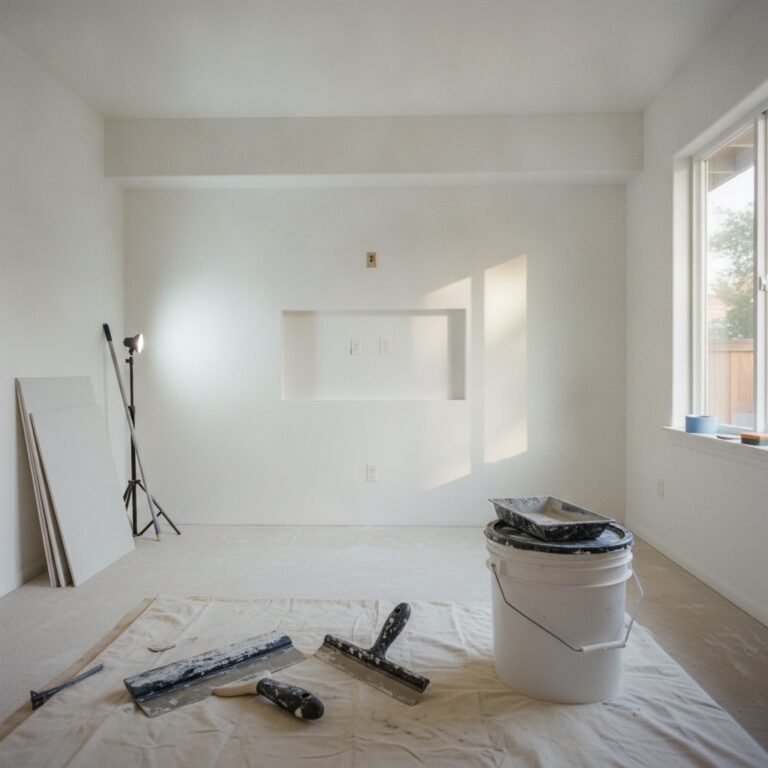
The walls were original orange peel over a level-4 base, sprayed fast in 1996 the way most Talega and Forster Ranch tracts were finished. The ceiling carried a heavier splatter knockdown. A 9-foot section of wall still separated the kitchen from the great room, which made the whole downstairs read as two smaller boxes instead of one open space.
That wall was the first question. A framer confirmed it was non-bearing: no point loads above, joists running parallel, nothing in the attic landing on it. That kept the job in drywall territory. Had it been bearing, the owners would have needed a structural engineer to size a beam and posts first, which runs $1,500 to $4,000 in California before a single sheet goes up, plus permits and inspection. JNL refers that work out and picks the job back up once the header is in and signed off.
Total surface in play once the wall came down: roughly 610 square feet of wall and 374 square feet of ceiling, just under 1,000 square feet of finish. The rest of the downstairs, about 1,180 square feet of hallway and bedroom surface, stayed exactly as it was. Drawing that boundary on day one is what kept the budget where the owners wanted it.
Nine Working Days, Start to Finish
The schedule ran nine working days with the family living upstairs the whole time. Day one was assessment and containment: zip walls at the stair landing, floor protection over the new engineered oak, negative-air fan venting out a slider. Containment is not optional on a skim job. Two full passes of compound produce a lot of fine dust, and fine dust finds stairs, HVAC returns, and every room nobody thought to close off.
Day two was texture removal. Orange peel comes off wet, scraped after a light mist, which keeps the dust down and saves the paper face underneath. Day three was demo on the 9-foot wall and hanging fourteen sheets, half-inch on the walls and five-eighths on the ceiling patch where the old wall header used to sit.
Days four and five were tape and two fill coats. Day six brought the third coat and the first full skim across every wall and the ceiling. Day seven was the second skim and a light pole sand. Day eight was high-build primer, spot glaze on three shiners that only showed under the work light, then a final sand to 220. Day nine was paint and the walk.
Nine days sounds slow next to a level-4 job that would have wrapped in five. That gap is the whole point. A skim coat is not a step you speed up. It is two thin passes of compound over the entire surface, sanded flat, then lit from a hard angle and corrected until the light stops finding anything.
The Two Decisions That Actually Changed the Room
The first decision was where level 5 stopped. The owners priced the entire downstairs at level 5 and then pulled it back to the great room and the kitchen wall only. Everything else stayed level 4. That was the right call. Level 5 earns its money where three conditions stack up: strong side light, a dark or saturated color, and long uninterrupted wall runs. Their great room had all three. The hallway had none of them, and nobody will ever notice.
The second decision was the ceiling. Knocking the splatter texture off a 374-square-foot ceiling and skimming it flat added two days and about $1,400. The owners went back and forth for a week. What settled it was standing in the room at 5 p.m. with the sliders open. A flat wall under a textured ceiling looks unfinished, because the eye reads the ceiling line as the reference edge. Carry the flat finish across both or the wall work loses half its effect.
Smooth wall is not a fad in coastal Orange County, it is where the market has gone. Finish suppliers and trim manufacturers have spent 2026 writing about the same shift: heavy texture out, flat planes in, because clean surfaces give architectural lighting something to work with and heavy texture flattens it out.
What It Cost, and What Drove the Number
Level-5 finish work prices out at $3.50 to $7.50 per square foot in 2026 depending on ceiling height, room complexity, and how bad the substrate is. Standard board and level-4 installation nationally sits closer to $2.26 to $2.69 per square foot as of May 2026. Half-inch sheets themselves run $12 to $16 each, which is the part homeowners fixate on and the part that matters least. Labor is the job.
This one landed at $5,400 for the great room package: texture removal, demo and patch on the wall opening, fourteen sheets hung, full tape-out, two skim passes, high-build prime, and sand. Roughly $2,100 of that was the upcharge over finishing the same room at level 4. Paint was separate and the owners hired their own painter, which is common and perfectly fine as long as the painter knows to use a low-sheen product.
One cost note worth saying out loud. A skilled level-5 applicator takes two to three times longer on a room than a level-4 crew does. Anyone quoting a level-5 great room at level-4 money is either not skimming the full surface or plans to sand it in one pass and call it done. Ask any bidder how many skim coats are in the price. The answer should be two.
Why the Calendar Matters Right Now
Interior finish work wants a dry, stable house. Compound sets on a schedule that humidity pushes around, and a room that is taking on moisture through a wall or a ceiling has a problem that no amount of skim coat solves. A flat finish is also the least forgiving surface in the house. A hairline crack that orange peel would hide reads plainly on a level-5 wall, so the substrate needs to be settled before the skim goes on.
Southern California just got a preview of the wet season five weeks early. Hurricane Marie stayed more than 700 miles offshore over Labor Day weekend and still pushed a quarter inch to an inch of rain across Los Angeles County, with coastal flooding on Ocean Blvd in Long Beach and standing water in Seal Beach. NOAA’s August 20 seasonal outlook put above-normal precipitation odds over coastal California above 50 percent from December through April, with the peak window landing January through March 2027. Fall stays quiet, then the pattern turns quickly.
Practically, that means the good months for a project like the San Clemente great room are the ones on the calendar right now. October and November are dry, the house is stable, and crews are not stacked behind water-damage calls. By February those same crews will be chasing ceiling stains from Dana Point to Yorba Linda, and a finish project competes with an emergency for the same calendar slot.
Harvard’s Joint Center for Housing Studies reported in August that remodeling contractor establishments nationally grew to over 128,000 by 2022, up a quarter in five years. More firms does not mean more good finishers. Homeowners have to sort quality on their own, and the fastest way to sort a drywall bidder is to ask about skim passes, corner bead type, and what the crew does about shiners.
If a room in your house is about to get a dark color, a wall of new glass, or a light fixture that washes down a long surface, it is worth knowing whether level 5 is the right call before the painter shows up. JNL walks the room, checks the existing finish under a work light, and gives a written number on both the level-4 and level-5 versions so the choice is yours to make. The in-home assessment is free, and September is the month to book it.
Morning-context sources used: https://stormbag.co/blogs/news/hurricane-marie-flooded-long-beach-and-seal-beach-a-southern-california-wake-up-call-for-el-nino-winter (Sep 8, 2026); https://www.latimes.com/california/story/2026-09-06/la-hit-by-rare-september-rain-coastal-flooding-from-hurricane-marie (Sep 6, 2026); https://stormbag.co/blogs/news/noaas-new-winter-outlook-el-ninos-rain-arrives-late-hits-california-and-the-southeast-hardest (Aug 20, 2026); https://www.jchs.harvard.edu/blog/bigger-market-more-players-what-20-years-data-reveal-about-remodeling-industry (Aug 20, 2026); https://www.angi.com/articles/cost-to-skim-coat-drywall.htm (2026 cost data); https://www.trim-tex.com/blog/drywall-design-trends-for-2026 (2026 finish trends).