Request Your Free Quote!

Home Office Soundproofing in SoCal: STC Ratings That Work
What actually quiets a SoCal home office: STC targets, Green Glue vs resilient channel, real Orange County costs, and a two-week summer timeline.
Your 2 p.m. video call in a Fullerton home office picks up everything. The dishwasher. The dog. Two kids home on summer break arguing over a controller in the next room. The wall between you and all of it is probably a 1990s builder-grade assembly, half-inch drywall on each side of a 2×4 stud bay with nothing in the cavity. That wall rates around STC 33. Normal speech passes through it like it is not there.
Mid-July is the right moment to fix it. Remote work has not faded. CNBC reported on July 1 that more than a third of U.S. employees still work from home at least part of the week, even as return-to-office rules tighten. If that room is where you earn a living, the wall around it deserves the same budget line as the chair and the monitor.
What STC Numbers Mean at Your Desk
STC stands for Sound Transmission Class. It measures how much airborne sound a wall assembly blocks, and it is the number that matters when you compare options. A bare interior wall with single-layer drywall and empty stud bays lands near STC 33. At 33, you can follow a conversation on the other side without trying. Add fiberglass batts to the cavity and you climb to roughly STC 39. Better, but a speakerphone still bleeds through.
The working target for a home office is STC 50. At 50, loud speech on the far side reads as a faint murmur, and normal conversation disappears. Purpose-built panels like QuietRock 510 on both faces of a batt-filled 2×4 wall test at STC 52. You do not need a recording studio. You need the kids’ movie to stop showing up in your client calls.
One honest caveat before the wall gets all the blame. Sound sneaks around walls, not just through them. A hollow-core door, an undercut gap, and back-to-back electrical outlets can undo a good assembly. Any serious soundproofing scope in a Tustin or Anaheim Hills office includes a solid-core door, a door sweep, and putty pads on the outlet boxes.
Mass, Damping, and Decoupling
Three levers move an STC number, and every quote you see is some mix of them. The first is mass. Heavier walls block more sound. The cheapest mass is a second layer of 5/8-inch Type X drywall over what you have. On its own, doubling up buys you a few points. Paired with the next lever, it buys a lot more.
The second lever is damping. Green Glue is a compound applied between two layers of drywall. It converts vibration into small amounts of heat as the layers shear against each other. Coverage runs about two tubes per 4×8 sheet. The appeal is practical: your existing wall stays put, the crew laminates a new layer over it, and the room is only out of service for days, not weeks.
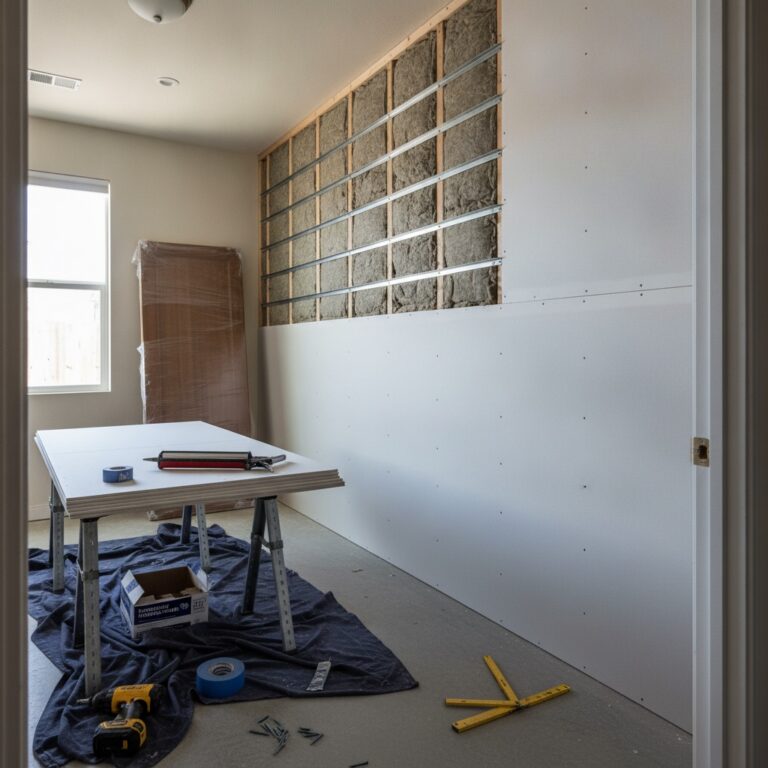
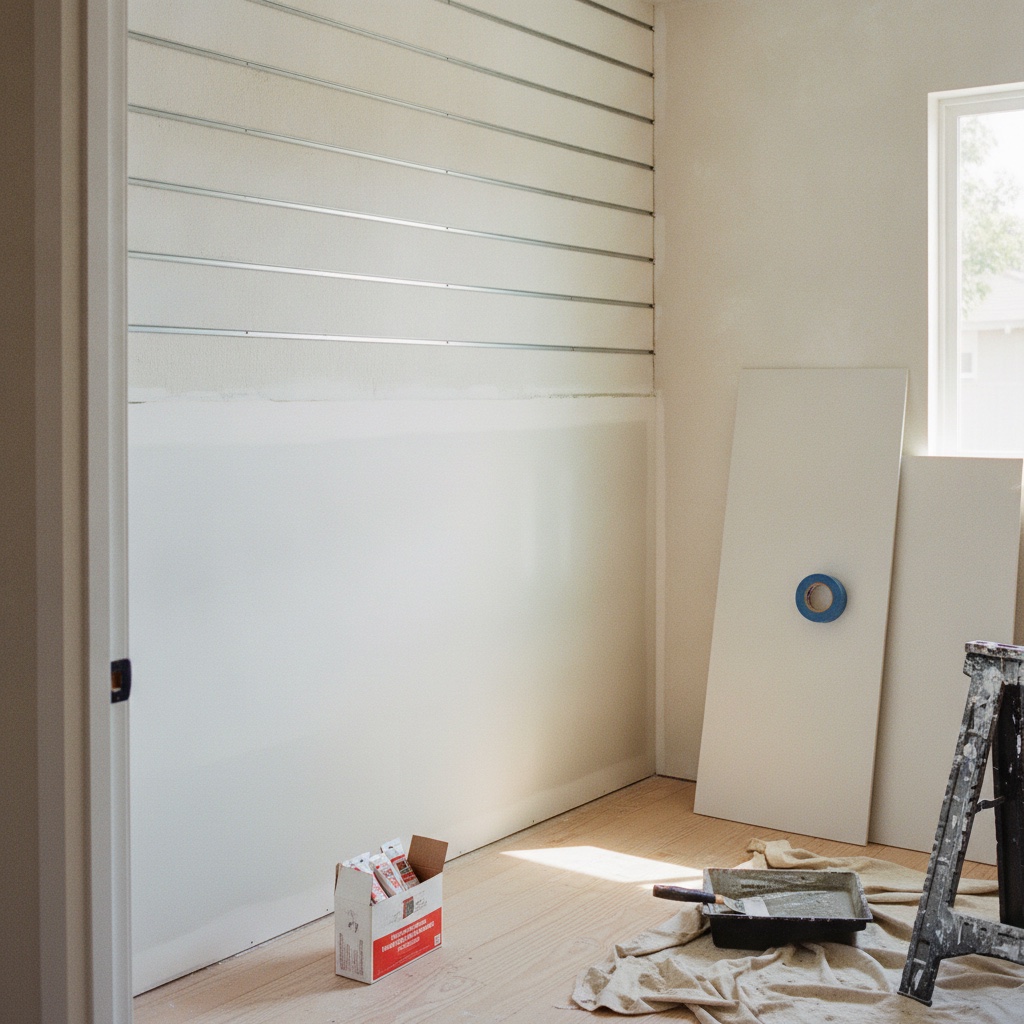
The third lever is decoupling. Resilient channel is thin steel hat channel screwed across the studs, with the new drywall hung on the channel instead of the framing. The drywall floats, so the studs stop acting like a soundboard. Sound isolation clips with hat channel do the same job with better performance and less risk of error. Decoupling is the strongest single lever, and it is also the most invasive, because the old rock usually comes down first.
Green Glue versus resilient channel is the question homeowners actually ask, and the answer is about tolerance for demo. Green Glue over the existing wall means no tear-out, minimal dust, and a solid jump when combined with a second layer of 5/8-inch rock. Channel outperforms it on paper but fails badly when a single screw finds a stud and shorts the whole system. Acoustics suppliers push the combined recipe for a reason: decouple, insulate the cavity, double the drywall, damp between layers. That stack is how a wall clears STC 55.
What This Costs in Orange County
For the laminate approach, figure the finished wall, not the room. A typical 12-foot office wall runs about 96 square feet. Adding Green Glue and a second layer of 5/8-inch Type X, taped, finished to level 4, and repainted, generally runs $8 to $14 per square foot installed in Orange County. Call it $800 to $1,400 for that one shared wall, plus $350 to $600 if a solid-core door joins the scope.
A full decouple is a bigger check. Stripping the wall, adding batts, hanging clips and channel, doubling 5/8-inch rock with damping compound, and finishing runs $18 to $28 per square foot. A whole 10×12 office treated on two walls and the ceiling can land between $6,000 and $10,000 with a level-4 finish. A level-5 skim adds roughly $1 to $2 per square foot and is worth it if the room gets hard afternoon side-light, which most west-facing SoCal offices do.
Material pricing argues for booking sooner, not later. Gypsum manufacturers including American Gypsum, National Gypsum, and CertainTeed pushed price increases effective June 1, and Roseburg followed on July 5. Tracked gypsum prices climbed through the second quarter on steady construction demand. A quote signed this month locks material at today’s numbers.
Done Before the School Year Starts
Here is the calendar math for a single-room soundproofing job started in mid-July. Week one covers the in-home assessment, measurements, and the assembly decision. Most like-for-like interior drywall work in OC cities needs no permit when framing, electrical, and plumbing stay untouched, which keeps the schedule in your hands. Work itself is fast: demo and prep on day one, channel and rock on day two, then three to four days of taping and finishing as coats dry, then prime, two topcoats, and a final walk. Two weeks door to door, cure time included.
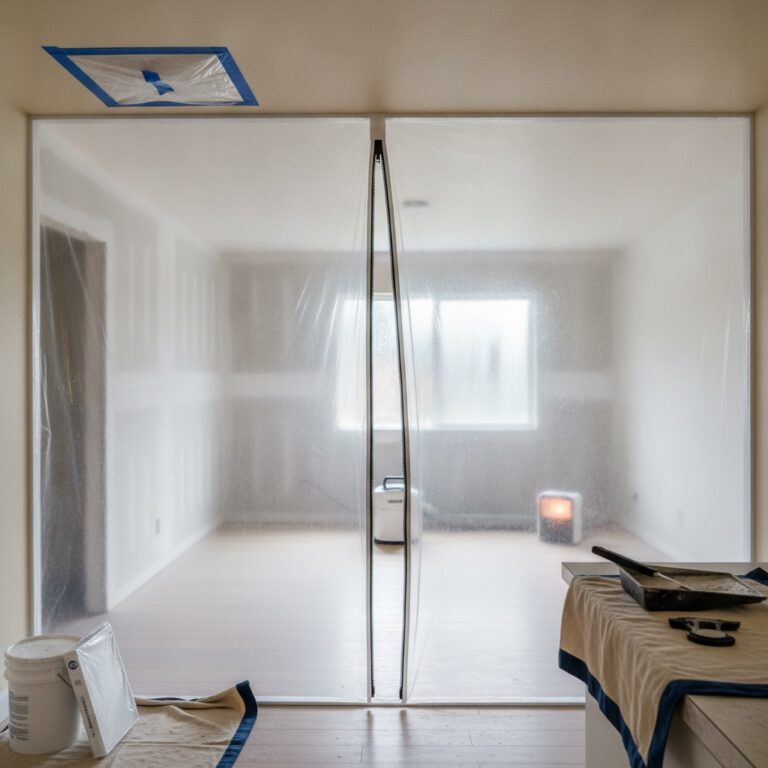
Summer cuts both ways and you should plan for it. Kids at home means the work zone needs real staging: zip-wall plastic at the doorway, floor protection down the hall, and a crew that vacuums out daily. The upside is access. You are not working around a school-run schedule, and an empty office during a family trip is the perfect demo window.
The booking reality is the quiet deadline. Fall is the busy season for SoCal interior work, and crews start filling September and October slots by early August. A mid-July call gets your office finished by the first week of school. An after-Labor-Day call often means November.
If a wall in your house is costing you focus, we can tell you which of the three levers it needs and what that costs before you commit to anything. JNL Drywall offers a free in-home assessment anywhere in Orange County and the surrounding area. We will measure the room, listen to the noise problem, and hand you a scope with real numbers and a finish date you can plan a school year around.
Morning-context sources used: CNBC, “More than one-third of employees still work from home, new research shows” (July 1, 2026, cnbc.com); ABC Supply Interiors, manufacturer pricing updates for June 1 and July 5, 2026 increases (abcsupplyinteriors.com); IMARC Group, gypsum price trend, Q2 2026 (imarcgroup.com); Soundproofing Company, “Understanding STC and STC Ratings” (soundproofingcompany.com); Soundproof Guide, “Green Glue vs Resilient Channel” (soundproofguide.com); Harvard JCHS, Leading Indicator of Remodeling Activity, May 2026 release (jchs.harvard.edu).