Request Your Free Quote!


What Home Insurance Pays for Drywall Damage in 2026
What homeowners insurance covers for drywall damage in OC, what it denies, and the deductible math that decides whether filing a 2026 claim is worth it.
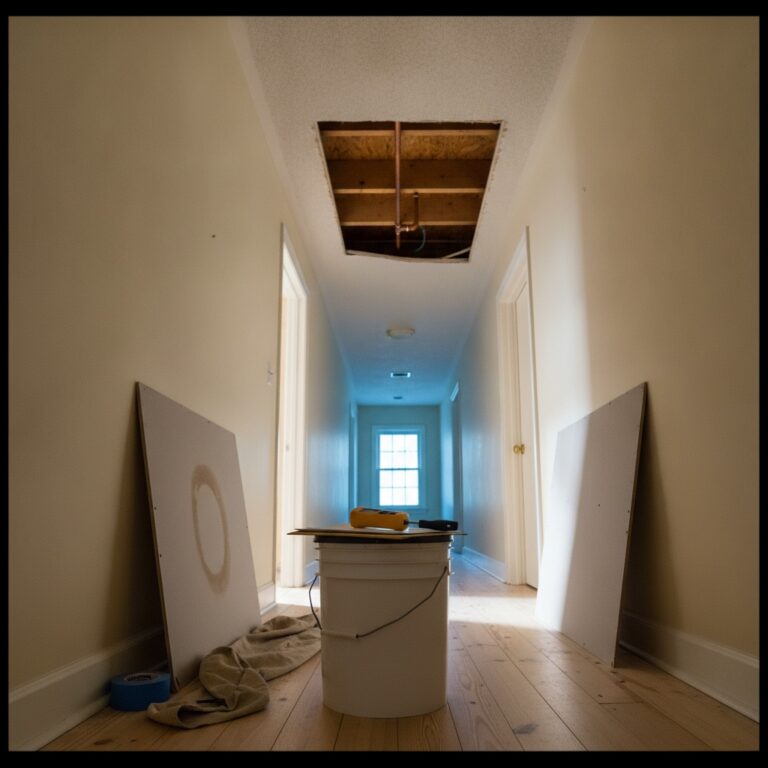
A burst supply line under a second-floor bathroom in Anaheim can soak a living room ceiling in a single afternoon. The drywall sags, the texture stains brown, and the repair quote lands somewhere between $900 and $2,400 once you add ceiling demo, new rock, a knockdown match, primer, and paint. The first question most homeowners ask is simple. Will insurance pay for this? The honest answer is “sometimes,” and the reason hides in two words buried in your policy language.
That gap between what you assume is covered and what the carrier actually pays trips up SoCal homeowners every rainy season and every summer pipe failure. Knowing the rule before you call your agent changes how you document the damage, how you frame the claim, and whether filing even makes sense. Here is how the money really works on a drywall claim in Orange County in 2026.
Sudden and Accidental Is the Whole Ballgame
Standard homeowners policies pay for drywall damage when the cause is sudden and accidental. A pipe that bursts behind a Fullerton wall, a washing machine hose that lets go, a fire, a storm that tears open a roof. Those are covered perils. The damage happened fast, you did not cause it, and you could not have reasonably prevented it. Carriers like NerdWallet and Bankrate both describe this as the dividing line that decides almost every wet-drywall claim.
The same soaked ceiling can be paid or denied depending on the story behind it. A slab leak that finally surfaced after months of slow seepage reads as gradual damage. A supply line that failed at 2 a.m. reads as sudden. Same brown stain, same texture, very different outcome. Adjusters look hard at this because it controls whether they write a check at all, so your documentation of when and how it started carries real weight.
What a Standard Policy Usually Pays For
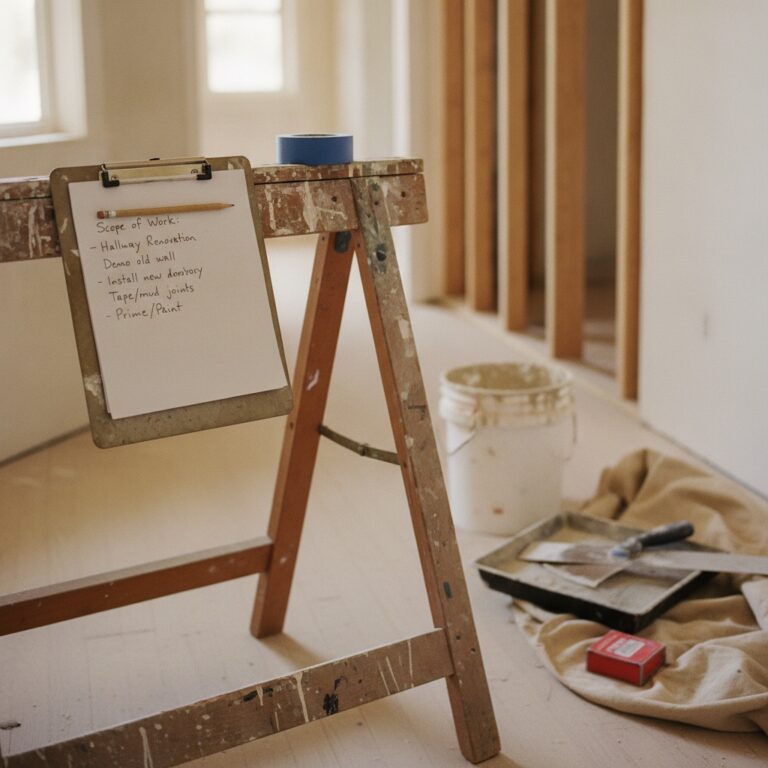
When the cause clears that bar, most policies cover the full drywall repair chain, not just the patch. That means water extraction, drying and dehumidification, cutting out the ruined rock, hanging new board, taping, a texture match to your existing knockdown or orange peel, primer, and paint. On a typical 200 to 400 square foot ceiling hit, that scope runs $1,200 to $3,500 in OC depending on access, ceiling height, and whether the finish is a basic level-4 or a tougher smooth level-5.
Carriers also tend to pay for what the trade calls consequential work. If the crew has to pull back baseboard, remove a section of crown, or open an adjacent wall to chase moisture, that labor usually rides along on the same claim. The key is that every line item must connect back to the covered event. A finished room that simply looked dated before the leak does not get a free upgrade because water touched one corner of it.
What the Carrier Will Not Touch
The denials cluster around a few predictable causes. Slow leaks and long-term moisture get treated as maintenance, so a drip that quietly rotted the drywall behind a Santa Ana shower for a year is on you. Wear and tear, settling cracks, and nail pops are never covered because nothing sudden caused them. The failed part itself, the worn hose or the aged water heater, also falls outside the policy even when the water it released is covered.
Flood is its own category. A standard homeowners policy excludes rising water and flood entirely, which matters in low-lying parts of the Inland Empire and coastal San Diego. That coverage only comes from a separate flood policy. Mold gets murky too. Many SoCal policies cap mold remediation at a few thousand dollars or exclude it unless it grew from a covered water event, so a stained ceiling discovered weeks after the marine layer set in can turn into an expensive surprise.
The Deductible Math Most People Skip
Coverage is only half the decision. The other half is whether filing is worth it. A common all-perils deductible runs $1,000 to $2,500 in California, and you pay that before the carrier pays a cent. If a single-wall patch in Irvine runs $650, filing makes no sense. You would spend your deductible and still pocket nothing while putting a claim on your record.
That record matters more in 2026 than it used to. Insurify reports California homeowners could face roughly a 16 percent rate jump this year as carriers recover from the 2025 wildfire season, and Inszone notes SoCal’s wet stretches are pushing rates higher on top of that. A claim or two can move you into a worse tier or cost you a claims-free discount. For smaller drywall repairs, paying out of pocket and keeping a clean history often saves more over three years than the claim returns today.
There is a second cost pressure worth knowing. Construction Dive reported tariffs drove construction input prices up to start 2026, and more than half of U.S. gypsum comes from Canada and Mexico. Drywall material has crept up 2 to 4 percent and labor now drives roughly 70 percent of installed cost. So the repair number on a denied claim is climbing, which makes the file-or-not call even sharper.
How a Drywall Crew Fits Into Your Claim
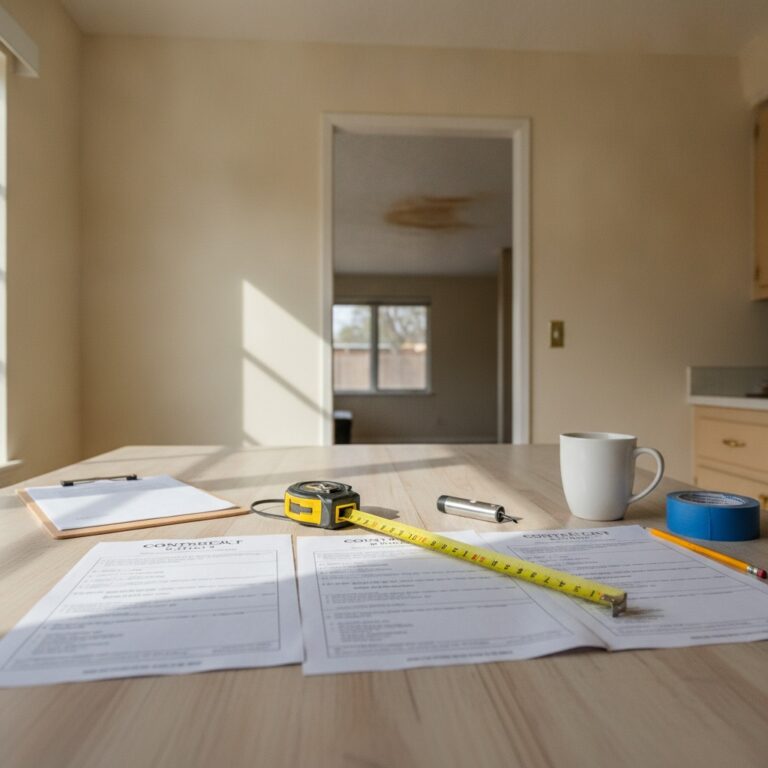
A good drywall contractor does more than hang board after the adjuster leaves. The crew that scopes the job early can document the moisture line, photograph the failure point, and write a line-item estimate that matches how carriers think. That paperwork is often the difference between a clean approval and a back-and-forth that drags for weeks while your ceiling stays open.
JNL Drywall walks Orange County, Inland Empire, and San Diego homeowners through that exact moment. We come out, read the damage, tell you honestly whether it looks like a covered sudden event or a maintenance call, and hand you a written scope you can take straight to your adjuster. If the smart move is paying out of pocket to protect your rate, we will tell you that too. Book a free in-home assessment and get a straight read before you ever pick up the phone with your carrier.
Morning-context sources used: Insurify, California Homeowners Could Face 16% Insurance Rate Jump in 2026; NerdWallet, Does Homeowners Insurance Cover Water Damage?; Bankrate, Does Homeowners Insurance Cover Water Damage?; Angi, How Much Does Drywall Repair Cost? 2026 Data; Construction Dive, Tariffs drove construction input prices up to start 2026; Inszone Insurance, 2026 Home Insurance Rates.