Request Your Free Quote!


The Wall Came Out: A Laguna Niguel Kitchen Opens Before El Nino
An 11-foot load-bearing wall, a flush beam, and a popcorn ceiling gone smooth. How a Laguna Niguel kitchen opened up in 11 working days, with OC costs.
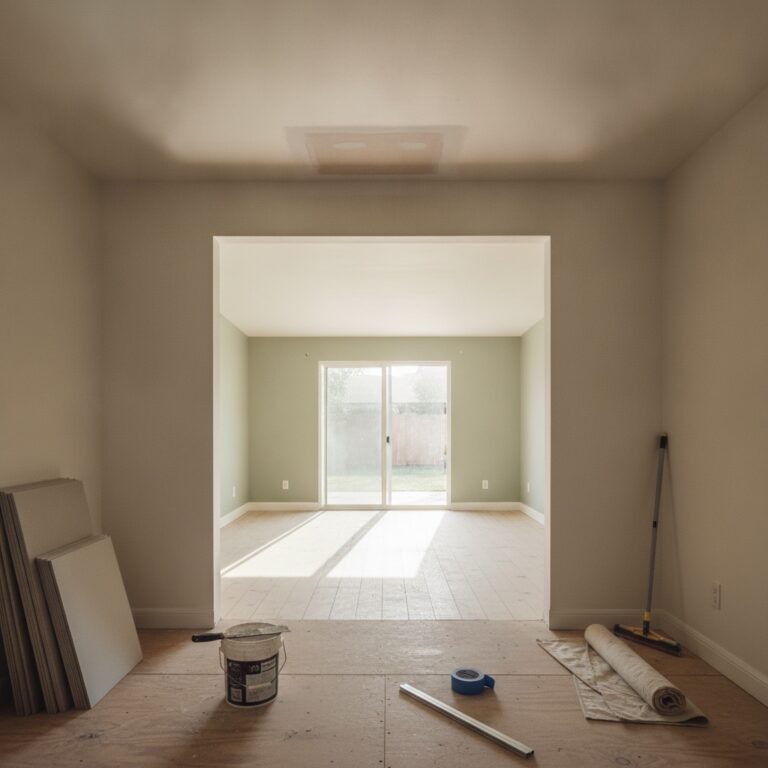
The wall was 11 feet long, 8 feet tall, and it cut a 1986 Laguna Niguel single-story right down the middle. On one side sat a galley kitchen with one window. On the other, a family room with a sliding door that got all the afternoon sun. The homeowners wanted one room before Thanksgiving, with the whole family at one table. They also wanted the dust gone before the rain showed up. With forecasters calling for a historic El Nino this fall, that second goal mattered as much as the first.
This post walks that project from the first look to the final walk. It is a composite of the kitchen-wall jobs we see across south Orange County, so the numbers are real ranges, not one family’s invoice. The point is to show which decisions actually change how the room looks when the plastic comes down.
The first walk: is it load-bearing, and what is above it
Every one of these projects starts in the attic, not the kitchen. In this house the ceiling joists ran front to back and lapped right on top of the wall. That made it load-bearing, which is the common answer in 1980s Laguna Niguel and Mission Viejo tracts. A structural engineer visited, sized the beam, and wrote the letter the city needs. Engineering on a single beam like this runs $600 to $1,200 in Orange County. The permit took about two weeks to come back.
The attic visit also answers the drywall questions. How many feet of ceiling get cut open? Is there a soffit, a duct, or a vent stack hiding in the wall? Here there was one 2-inch vent and a single electrical run feeding the old kitchen light. Both moved without drama. A water line in the wall would have changed the schedule. That is why the attic and the wall cavity get checked before anyone signs a quote, not after the demo crew finds a surprise.
Flush beam vs dropped header: the decision that defines the room
This is the call homeowners remember. A dropped header hangs below the ceiling, usually 9 to 12 inches. It is cheaper and faster because the framer works from below. A flush beam lifts up into the attic and hangs the joists off the beam with metal hangers. The ceiling reads as one flat plane from the front door to the slider. Flush framing typically added $2,500 to $4,000 to the structural line on jobs like this, mostly in attic labor.
The family chose flush. In a 480 sq ft great room with 8-foot ceilings, a 10-inch drop makes the space feel like two rooms that happen to share a floor. The drywall side gets harder with a flush beam, though. The new ceiling strip runs 14 feet long and about 2 feet wide, and it has to land perfectly flat against the old ceiling on both sides. Any crown or dip in that strip shows up the first time the afternoon sun comes through the slider. Expect the framer and the drywall crew to shim and string-line that ceiling before a single sheet goes up.
Popcorn, patching, and why the whole ceiling went smooth
Both rooms had the original acoustic popcorn. Matching popcorn over a 14-foot patch is possible, but it rarely disappears. New spray lands brighter and fluffier than 38-year-old texture, and the seam shows at an angle. So the team pulled a sample first. Any SoCal home built before the early 1980s needs an asbestos test before scraping, and plenty of contractors test homes from the late 1980s too. This one came back clean, which kept the job simple.
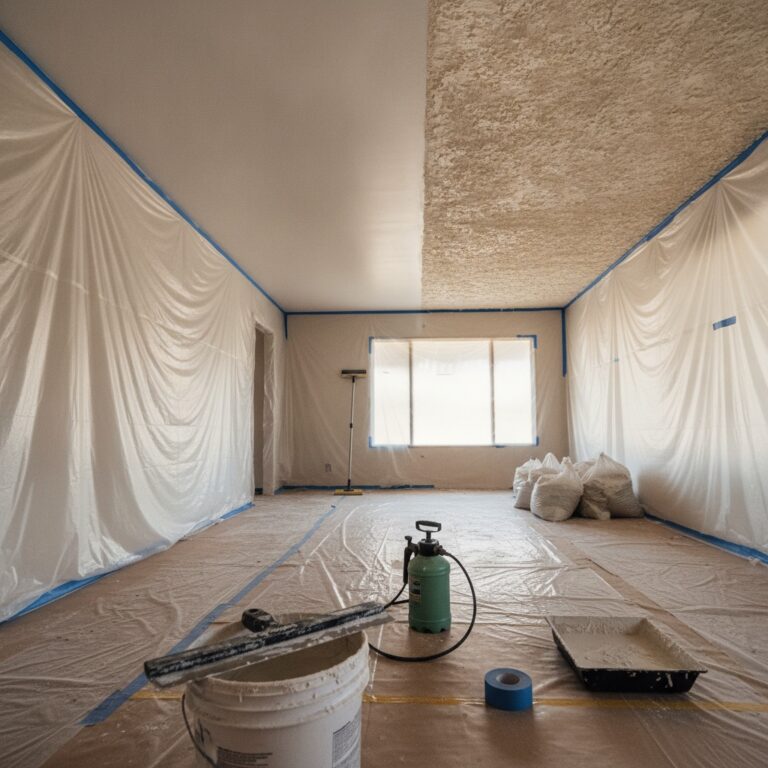
With a clean test, the crew wetted and scraped all 480 sq ft of ceiling, kitchen and family room together. Then came a level-4 finish on the new strip and a full skim coat across the rest. Scraping and skimming a ceiling this size usually runs $3.50 to $5.50 per sq ft in Orange County, on top of the patch. It sounds like scope creep. In practice it is the only way the flush beam actually looks flush, because a smooth ceiling hides the transition and a textured one advertises it.
The long wall facing the slider got a level-5 finish. That means a thin skim over the whole surface, not just the seams. Late-day light in Laguna Niguel comes in low and warm, and it skims across that wall at a steep angle. Level-4 would have shown faint tape lines by 4 p.m. every afternoon. Level-5 on one 18-foot wall added about $650.
The work calendar, day by day
Once the permit cleared, the build ran 11 working days. Here is how they broke down:
- Days 1 and 2: plastic dust walls with zip doors, floor protection, demo, and haul-off. The old wall left the house in about six hours.
- Days 3 and 4: framer sets the flush beam and hangers, then the city framing inspection.
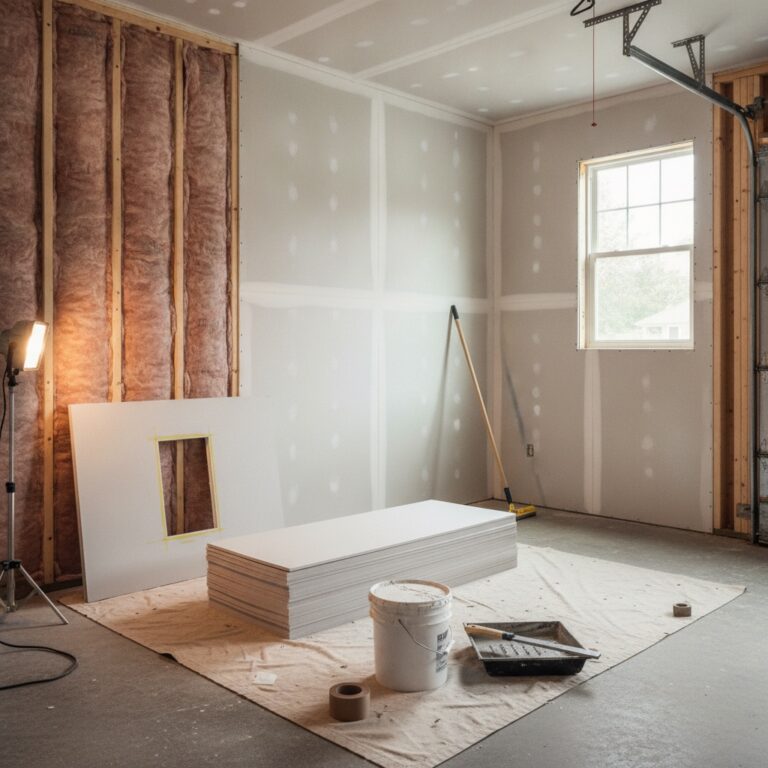
- Day 5: hang 5/8-inch board on the ceiling strip and patch the floor-to-ceiling scars where the wall met the side walls.
- Days 6 through 8: tape, coat, and the ceiling skim. Setting-type compound for the prefill and first coat.
- Days 9 and 10: level-5 skim on the long wall, sand, prime with a high-build primer.
- Day 11: two coats of flat ceiling white, eggshell on the walls, final walk and punch list.
The setting-type compound matters more in October than in July. Regular premixed mud dries by evaporation, and a humid, rainy week can stretch one coat from overnight to two days. Hot mud in a 45 or 90-minute mix cures chemically, so the schedule holds even when the windows stay shut. For a family trying to finish before the first big storm, that choice saved two or three days.
Budget on the drywall and finish side of a job like this lands between $6,500 and $9,500 in south OC. That covers hang, tape, the ceiling scrape and skim, level-5 on one wall, prime, paint, and cleanup. The structural side, including the beam, framer, engineering, and permit, usually adds $9,000 to $16,000 depending on the span and the attic.
Why fall is a smart window for this kind of job
Federal forecasters put the odds of a historic El Nino this October through December at 75 percent, and Southern California may see rain earlier than usual. That does not stop interior work. A kitchen wall is an inside job from start to finish. Rain does change two things, though. Closed houses trap dust, so the zip-door walls and a HEPA air scrubber earn their cost. And any ceiling stain in the work zone needs a roof check before anyone patches over it. Opening the attic for a flush beam is a free look at the roof deck. Use it.
The other reason is the calendar. Eleven working days plus a two-week permit puts a mid-October start comfortably ahead of Thanksgiving. A start in early November gets tight, and a start after the first atmospheric river means fighting slow-drying coats and crowded schedules. If a wall in your house has been in the way for years, a free in-home assessment is the fastest way to learn whether it is load-bearing, what flush vs dropped would cost, and whether your ceiling should go smooth while the room is open anyway. We can usually tell you all three in one visit.
Morning-context sources used: Los Angeles Magazine, El Nino outlook for L.A. (Sept 29, 2026); Los Angeles Magazine, long-duration heat wave (Oct 2, 2026); LAist, strong El Nino and flood insurance (updated Sept 30, 2026); Newsweek, CPC El Nino update (Sept 10, 2026); NOAA Climate Prediction Center, ENSO diagnostic discussion.