Request Your Free Quote!

AC Condensate Ceiling Stains: What SoCal Summers Do to Drywall
A ceiling stain that grows when the AC runs points to a condensate leak. What is behind it, repair costs in OC and San Diego, and when the drywall must go.
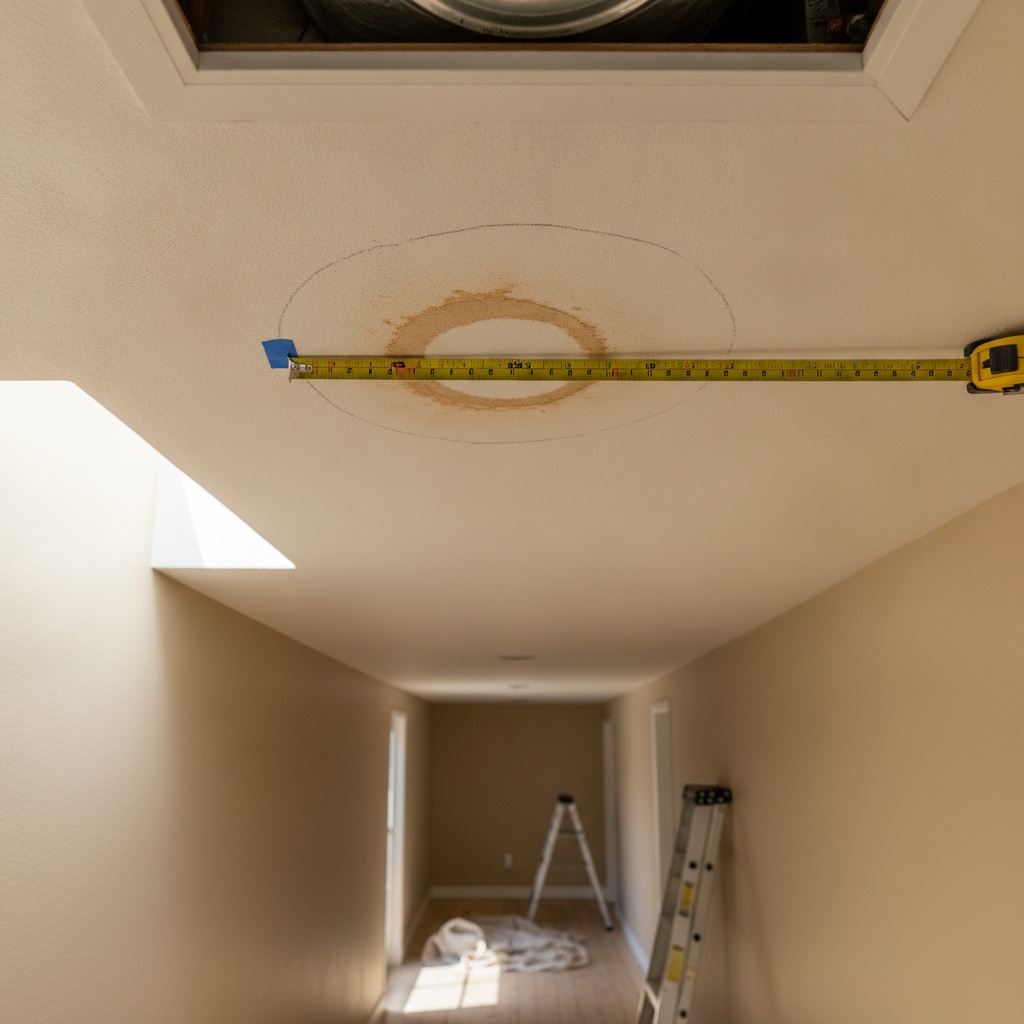
The first sign is usually small. A tan ring the size of a coffee cup lid shows up on a hallway ceiling in Anaheim Hills, directly below the attic air handler. It was not there in June. Now it is mid-July, large parts of LA County sit under an extreme heat watch through July 16, valley forecasts are calling for 105 degrees, and the AC has been running ten hours a day. That timing is not a coincidence. It is the diagnosis.
Summer is peak season for condensate stains in Southern California. Your air conditioner pulls moisture out of the air every hour it runs, and during a heat wave it runs almost constantly. All of that water has to drain somewhere. When it stops draining, the ceiling below the unit pays the price, and the bill grows every day you wait.
Why the Stain Shows Up in July and Not January
Most SoCal homes with central air keep the evaporator coil and air handler in the attic. Warm indoor air crosses the cold coil, moisture condenses, and the water drips into a drain pan. A small PVC line carries it outside. On a 100-degree day with the marine layer pushing humidity inland, a three-ton system can produce 5 to 20 gallons of condensate. That is a bathtub’s worth of water sitting one sheet of drywall above your hallway.
The drain line is the weak point. Inside, it is warm, wet, and dark, which is exactly what algae and mold slime want. Buildup narrows the line over weeks of heavy use, then blocks it completely. The pan overflows, water finds the ceiling, and a stain blooms on the drywall below. HVAC techs see the same pattern every summer: clogs arrive during the hottest weeks, because that is when condensate volume peaks.
January stains tell a different story. Winter ceiling stains in SoCal are almost always rain-driven: roof flashing, a cracked tile, a wind-blown valley. In July, with no measurable rain across most of Orange County or San Diego, the roof is rarely the suspect. The AC almost always is. Knowing which season you are in narrows the search before you spend a dollar.
Condensate, Roof, or Plumbing: Reading the Evidence
Location is your first clue. A condensate stain sits near the air handler, under the drain pan, or along the run of the drain line. Pull down the attic ladder and look. If the ceiling stain lines up with the unit above it, or with the white PVC line snaking toward an eave, you have your answer before any contractor arrives.
Growth pattern is the second clue. Trace the stain’s edge with a pencil, then run the AC hard for a full day. If the stain crosses the pencil line, active water is still arriving and the condensate system is the prime suspect. A stain that has not moved in weeks may be scar tissue from a past overflow, which changes the repair plan completely.
Plumbing behaves differently. A pressurized supply line leaks around the clock, so that stain grows steadily whether the AC runs or not, and the water meter may creep with every fixture off. Stains that form a ring around a ceiling register are usually duct sweat: cold supply air chilling an uninsulated boot until moisture condenses on the metal. That one is an insulation fix, not a drywall crisis.
Stop the Water First, Then Fix the Ceiling
Never patch a stain while the source is live. The order is always the same: stop the water, dry the cavity, then repair the drywall. An HVAC service call to clear a clogged condensate line and flush the pan typically runs $150 to $350 in Orange County and San Diego. Ask the tech to add a float switch that shuts the system down before the pan overflows again. That switch costs less than any ceiling repair ever will.
Drying matters more than most homeowners think. Mold can start colonizing wet drywall within 24 to 48 hours. Open the attic hatch, run fans, and give the cavity two or three days. A moisture meter should read below about 13 percent before anyone opens a bucket of joint compound. Trapped moisture under a fresh patch resurfaces as a new stain within a month, and then you pay twice for the same ceiling.
Repair or Replace: Real Numbers for OC and San Diego
If the drywall is dry, flat, and sound, the fix is cosmetic. Seal the ring with a shellac or oil-based stain-blocking primer, then repaint. Plain latex will not hold; the tannin ring bleeds back through in weeks. Expect $200 to $450 for a pro to prime and repaint a stained hallway ceiling section, more if the whole ceiling needs a coat for color match.
If the ceiling sags, crumbles under thumb pressure, or the paper face has bubbled, that board is done. The honest repair is to cut back to sound material at the joists, hang new 5/8-inch ceiling board, tape, mud, and match the texture. For a typical 20 to 40 square foot cutout with an orange peel or knockdown match, budget $600 to $1,500 depending on attic access and texture complexity. A full ceiling replacement in a 300 square foot room, finished to level-4, generally lands between $2,500 and $4,500.
Texture match is where cheap repairs announce themselves. Blending sprayed knockdown into a 1990s Aliso Viejo ceiling takes a different touch than feathering a patch into a level-5 smooth ceiling in an Irvine great room. Ask any bidder how they match texture and what happens if the first pass does not blend. The good ones have an answer ready. Insurance can help too: sudden overflow damage is often covered while slow, gradual leaks usually are not, so photograph everything the day you find it.
A Ten-Minute Check Before the Next Heat Wave
This week, before the next stretch of triple digits, pour a cup of distilled vinegar down the condensate line access near the air handler. Repeat it monthly through October. Glance at the ceiling under the unit every time you change a filter. If a ring has already appeared, mark its edge in pencil and watch it for 48 hours before deciding anything. Two minutes of tracking beats a week of guessing.
If the stain is growing, or the ceiling feels soft overhead, get a pro’s eyes on it now rather than after the board lets go. We repair condensate-stained ceilings across Orange County and San Diego every week of AC season, and the difference between a $300 fix and a $3,000 one is usually two weeks of waiting. Request a free in-home assessment and we will tell you at the kitchen table, plainly, whether you are looking at paint, a patch, or new board.
Morning-context sources used: laist.com (LA July heat wave and extreme heat watch, July 2026), blog.wego.com (San Diego heat wave 2026, SDG&E summer outlook), jmartiniaq.com (clogged AC condensate drain 2026 guide), southminisplits.com (algae clogs in condensate lines and drywall damage), lyonrestoration.com (AC condensate leaks and ceiling damage), caiso.com (2026 summer loads and resources assessment).